 Follow a
  See our
  View our
 Download the


Bold action.
Proven impact.
Inclusive change.
Realising unbound possibilities for a more sustainable African urban future: Insights from the RISE Africa 2025 Urban Action Festival
RISE Africa’s first in-person 2025 Urban Action Festival convened multi-disciplinary and multi-sectoral participants from across the continent and beyond. Participants explored how to move from vision to action for more resilient, sustainable and equitable African cities through poetry, theoretical provocations, practical workshops, games and site visits. The festival offered alternative ways of convening and sense-making, to support participants to build their own capabilities and resilience. The key takeaway is that the transformation needed in African cities demands we embrace uncertainty, challenge rigid urban paradigms and ground change in contextual realities.
Changing our relationships with urban food and water systems, while embracing circular economy as a development paradigm
This year has seen ICLEI Africa drive systemic change in cities through urban water systems, food governance, circular economy principles and resource-sensitive urban planning.
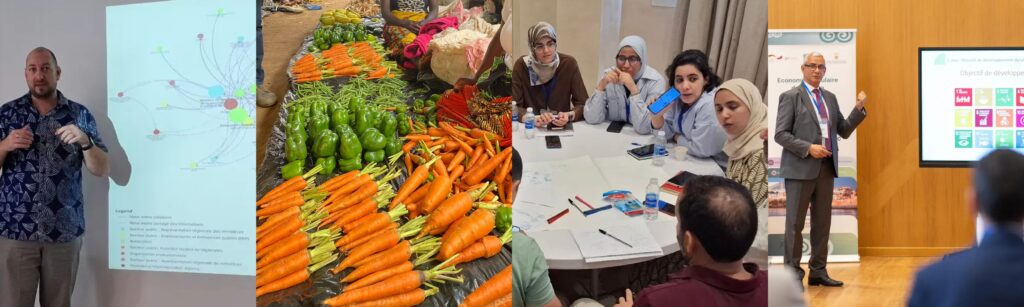
In collaboration with GIZ, the Morocco Urban Circular Water Resilience Initiative (MUCWRI) hosted workshops in Marrakesh, Tangier, Kenitra and Ben Guerir to explore circular water economy practices and develop city-specific action plans.
FoodCLIC is co-creating resilient food systems in Ebolowa, eThekwini and Fort Portal through inclusive governance processes, alongside SchoolFood4Cities’ work to support healthy school food environments in Mbale, Arusha and Kitwe. Further to this, new research in Lilongwe and Lusaka highlights the importance of investing in urban food markets for sustainability and food security, while 15 AfriFOODlinks-driven pilot projects are underway, ranging from school gardens to market upgrades, sodium regulation in bread to promoting urban food heritage.
Under UrbanShift, multilevel dialogues in Kigali, Freetown and Rabat focused on climate resilience, waste management in informal areas, and circular economy as a development paradigm, respectively. The Urban Resilience and Local Governance thought-piece series, co-edited with KAS Tanzania, articulates the need to better equip urban planners.
ICLEI Africa is also supporting the uptake of circular economy in plastic packaging reuse (in partnership with GIZ), and textiles sectors, through policy analysis and recommendations.
Uniting communities and nature: A key theme for urban resilience
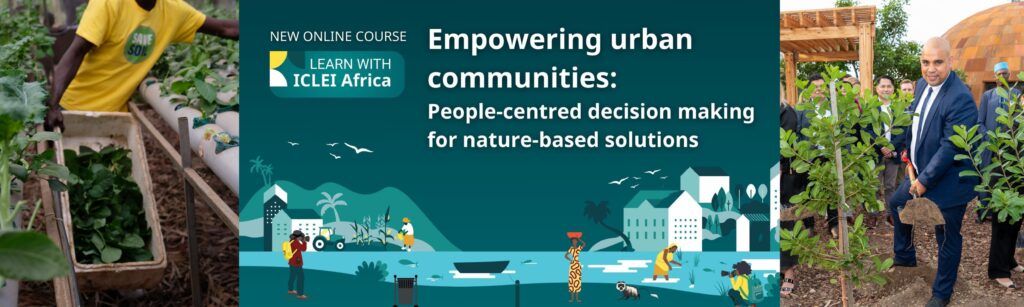
African cities have taken bold steps to integrate nature-based solutions (NbS) into urban planning, prioritising community engagement and resilience. A groundbreaking course on people-centred NbS governance, rooted in African case studies, underscores the continent’s leadership in sustainable, inclusive urban futures.
Cape Town hosted pivotal gatherings, including the Urban Natural Assets immersive learning and engagement programme and the Generation Restoration workshop, fostering cross-city collaboration for NbS.
In Nairobi and Dar es Salaam, the LISTEN, LEARN & LEAP project is exploring equitable climate resilience through nature. Meanwhile, new guides from the INTERACT-Bio project empower cities on biodiversity finance, values and urban resilience strategies based on work done in Africa. Taking action for biodiversity is more important than ever.
African cities are contributing to the global momentum for nature, as is evidenced in the recent UN Oceans Conference and this report on the role of subnational governments and cities at COP 16.
Brokering impactful climate action in Africa
The first six months of 2025 were marked by key milestones that highlight the momentum of our collective efforts to drive meaningful climate action across the continent.
The launch of the Cameroon Adaptation Finance Landscape Tool enhances the transparency of local adaptation finance flows.
We signed a landmark cooperation agreement with FEICOM, marking a shared commitment to improving both the quantity and quality of local adaptation finance in Cameroon.
The second CoM SSA Regional Mayors Forum cohort was elected, strengthening regional collaboration. Explore 2019–2024 milestones in an interactive infographic.
A second phase of support to enable the financing of embedded generation projects in South African intermediate cities, completed inception engagements. Through the JMEG project, we’ll continue our long-term partnership with DBSA in contributing to the transformation of the municipal finance landscape in South Africa.
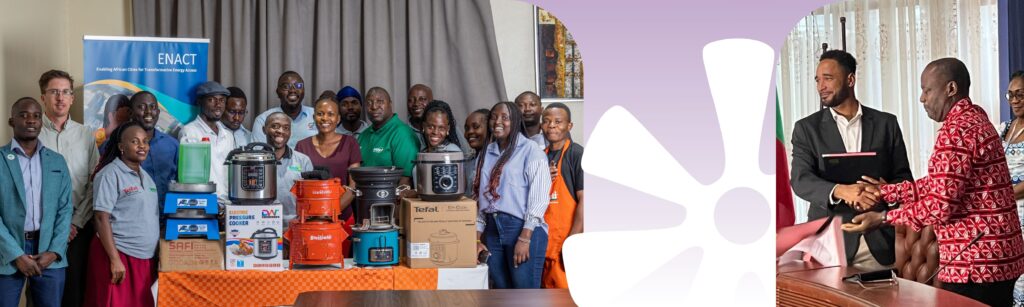
We are improving lives by expanding clean cooking access to at least 30,000 people in informal settlements, directly supporting the Ugandan Ministry of Energy and Mineral Development’s Clean Cooking Unit.
As a trusted intermediary and knowledge broker, we are working with cities to overcome barriers that hinder finance flowing to where it is needed most—the local level. Our Sustainable Finance Centre continues to build out impactful needs-based programming, as we deepen collaboration with MDBs, DFIs and the private sector, to reshape Africa’s urban future.
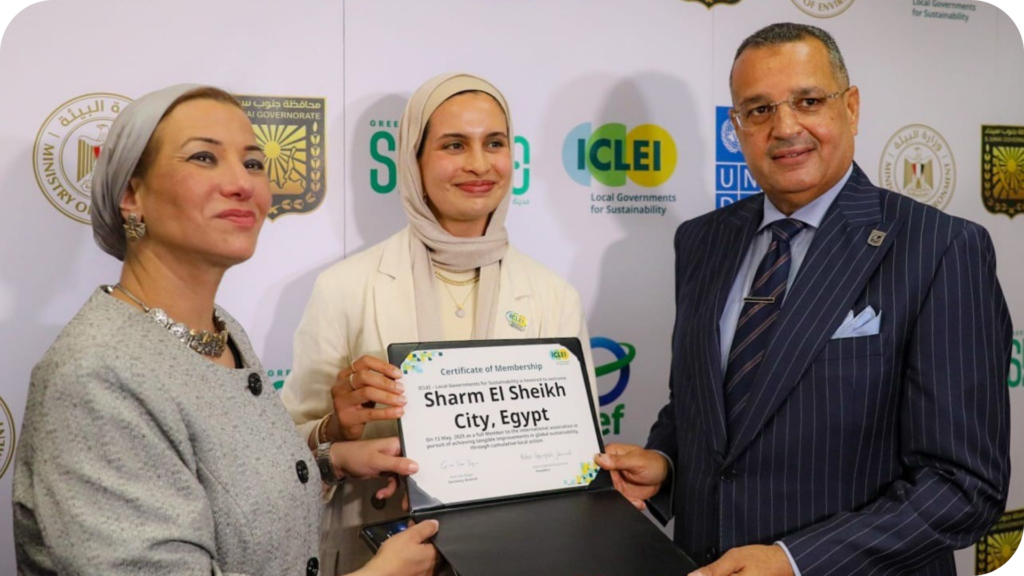
Welcoming our first Egyptian Member: Sharm el-Sheikh
In a landmark moment for Egypt’s sustainability journey, Sharm el-Sheikh became the country’s first city to join ICLEI as a Member.
Sharm el-Sheikh’s journey towards sustainability has been guided by the locally-tailored Green Sharm initiative, which focuses on renewable energy, sustainable transport, water conservation, biodiversity protection, local communities and waste management – an inspiring example of what is possible when local and national actors work together.