
 Follow a
  See our
  View our
 Download the
LOOKING FOREWARD
Lessons for future initiatives
The UNA project’s learnings span many years, different phases, several themes and across cities, but always return to the fundamental goal of supporting African cities in integrating NbS into urban governance, planning and finance frameworks to achieve nature-positive, inclusive and resilient urban development. For cities, funders, private businesses and practitioners wanting to develop similar initiatives, we offer the following recommendations and learnings.
1
Driving people-centred development
Embedding human rights into urban development is not a box-ticking exercise; it’s a long-term commitment to inclusion, dignity and shared agency. When we centre rights to education, nature and participation, we create cities where people are not just beneficiaries of change, but active drivers of it.
2
Promoting nature-positive development
The role of nature in safeguarding livelihoods, driving economies and promoting social inclusion cannot be underestimated. As cities transition towards a more sustainable development trajectory, it is critical to recognise that restored and healthy ecosystems, along with NbS, offer cities a way to provide a range of benefits and services for urban communities simultaneously. These benefits are often less costly than “grey” alternatives in the long term. Sustainable cities require healthy natural ecosystems to thrive; therefore, development decisions and actions must ensure nature-positive outcomes.
3
Mainstreaming gender considerations
Simply including men and women in planning, decision-making and implementation isn’t enough to promote equality. It’s vital to create an enabling environment within which all genders can thrive, particularly those whose voices are often marginalised. By exploring the intersection between gender and socio-cultural dynamics, interventions can evolve from being gender-blind to becoming more gender-transformative. This creates approaches to urban development where all genders can thrive.
4
Fostering a bottom-up approach to urban governance
Lasting change comes from listening deeply, co-developing and co-designing solutions with stakeholders. By creating spaces and platforms where communities, practitioners, researchers and marginalised groups can co-develop solutions, cities can unlock grounded, context-specific strategies that reflect lived realities and build trust in institutions.
5
Tackling urban challenges with a whole-of-government and whole-of-society approach
NbS does not fall under a single department; it spans housing, transport, health and education. Future projects must encourage collaboration across all levels of government and society to align mandates, pool resources and activate shared responsibility.
6
Testing new ways to address old challenges
Complex urban challenges require adaptive solutions. Experimentation – through urban tinkering, storytelling, games or walking workshops – helps cities break through planning inertia, test alternatives and respond in agile, low-risk ways that build capacity as they go.
7
Leveraging strategic communications tools
To shift narratives and mobilise action, we must communicate beyond technical audiences. Visual storytelling, youth engagement, participatory exhibitions and creative campaigns can make complex ideas tangible. This helps to build public support, political buy-in and momentum for nature-positive change.
Long-term impacts and significance
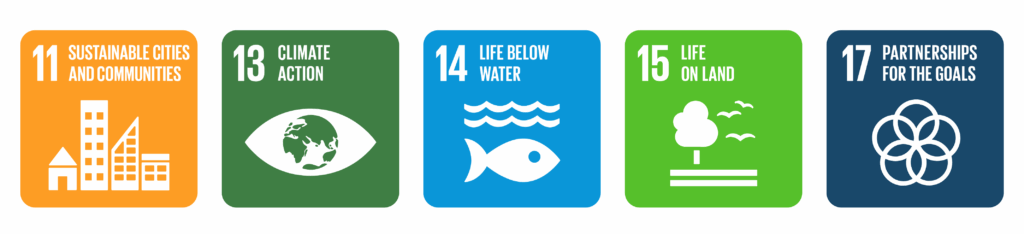
For African cities to address growing urban crises and effectively protect and reintegrate nature into urban areas, a new approach to planning and development must be mainstreamed. Through the UNA project’s interventions, the project successfully supported city stakeholders in localising national and global action, creating a catalytic impact. On-the-ground implementation work helped to advance the achievement of SDG 11 (Sustainable Cities and Communities), 13 (Climate Action), 14 (Life Below Water), 15 (Life on Land) and 17 (Partnerships for the Goals), among others. It also aligned with specific targets set out in countries’ NBSAPs, thereby promoting the tangible execution of these action plans. Focusing on multilevel governance and awareness building, the UNA project supported cities in strategically aligning nature-based interventions with societal pressures and designed scalable projects that deliver real value to local communities.
By championing nature-based development for climate resilience and reduced biodiversity loss at the urban scale, the UNA project contributed immensely towards empowering cities with the data, skills and evidence necessary to make informed decisions needed to build urban communities’ resilience to climate change and ensure nature-positive urban development.
URBAN NATURAL ASSETS FOR AFRICA
A legacy of commitment to foster sustainable development and strengthen interconnected natural systems
The Urban Natural Assets project was developed by ICLEI Africa through the ICLEI Cities Biodiversity Centre (CBC), and generously funded by SwedBio through the Swedish International Development Cooperation Agency (SIDA).