 Follow a
  See our
  View our
 Download the
21 September 2026
Every Municipal and District Council in Mauritius joins ICLEI
For the first time in ICLEI's history, every municipal and district council in a country is now a Member. Mauritius' full mobilisation gives its local governments a stronger collective voice and renewed momentum for local climate and sustainability action.

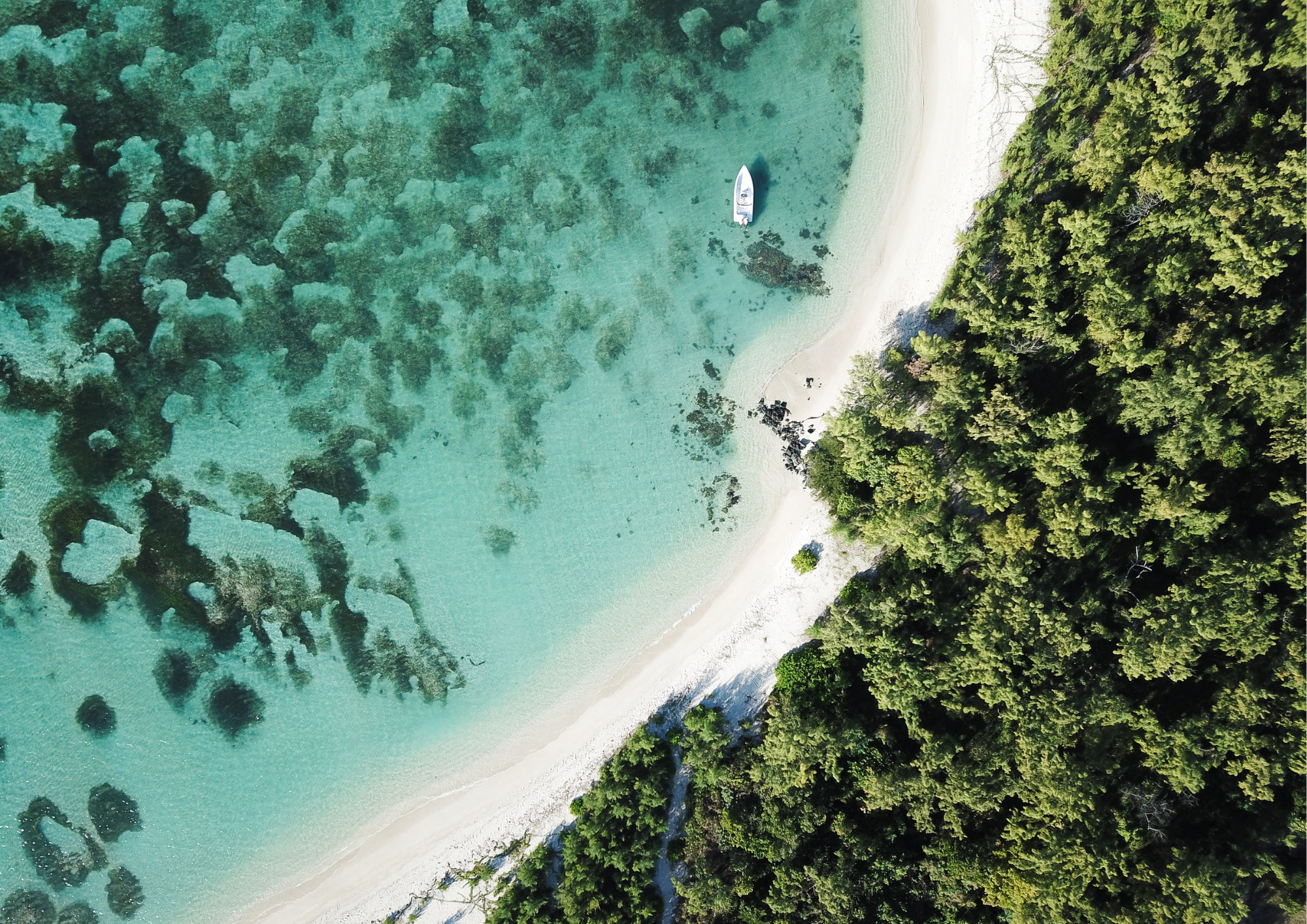

An historic first: Every Municipal and District Council in Mauritius joins ICLEI
For the first time in ICLEI’s history, every municipal and district council in a country is now a Member. Mauritius’ full mobilisation gives its local governments a stronger collective voice and renewed momentum for local climate and sustainability action.
Imagine if an entire country’s local governments were so committed to creating a resilient urban future that they all joined the same global sustainability network. In Mauritius, they have done just that.
All five Municipal Councils and all seven District Councils in Mauritius are now ICLEI Members, alongside the Association of District Councils (AODC), which represents them collectively at the national level. With the recent addition of the District Council of Black River, Mauritius has closed the final gap: every Municipal and District Council on the island – the tiers of local government with a local service delivery mandate – is now part of the same global network.
This is the first time in ICLEI’s history that every Municipal and District Council in a country has joined our network. ICLEI Africa’s relationship with Mauritius stretches back to the early 2010s, beginning with Port Louis, through collaborative work on urban climate resilience. From there, councils across the country have made the same bold choice in successive waves – each one deciding, on its own terms, that sustainable and resilient development is better pursued as part of a global network than alone – up to Black River’s arrival this year as Mauritius’ newest Member.

“We are proud to see our longstanding partnerships across Mauritius reach this important milestone, while warmly welcoming the District Council of Black River as our newest Mauritian Member,”
said Kobie Brand, Deputy Secretary-General of ICLEI and Regional Director of ICLEI Africa.
Mauritius is now the rare case of a country represented, in full, at ICLEI’s table. From individual local governments to a connected local government association, Mauritius is demonstrating the power of working together to advance climate action, resilience and sustainable development. What makes that even more remarkable is that all twelve arrived at the same place independently, each on its own timeline.
A stronger collective voice
ICLEI’s model runs on the principle that every Member holds a seat on ICLEI’s Council, and helps set our Strategic Plan and priorities. A handful of Members from a country gives that country a voice. All of them give it something closer to a coherent position – one that reflects the realities of a capital city and a rural district council at the same time, and that carries more weight when Mauritius attends a COP, or participates in ICLEI’s global campaigns. It was Hans Margueritte, former Mayor of Curepipe, who served as ICLEI’s special envoy at the CBD COP15 in 2022, for example, representing island-city interests in the global biodiversity framework. Full membership means that representation no longer rests on one city or one champion but is rather backed by the whole country’s local government system.
For the wider ICLEI network, Mauritius’ milestone is an example worth highlighting. Small Island Developing States (SIDS) like Mauritius are consistently among the most climate-exposed Members and among the least resourced to act alone.
“As a small island developing state, Mauritius faces some of the most acute climate risks of any nation, from rising sea levels to coastal erosion and extreme weather events, while also being home to rich and fragile biodiversity. Local governments are on the frontline of this reality, and their leadership in embedding sustainability into everyday governance is exactly the kind of action our planet needs. This milestone shows what’s possible when every level of subnational government commits to the same vision,”
said Brand.

With every council now represented in ICLEI, Mauritian local governments have a stronger, unified platform: to connect with peers across Africa and the world, share knowledge and solutions, accelerate local climate and sustainability action, and bring local government perspectives to major global platforms. This is a working example of what deep, durable membership can look like for other small nations, and a reminder that the value of ICLEI is not only in what individual flagship cities do, but in whether entire systems of local governance pull in the same direction.
Standing ready with national government
Mauritius’ national government has set itself ambitious targets: a 40% reduction in greenhouse gas emissions relative to business-as-usual by 2030, under its updated Nationally Determined Contribution (NDC), alongside a target to increase terrestrial protected area coverage from approximately 4% to 16%, under its National Biodiversity Strategy and Action Plan (NBSAP) and Protected Area Network Expansion Strategy. Targets like these are set nationally, but they are delivered locally – in how coastlines are managed, how land is used, and how waste and biodiversity are handled in towns and districts. With every Municipal and District Council now part of the same international network, local governments in Mauritius are signalling that they are ready to stand alongside their national government in delivering on these commitments, and are not simply waiting to hear what their role should be. Local action of this kind is what turns national ambition on the Sustainable Development Goals (SDGs), climate and biodiversity into real results on the ground.
“Our national government has set ambitious biodiversity and climate targets,” said Kemraz Ortoo, Chairperson of the Association of District Councils of Mauritius. “As a council, we are not waiting to be told what our role is – we are already at the table, taking action and are ready to help deliver on these targets.”
What local governments in Mauritius are prioritising now
This collective standing only matters if it translates into real action on the ground. And it already has: Black River, Curepipe, Pamplemousses, Port Louis, Quatre Bornes and Savanne have all joined the global CitiesWithNature initiative to strengthen urban biodiversity, while Curepipe took part in an ICLEI Africa and Western Indian Ocean Marine Science Association (WIOMSA) workshop, “Cities Under Pressure,” alongside nine other coastal African cities to explore circular-economy responses to coastal pressure.
Nationally, the Ministry of Environment’s ten-year Master Plan is steering Mauritius towards a low-emission, circular economy, with measures already in place on single-use plastics, solid waste management and vehicle emissions. Locally, councils and mayors have been clear about where they need support to carry that plan through: access to climate finance, a seat at the table when NDCs are set so that local realities are reflected in national commitments, and better coordination between central government and municipalities. There is active interest in the Covenant of Mayors in Sub-Saharan Africa (CoM SSA) as a route to support for climate and energy planning, and investment readiness. It is clear that the ambition is there, and so is the local capacity to organise around it. What these councils are looking for now is closer coordination between local, national and international efforts.
A steadfast and trusted network for uncertain times
It is worth naming the moment this milestone lands in. Climate finance is harder to access and more contested than it was even a few years ago. International development budgets are shifting, and small states are often the first to feel that shift, with the least room to absorb it. The fact that Mauritius has chosen to deepen its investment in an international network despite international uncertainty is a powerful statement of confidence, not caution. It is an endorsement of the idea that no single council, however capable, can build climate resilience alone, and that collective bargaining power, shared technical resources, and peer-to-peer learning across borders matter more, not less, when the wider funding and policy landscape is uncertain.
“Full ICLEI membership means every council in Mauritius, whatever its size, has a say in shaping global sustainability priorities,” said Christelle Pondard, Mayor of the City Council of Port Louis. “We hope other local governments across Africa and the world see what we’ve built here, and know it is possible for them too.”
This is what a network like ICLEI has evolved into over more than three decades: ICLEI Members connect within ICLEI’s community with ease and trust, with like-minded local and subnational governments committed to a more sustainable urban future for all, even in times of rapid change and turbulence. Together, the ICLEI community is moving forward, steadfastly, inspired by one another, learning from each other, and well supported by dedicated technical teams in Africa and across the world as they now face a defining decade in the history of humanity.
The island state of Mauritius has shown what is possible when an entire country commits. What happens next is the story worth watching – one the whole ICLEI network, in Africa and beyond, will be paying attention to.