Follow a
 See our
 View our
 Download the



A think piece by Ruby Schalit, Portfolio Lead: Placemaking & Urban Design, ICLEI Africa
When we think about the infrastructure our cities need, we usually think first of water, sanitation, electricity, transport and housing. We think less often about somewhere to sit with a neighbour, somewhere children can play, somewhere people can connect with nature, or somewhere people can gather without having to pay or purchase something.
Yet public space should also be viewed as crucial infrastructure; much of what makes a city comes from the encounters that it enables. People exchange news, build relationships, play, trade, debate, organise and generate ideas. The proximity of people creates possibilities for connection; fundamental for mental health, solidarity, information exchange, opportunities and risk reduction. Public spaces help turn that proximity into shared urban life.
Even where little provision has been made for them, places to gather will inevitably emerge. Under a tree, outside a shop, beside a transport interchange or on an open patch of ground, the human social instinct means people will carve out spaces to connect and exchange as they need. What would change if we gave more purposeful focus to designing better quality public spaces in our cities?
Where space becomes place
During a recent visit to Tamale, Ghana, to launch the Urban Fabric Initiative,1 we encountered public life taking shape in many forms. Children kicked a football behind a school and played on rocks near the chief’s palace. Elders sat beneath a tree discussing the affairs of the day. Motorcycle riders cleaned their bikes beside a public tap. A group of women held a susu savings meeting beneath another tree, where they were using a wire enclosure to train the canopy to grow wider, to provide better shade. Without necessarily being formally designated as public spaces, these places were already serving important purposes. People had recognised an opportunity in their surroundings and adapted it to support daily life.
1. The Urban Fabric Initiative Tamale is led by ICLEI Africa, with the University of Development Studies and Youth Empowerment for Life, and co-funded by Agence Francais de Developpement and the European Union; it is implemented within the framework of the Tamale Urban Resilience Programme.
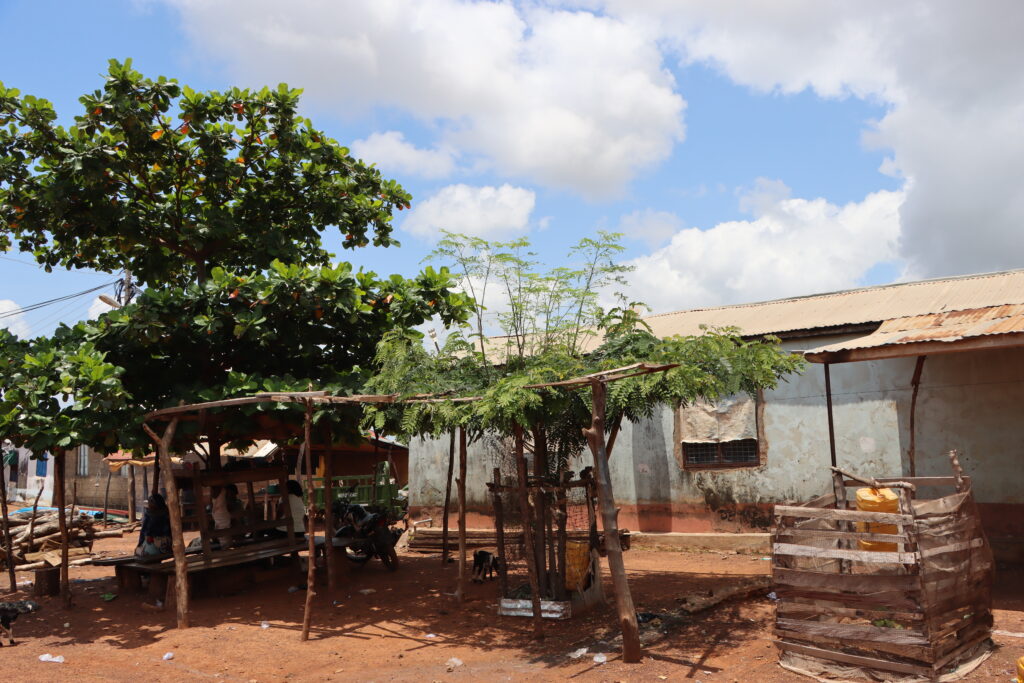
In Tamale, residents guide a tree’s growth to encourage a wider canopy, creating more effective shade for gathering beneath it. This everyday adaptation reflects local knowledge and ingenuity in shaping public space around people’s needs.
Photo: Erin Hill for ICLEI Africa
The relationship between people and their surroundings is at the heart of placemaking. While placemaking theory was popularised globally by USA-based urbanists like Jane Jacobs and William H. Whyte, its core practices have long happened informally in cities around the world. In many of the African cities with which we work, communities have created, adapted, and cared for shared spaces out of organic necessity. Organisations such as Project for Public Spaces have helped develop and popularise placemaking as a collaborative approach to shaping public spaces around community needs. As a deliberate practice, placemaking involves listening, observing, testing ideas and deciding together how a place could work better, drawing on the knowledge, needs and aspirations of those who use it. These experiences provide an important foundation for how we understand and support public space today.
Consider a familiar journey to work. At the taxi rank or bus stop, is there shade? Somewhere to sit? Something to eat? Can people move comfortably through the space, including those with limited mobility? Is there a reason to linger, and room to do so without obstructing others?
The answers affect how people experience their city. So do the less visible arrangements: who can trade there, who maintains the space, who is welcomed and who might not be, and who has a say when changes are proposed. Placemaking therefore brings questions of design into conversation with questions of governance.
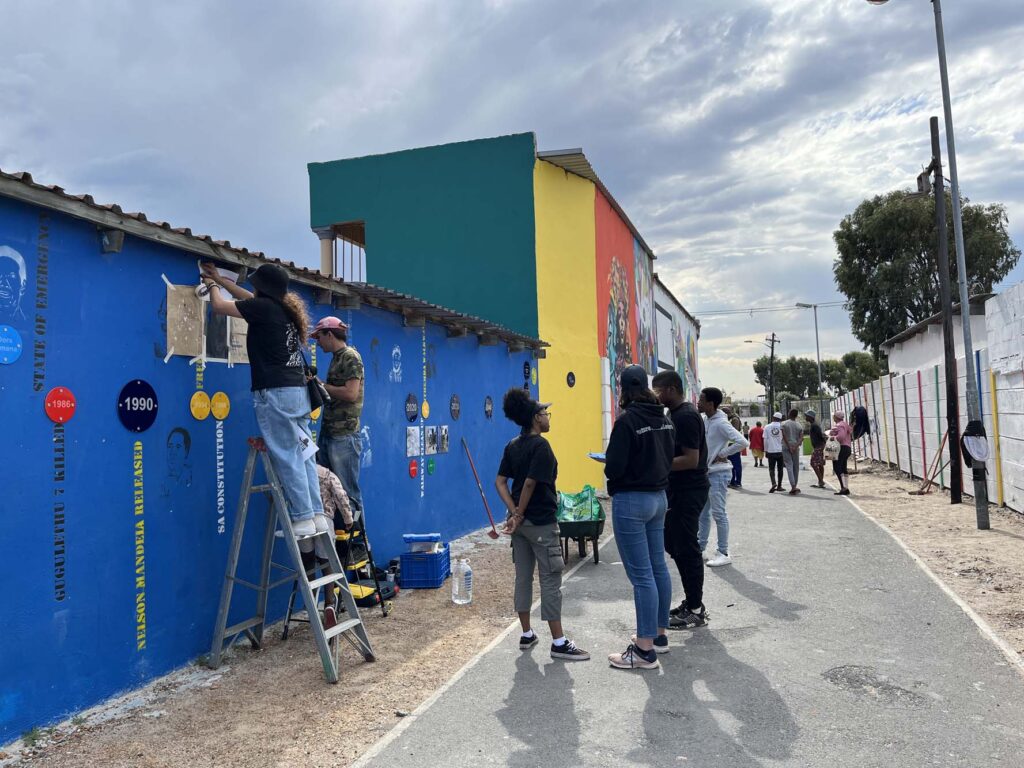
At iThemba Walkway in Gugulethu, South Africa, residents and partners have combined collaborative design, public art and ongoing local stewardship to upgrade a neglected pedestrian passage. Previously an unsafe, underutilised space being used as an informal dumping ground, the work shows how improving this underutilised public thoroughfare has also strengthened its role as a shared neighbourhood place – becoming a meeting and gathering space for the community.
Care in placemaking means attending to both a place and the people who use it: maintaining shared facilities, nurturing planting, responding to changing needs and ensuring that people feel welcome. Sustaining this care requires clear responsibilities and resources, alongside community commitment.
iThemba Walkway, Gugulethu, Cape Town. Residents and partners have transformed a neglected pedestrian passage through community-led care, collaborative design and public art, creating a more welcoming route and shared neighbourhood space.
Photo: Kathryn Ewing
Is there space for place?
For municipalities responding to the “big challenges” of housing shortages, unemployment, climate hazards and gaps in basic services, public space can seem like something to address only once more urgent needs have been addressed.
But consider how these needs come together in a place. Shade can make gathering space more comfortable during hot weather. A market connects food access and livelihoods with transport, water and waste management. Somewhere to sit, play or meet can be especially valuable for people whose homes offer little room for these activities. Consider, too, what happens when public space is poorly designed, protected or managed: it can harm people’s health, add to their daily stress, compromise their safety and weaken their sense of belonging.
These needs can be addressed together, as Kibera Public Space Project 05 in Nairobi demonstrates. Developed by Kounkuey Design Initiative and the Kibera Action Group Organisation, the project combines sanitation and laundry facilities with flexible community space, bringing everyday services, gathering and local livelihoods into one place.
When we plan housing, we also need to ask where people will gather. When we plan transport, we need to consider the experience of waiting. When we support local livelihoods, we need to understand the spaces in which people earn a living. These questions help us better plan for people’s lives as a whole.
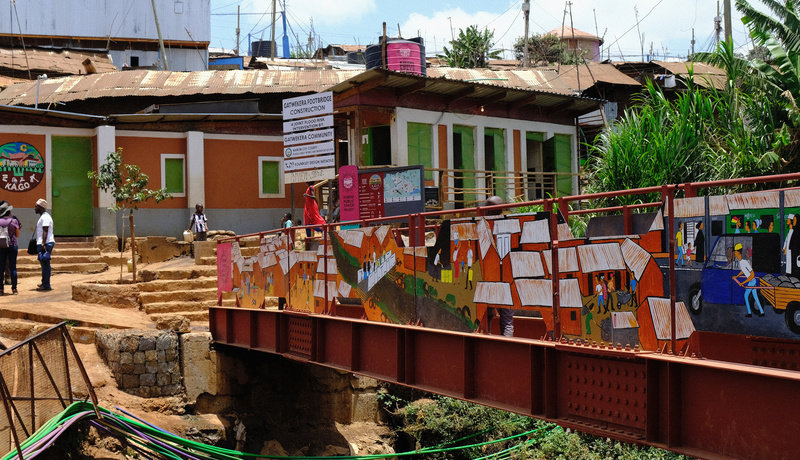
Kibera Public Space Project 05, Nairobi. Developed by Kounkuey Design Initiative and the Kibera Action Group Organisation, this community hub brings essential services and public life together.
Photo: KDI
This also requires us to recognise what already exists. The women adapting a tree canopy for their meetings are demonstrating knowledge about shade, comfort and collective use. Vendors gathering along a commuter route understand the relationship between movement and demand. Children finding somewhere to play reveals a need that formal provision may have overlooked.
These adaptations offer lived intelligence to planners and practitioners about what is needed, and how people are solving their challenges. But they also raise questions and concerns. What happens to the meeting when it rains? Is it safe for children to set up a soccer pitch next to the highway? Can a trader predictably rely on access to this same trading place tomorrow? Some of these arrangements are longstanding and carefully sustained; others leave people exposed to hazards or uncertainty. With the right support, these arrangements can become safer and more secure, helping neighbourhoods cope with heat, flooding and other pressures. Public authorities can strengthen these existing arrangements by addressing gaps in infrastructure, protecting access and supporting community-led maintenance and care, while working with residents to help determine what support is needed. That might mean improving lighting, drainage or access; protecting an existing use; or agreeing how different activities can share a space. The appropriate response depends on the people and circumstances involved.
Cities should approach both formal and informal gathering places as evidence of how people choose to use and shape their surroundings. Before redesigning a space, planners and partners should spend time observing its daily rhythms and listening to those who gather, trade, play or pass through it, including people whose needs are less visible. Improvements should be developed with these users, protecting valued activities and livelihoods while addressing hazards and barriers to access. Formal designation or redevelopment should not be the assumed endpoint. Sometimes the most useful intervention is to secure an existing use, provide basic amenities or support the arrangements through which people already care for a place.
RISE Africa’s 2025 photography exhibition, Where We Gather, offers a rich visual account of these varied gathering practices, revealing how people create places of connection through everyday work, play, cultural expression and collective action
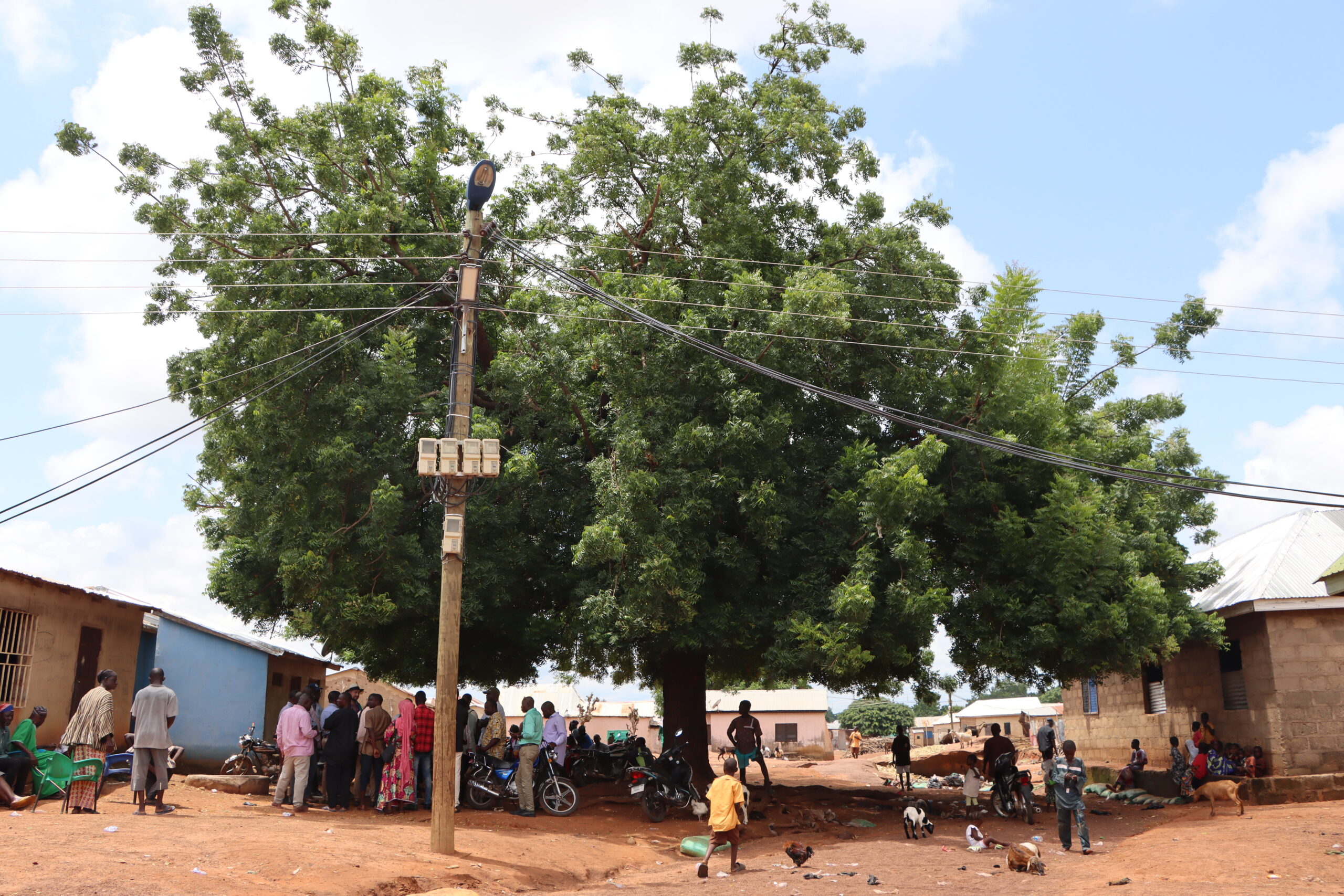
A large tree anchors everyday public life in Tamale, providing shade for gathering, motorcycle parking and children’s play beside a drainage ditch. Spaces like this offer a starting point for placemaking: understanding what already works, then supporting safer, more comfortable use without losing the activities that give the place its value.
Photo: Erin Hill for ICLEI Africa
Connecting urban systems with everyday life
Initiatives such as iThemba Walkway in Gugulethu and the Kibera Public Space Project in Nairobi demonstrate the depth of practice already underway on the continent. These experiences offer valuable lessons for ICLEI Africa’s work with local governments. Our recently named placemaking portfolio brings together a longstanding concern with place across our urban sustainability work, including a number of demonstration projects that connect community priorities, urban nature and everyday services.
For ICLEI Africa, public space offers a tangible meeting point for work on climate resilience, nature, food, livelihoods, equity and governance. At the scale of a neighbourhood gathering place or market, connections between these issues become visible: residents experience them together, even where municipal responsibilities sit across different departments. Working around a shared place then creates an opportunity to bring those departments into conversation with each other, and with communities, businesses and local organisations.
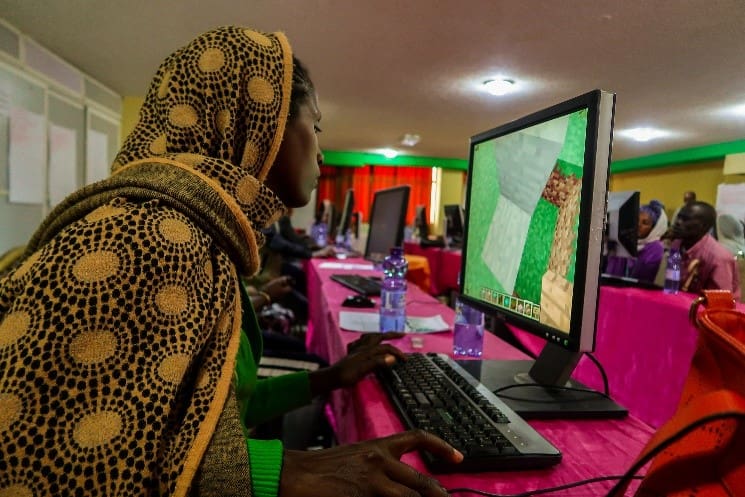
Residents used Minecraft to help redesign a riverside site in Addis Ababa through ICLEI Africa’s UNA programme, working with the city authority and UN-Habitat. Their ideas informed the development of Ras Mekonnen Urban Park.
Photo: ICLEI Africa
ICLEI Africa’s placemaking work connects practical place-based interventions with broader questions about how cities plan, collaborate and learn. It also actively champions local knowledge and creative practice as vital contributions to urban development. Informing our placemaking implementation projects is ICLEI Africa’s public space intervention framework, which recognises that African cities are multi-layered and calls for a corresponding approach to land use. It identifies four mutually reinforcing intervention areas: essential infrastructure and services, including water, sanitation, shade and food access; accessibility, mobility and leisure, including connected walking routes, inclusive access and places to play; social services and civic agency, including learning, health, livelihoods and participatory governance; and aesthetics and sense of place, including heritage, biodiversity and community expression. Rather than treating these as separate choices, our work actively seeks interventions that meet several of these objectives at once. The intention is to help cities ask better questions about who their spaces serve, how they function and what would enable people to use and care for them over time.
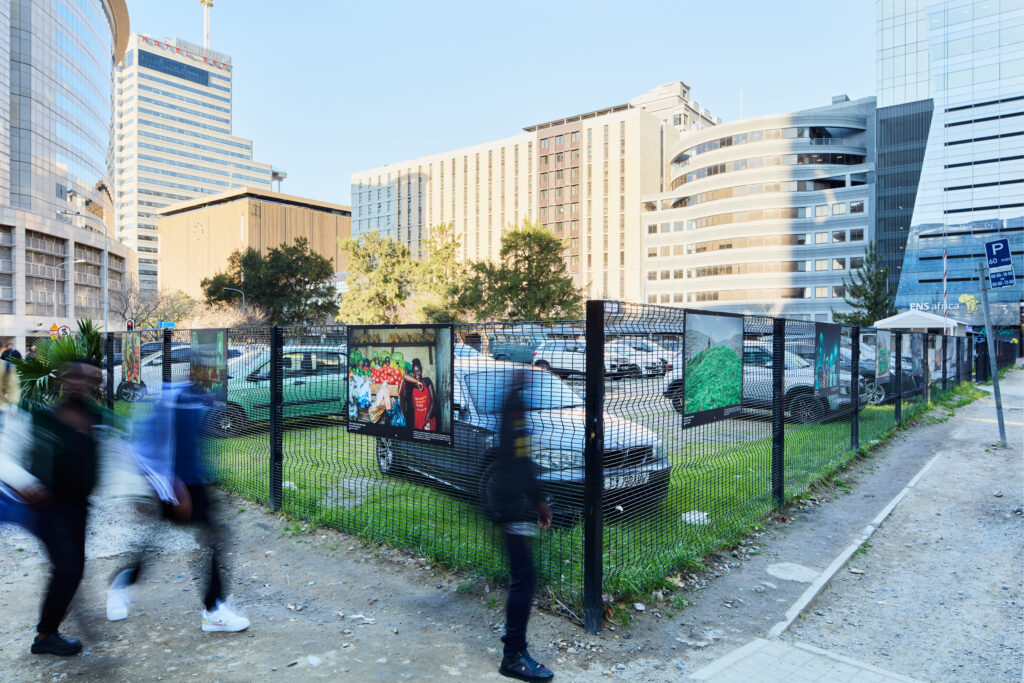
This work draws on experience across ICLEI Africa’s work, from participatory approaches to shaping urban nature through Urban Natural Assets (UNA), to creative interventions such as Cape Town’s Alpha Street Gallery. Developed with Mission for the Inner City and partners, the outdoor photography exhibition brings images and stories into an everyday pedestrian route, inviting people to pause and engage with their surroundings. These experiences offer different starting points for exploring how people can help shape, use and connect with shared urban spaces.
Alpha Street Gallery brings African photography into an everyday pedestrian route in Cape Town. A collaboration between Mission for Inner City, ICLEI Africa, SJ Artists and Orms, the free outdoor exhibition invites commuters and visitors to pause and contemplate African scenes and stories, woven into the rhythm of their everyday routine.
Photo: Slater Studio
Building on public life in Tamale
In Tamale, these questions and considerations are shaping the Urban Fabric Initiative (UFI). The UFI complements the wider Tamale Urban Resilience Project, focused on largescale infrastructure upgrading across the city, by testing methods for community engagement, development of public space, and the management models that will enable their maintenance over time. The initiative brings communities, young people, local authorities and technical partners together to co-diagnose priorities, co-design public space improvements and establish stewardship arrangements for these spaces that will last beyond the project span. Its approach combines larger public space interventions with smaller youth-designed placemaking projects and public space improvements, creating opportunities to test ideas and learn through implementation.
The rhythms and forms of public life we observed across the city provide an important starting point. The task is to understand what people value about these places, what limits their use and what residents would like to change.
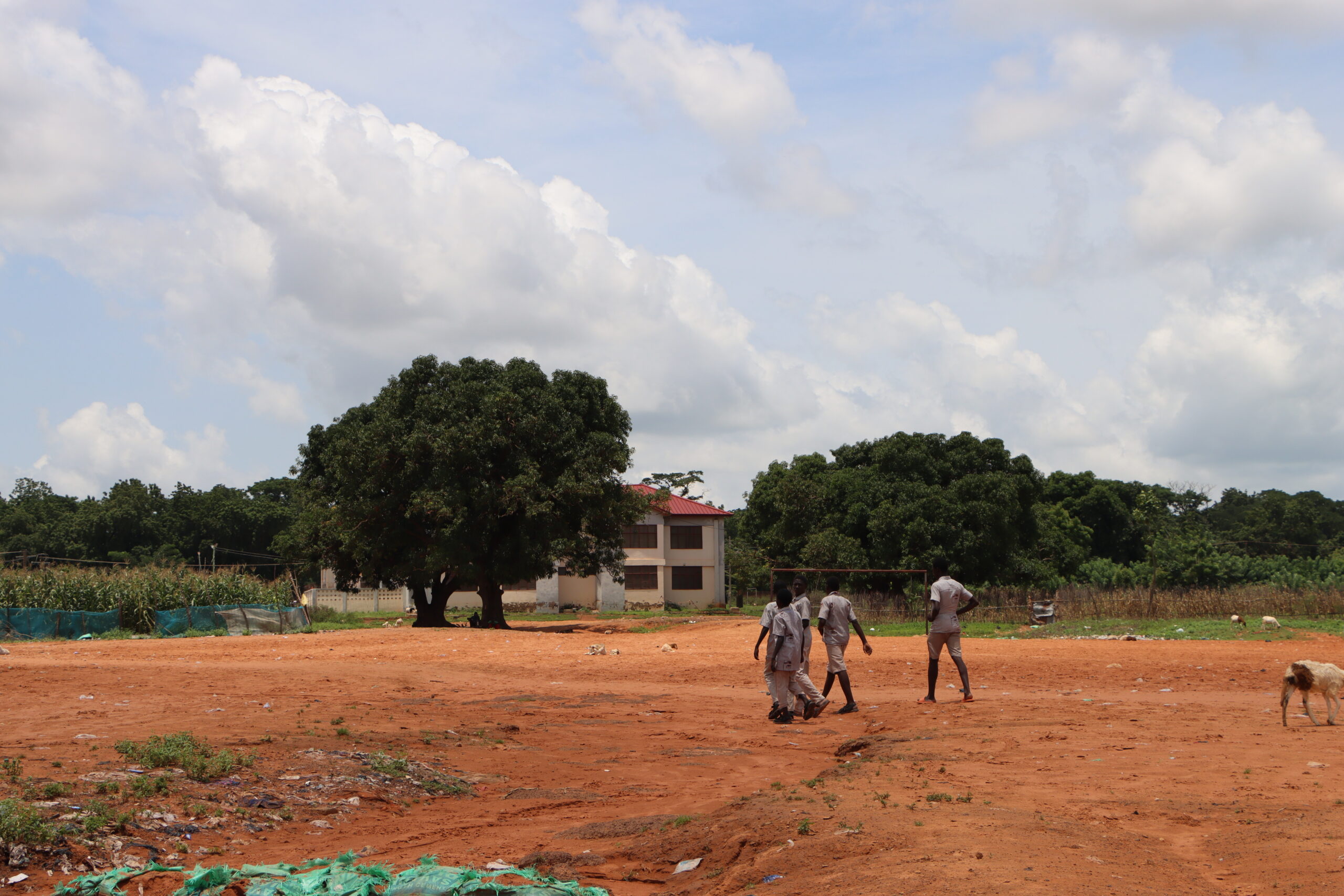
A strip of land between a Tamale neighbourhood and local urban agriculture serves as an informal football pitch for young residents, despite being impacted by waste dumping. Earmarked as a project site for UFI Tamale, this space will undergo a collaborative co-design process to determine physical improvements that address environmental challenges while better serving the community.
Photo: Erin Hill for ICLEI Africa
Over the course of the project, young people will have opportunities to build skills and develop placemaking proposals for their neighbourhoods. Alongside decisions about physical improvements, the project will explore how spaces can be managed and maintained, and how community priorities can inform wider planning and investment.
As the work begins, its value will lie both in the places developed and in the relationships and capacity built through the process. Can residents influence decisions about their surroundings? Can local authorities better support existing activities? Can small interventions generate useful lessons for larger investments?
Learning from the places we already make
Across African cities, there are rich, established examples of people creating, sharing and sustaining public places. These practices take different forms, shaped by distinct cultures, histories, microclimates and institutions. Rather than applying a one-size-fits-all model, ICLEI Africa’s placemaking work actively surfaces, exchanges and scales these diverse approaches.
ICLEI Africa’s placemaking work continues to grow through its partnerships with municipalities, community organisations, designers, researchers and practitioners, and we welcome new collaborators. Together, we want to explore how public spaces can become safer, more accessible and authentically responsive to the people who use them, and how institutions can better support the work already happening.
Cities need infrastructure that enables people to live healthy, dignified lives. That includes room to gather, play, participate and belong. Making space for place means giving these needs a deliberate role in how we shape our cities.
To learn more about our placemaking work and explore potential synergies, please contact us: ruby.schalit@iclei.org