Follow a
 See our
 View our
 Download the

25 November 2026
From Antalya to Addis Ababa: Putting local climate action at the heart of COP32
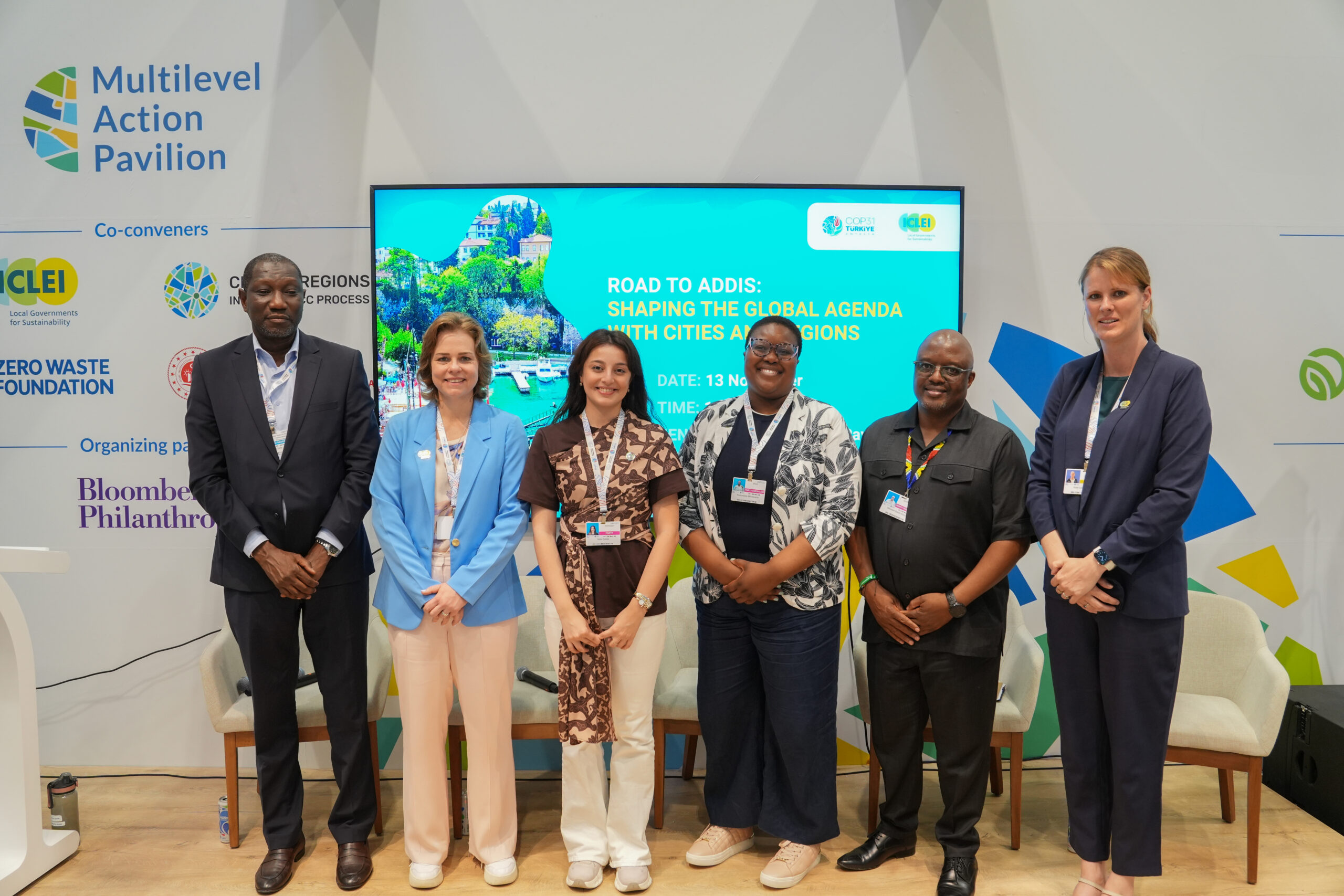
African cities brought practical lessons on locally led adaptation and municipal climate finance to COP31.Through our Subnational and Local Governments Road to COP32, ICLEI Africa is working with partners to turn that recognition into practical support for cities, with a focus on locally led adaptation and finance for local climate projects.



From Antalya to Addis Ababa: Putting local climate action at the heart of COP32
COP31, in Antalya, Türkiye, concluded without agreement on the proposed Antalya Pact, primarily because of divisions over fossil fuels and climate finance. Countries agreed on some individual agenda items, including a platform to help least developed countries implement their national adaptation plans. However, the earlier call to triple adaptation finance by 2035 still lacks an agreed baseline. This is a serious political setback, but the Paris Agreement remains in force, and separate decisions and significant voluntary initiatives continue. This leaves a practical question for COP32: how to get predictable adaptation finance to the local governments and communities who must put those plans into practice. The road to COP32 in Addis Ababa, Ethiopia, offers an opportunity to rebuild trust and strengthen support for local implementation. As UN Climate Change Executive Secretary Simon Stiell said at the closing plenary: “The fight continues. We will never give up.”
Opening windows where doors have been closed
Speaking at the COP31 World Leaders’ Summit, the President of Brazil, Luiz Inacio Lula Da Silva, said: “The lack of consensus cannot become a hurdle for advancement. In times of polarisation, diplomacy needs to open windows where doors have been closed.”
ICLEI remains dedicated to sustaining and ramping up multilevel action, as the focal point for the Local Governments and Municipal Authorities (LGMA) Constituency and through its over 400 sustainability projects and programmes. We welcome the recognition of local and subnational governments in the COP31 decisions on matters relating to least developed countries and on the Just Transition Work Programme. On the road to COP32, ICLEI will keep building bridges between national, regional and local governments for a package that puts real finance and implementation where climate impacts hit hardest: in our cities, states and regions.
Resource
Subnational and Local Governments Road to COP32
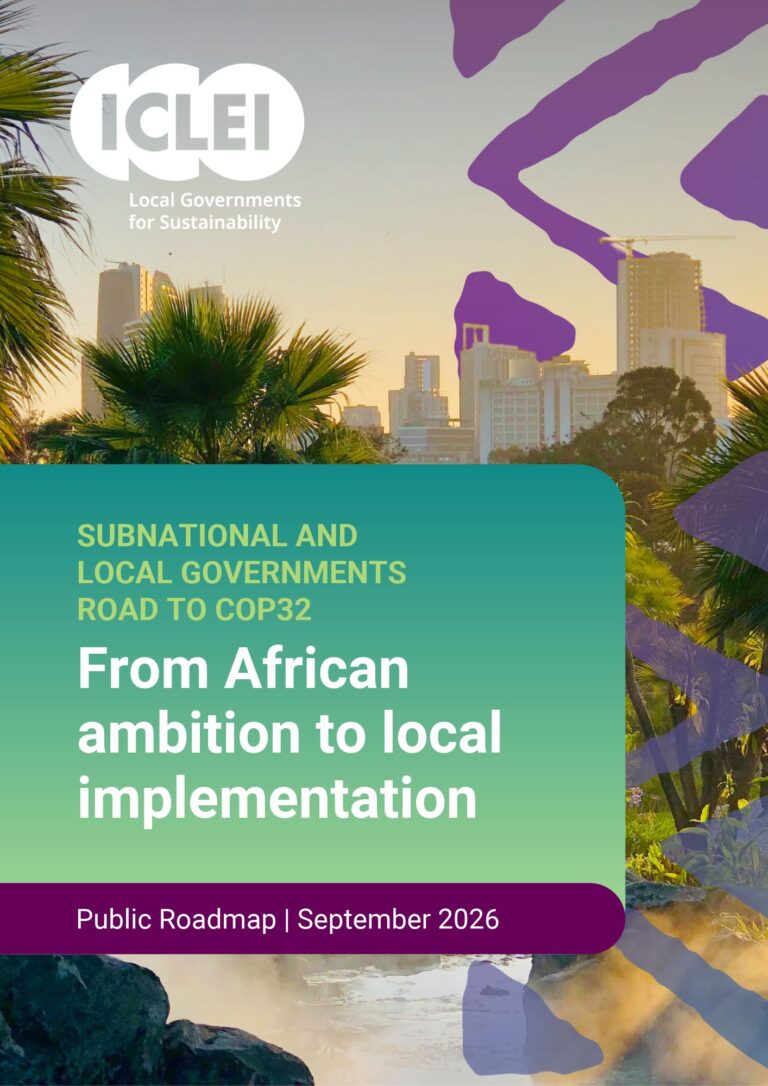
At COP31, ICLEI launched the Subnational and Local Governments Road to COP32. This is a year-long engagement and implementation journey designed to strengthen multilevel action, elevate African local leadership, demonstrate integrated climate-nature-land solutions, build partnerships and move finance closer to delivery. Read the publication here and sign up to become a partner or share your comments here.
Informing the road to COP32
Involving local governments in national climate planning brings local investment needs into view, from keeping essential services running during floods to preparing municipal energy projects for finance.
As negotiations continue in Bonn and Addis Ababa, Parties can explore new perspectives and arguments to spur on consensus, for example, drawing on development priorities: “climate talks cannot ignore the development crisis”, as put forward by Imraan Valodia, Commissioner of South Africa’s Presidential Climate Commission. He says: “A successful climate transition must do more than change how energy is produced. It must also transform the unequal economic relationships through which energy, technology and wealth are produced and distributed.”

ICLEI Africa’s Just Municipal Embedded Generation project worked with six South African municipalities to assess options for local power generation, from grid capacity to financing and ownership models. Municipalities are central to delivering climate-resilient infrastructure and essential services, yet many struggle to translate policy ambition into projects that can be financed and implemented. A technically viable project is not automatically an implementable or financeable project. The level of institutional readiness of a municipality in terms of its financial and governance performance, state of infrastructure, and institutional capabilities for project development and implementation determines whether a well-prepared project is supported by the conditions that make it investable. The type of project selected and how it is structured must match the municipality’s capacity, in order to make it viable and investment-ready. Continuity and coordination among support actors across all stages of the project development value chain are essential to move a project from concept to implementation.
ICLEI Africa highlights
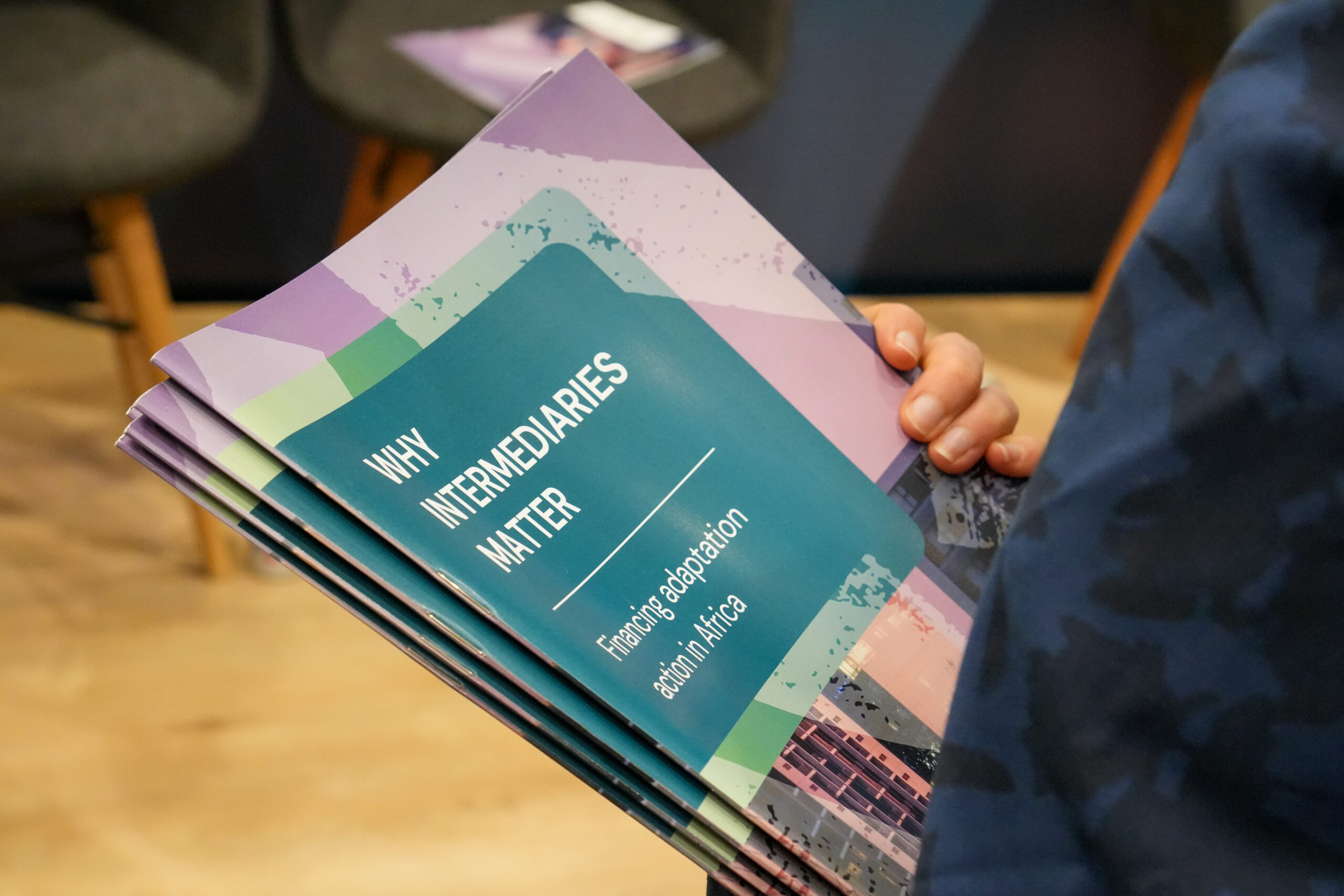
1. Publication launch | Financing adaptation action in Africa: Why intermediaries matter
Our new ICLEI Africa publication, launched at COP31, explores how three types of intermediaries can help unlock this potential, connecting capital with local priorities and making every concessional dollar go further: Financial intermediaries, such as development banks and subnational finance institutions, mobilise and de-risk capital. Intermediary initiatives build project pipelines and help cities turn plans into fundable proposals. Institutional enablers provide the long-term capacity, convening and policy support needed to sustain progress beyond individual projects. Read the publication here.
The big insight: These three types of intermediaries achieve more when they work in sync. By aligning around a shared pipeline of local projects, they can bridge gaps between funders, programmes and tiers of government, helping investment translate into lasting resilience.
At the ICLEI Africa Sustainable Finance Centre, we work across this ecosystem to help turn local development priorities into viable investment opportunities. We know progress depends on collaboration between cities, governments, financiers, development partners, and the private sector.
2. ICLEI Africa and Cameroon’s National Observatory on Climate Change (ONACC) sign cooperation agreement
On Saturday, 14 November 2026, ICLEI Africa and Cameroon’s National Observatory on Climate Change (Observatoire National sur les Changements Climatiques, ONACC) signed a cooperation agreement, establishing a strategic partnership to advance climate action through stronger institutional collaboration, shared expertise and the development of impactful climate projects and programmes.
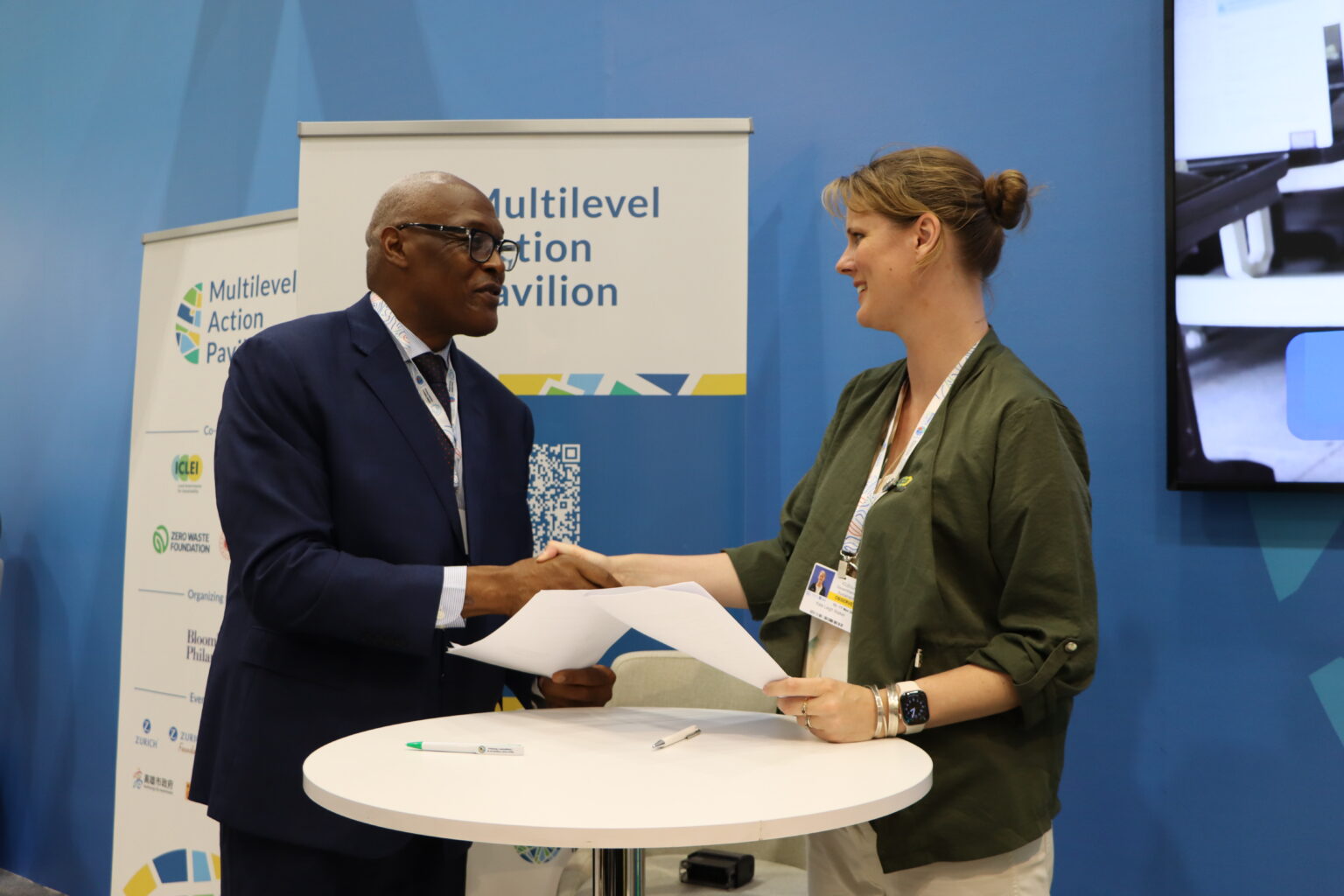
As Cameroon’s national institution responsible for monitoring and evaluating the socioeconomic and environmental impacts of climate change, ONACC plays an important role in generating climate information that informs the country’s adaptation and mitigation responses. Through this agreement, ICLEI Africa and ONACC will bring together their complementary expertise to help translate climate knowledge into practical action at the local level.
The agreement establishes a framework for cooperation in key areas, including using climate information in local development planning, strengthening capacity, exchanging knowledge across Africa, and jointly developing and implementing climate projects and programmes.
3. Co-developing new approaches to financing local-level projects
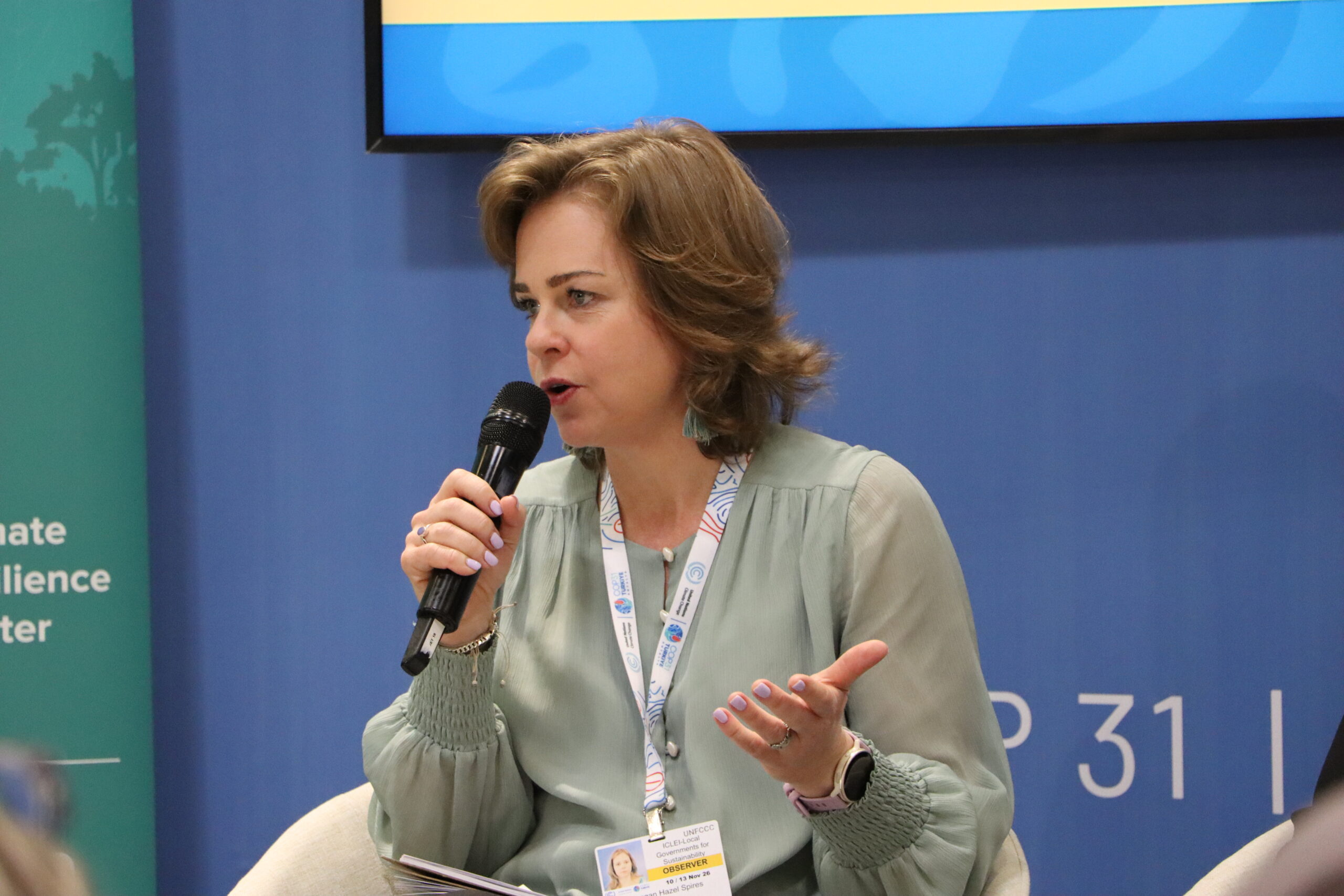
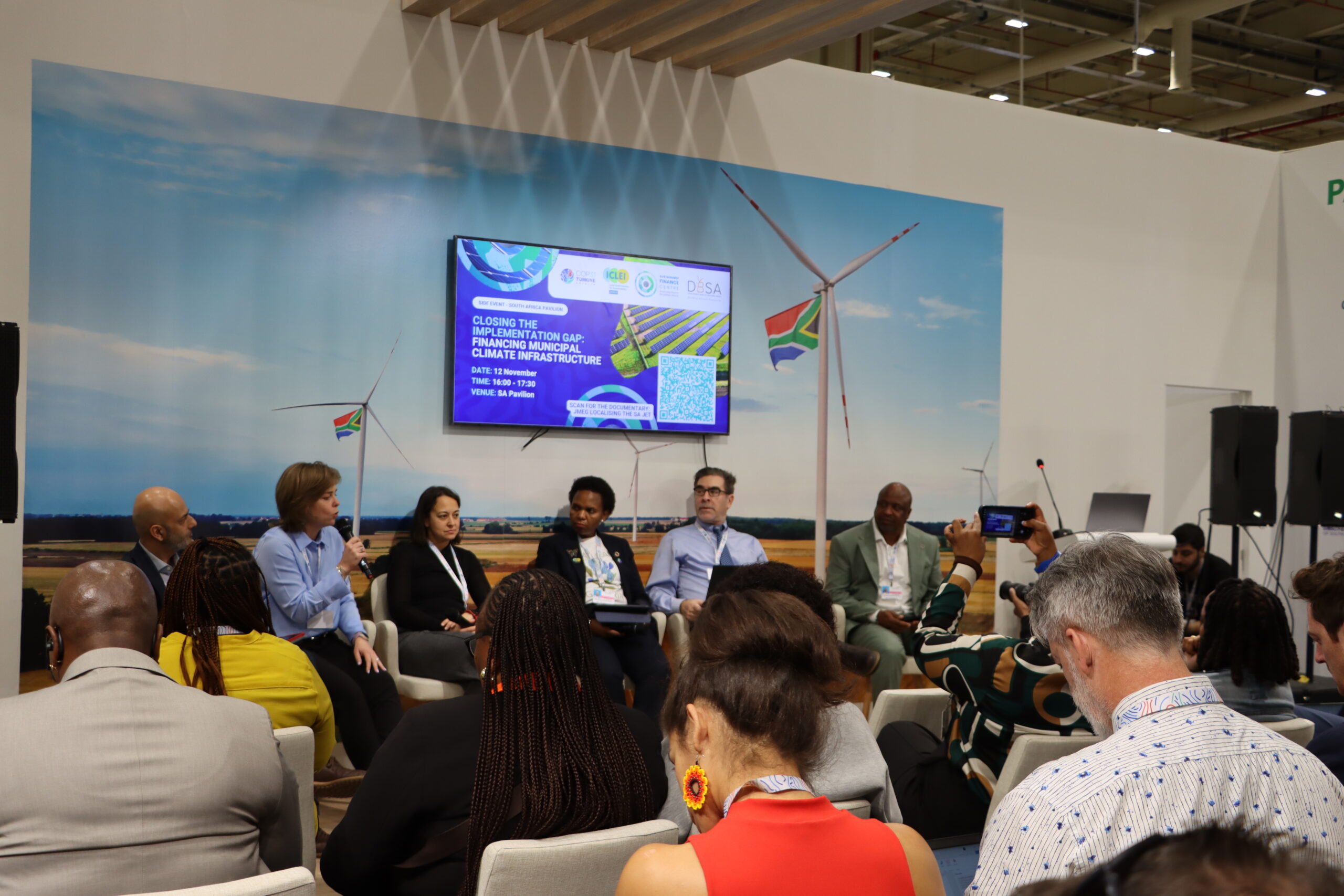
At COP31, we hosted two sessions with our long-standing partner, the Development Bank of Southern Africa (DBSA). The first focused on the strategic role of intermediaries in strengthening urban resilience in Africa, where ICLEI Africa launched its latest publication, Financing adaptation action in Africa: Why intermediaries matter, read here. The second explored financing local climate infrastructure, drawing on lessons from the JMEG project.
This conversation explored four key elements to moving from ambition to projects:
- improved institutional capabilities to deliver strong governance and financial performance;
- trusted institutional enablers that walk the project preparation journey with cities;
- understanding and then navigating national and municipal regulatory processes;
- assessment of projects and financing options available and selection of the most suitable within current circumstances.
4. Building sustainable cities in an overshoot context
ICLEI Africa contributed to several COP31 sessions on resilience, including discussions on financing locally led adaptation and coordinating implementation across the three Rio Conventions. The adaptation finance session explored how an overshoot of 1.5°C will change what cities need from finance. As risks evolve, cities need flexibility to adjust projects and sustained funding to keep them working beyond the pilot stage. This is particularly important where communities are already experiencing loss and damage, and municipalities must maintain basic services while investing in measures to reduce future risk.
The Rio Conventions session highlighted how locally designed solutions can advance climate, biodiversity and land priorities together. Approaches such as wetland restoration and flood risk management can be adapted to different places and help deliver National Adaptation Plans as well as the adaptation targets to Nationally Determined Contributions. Ahead of COP32, predictable, flexible finance that reaches the local governments can help to sustain and expand these approaches.

African local governments in action at COP31
The COP31 World Leaders Summit held a high-level dialogue on urban resilience, adaptation and climate action, with heads of state, ministers and mayors
This High-Level Dialogue builds on the four Ministerial Meetings on Urbanisation and Climate Change convened since COP27. Discussions highlighted how implementing the Paris Agreement can benefit from cooperation across levels of government, with Nationally Determined Contributions (NDCs), National Adaptation Plans (NAPs) and national urban policies as the framework that connects national commitments with local delivery. In UN-Habitat’s analysis of 142 NDCs, 80% included well-developed urban measures. Only one in three addresses coordination across levels of government, and fewer than one in five refers to urban climate finance. Read the full summary here.
Local Government and Municipal Authorities COP31 Position reaches UN Secretary-General, António Guterres
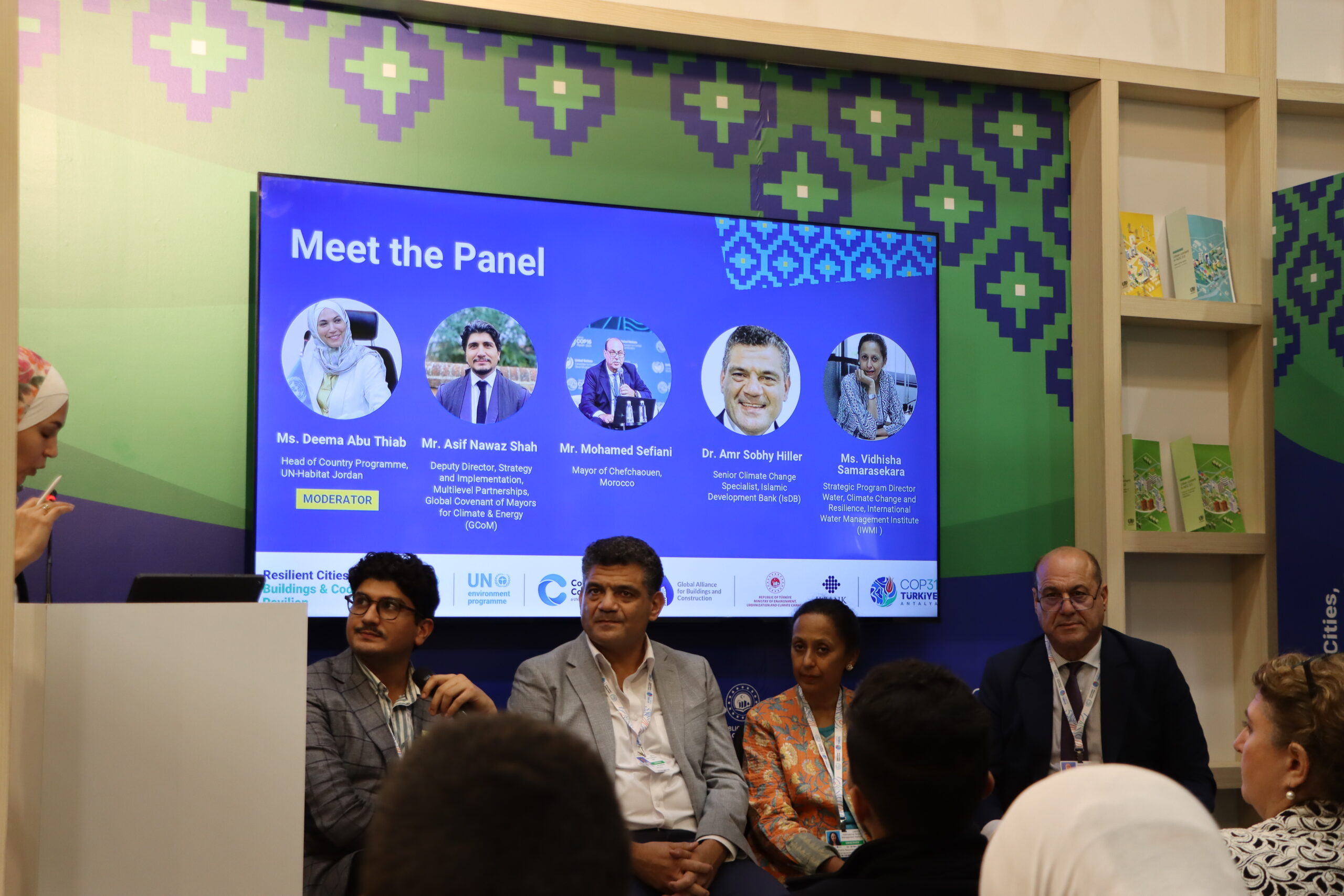
The handover took place during a bilateral meeting with a delegation of local and subnational leaders, including ICLEI Vice President, Mayor of Chefchaouen, Morocco, Mohamed Sefiani. This position represents the unified voice of 80 networks, representing tens of thousands of local, regional, and other subnational governments worldwide. ICLEI serves as the focal point for the Local Governments and Municipal Authorities (LGMA) Constituency.
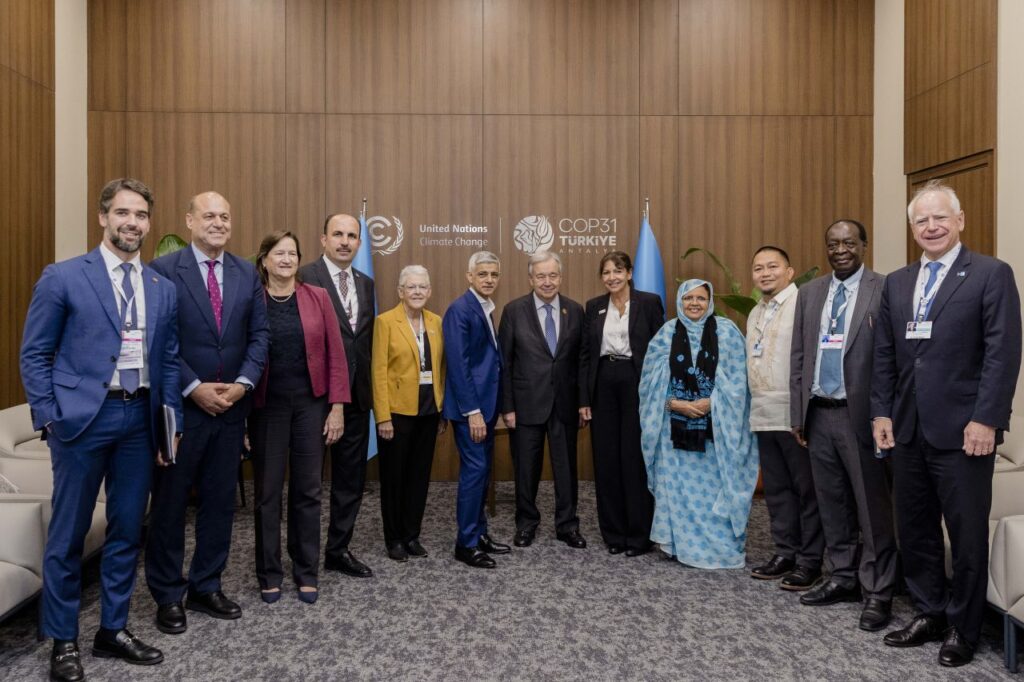
Sharing insights and experiences to inform global agendas
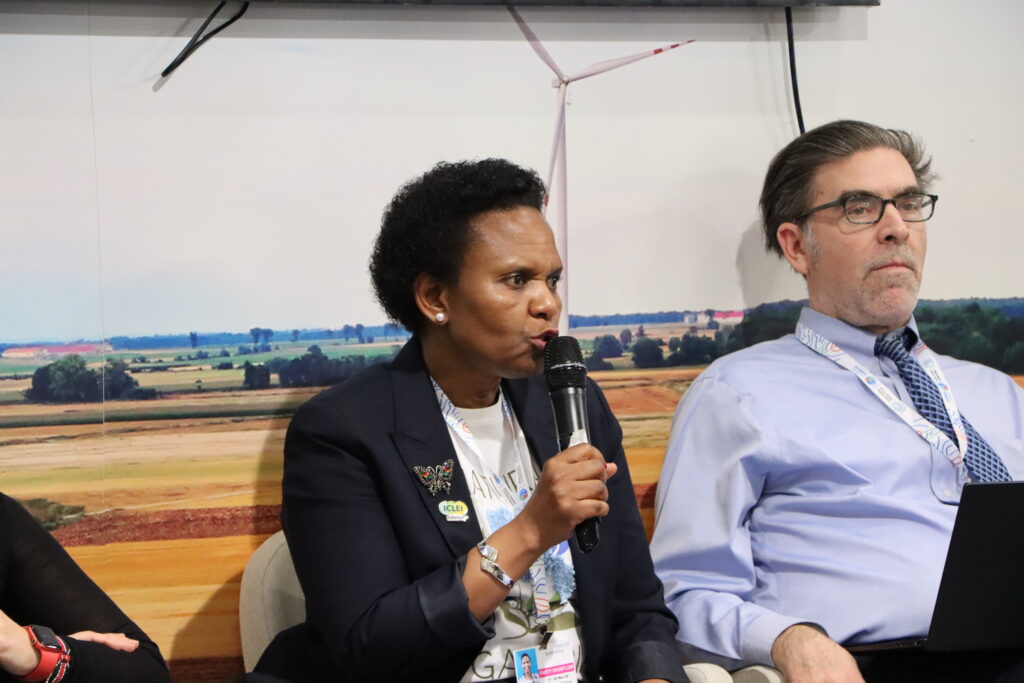
“Municipalities are learning to navigate new terrain, including: understanding investment requirements; exploring opportunities of partnering with external actors to crowd in private finance; and establishing the conditions to enable investment-ready project pipelines and attract finance. We need to reduce the burden of re-doing project preparation work when new financial partners are brought on board; it is unlikely that one partner will work on all stages of a project’s development, and municipal resources are limited.”
~ Dorah Marema, Portfolio Head for Municipal Sustainability, South African Local Government Association
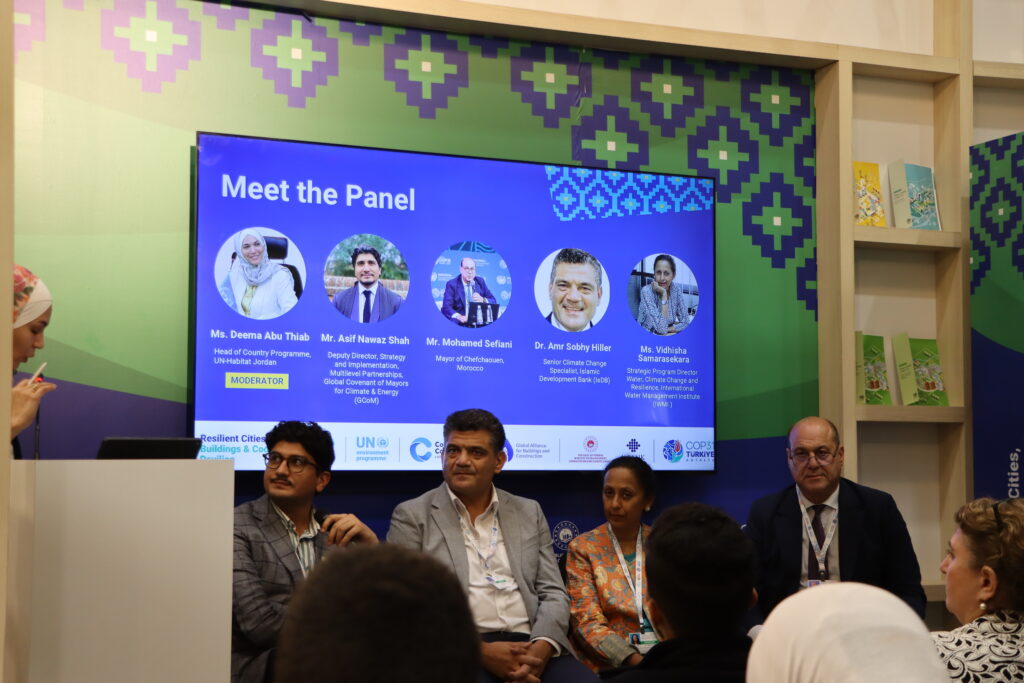
“A good feasibility study is not yet a funded project. We financed an LED streetlights project by combining national and international grants with an interest-free loan.”
~ Mayor of Chefchaouen, Morocco, Mayor Mohamed Sefiani
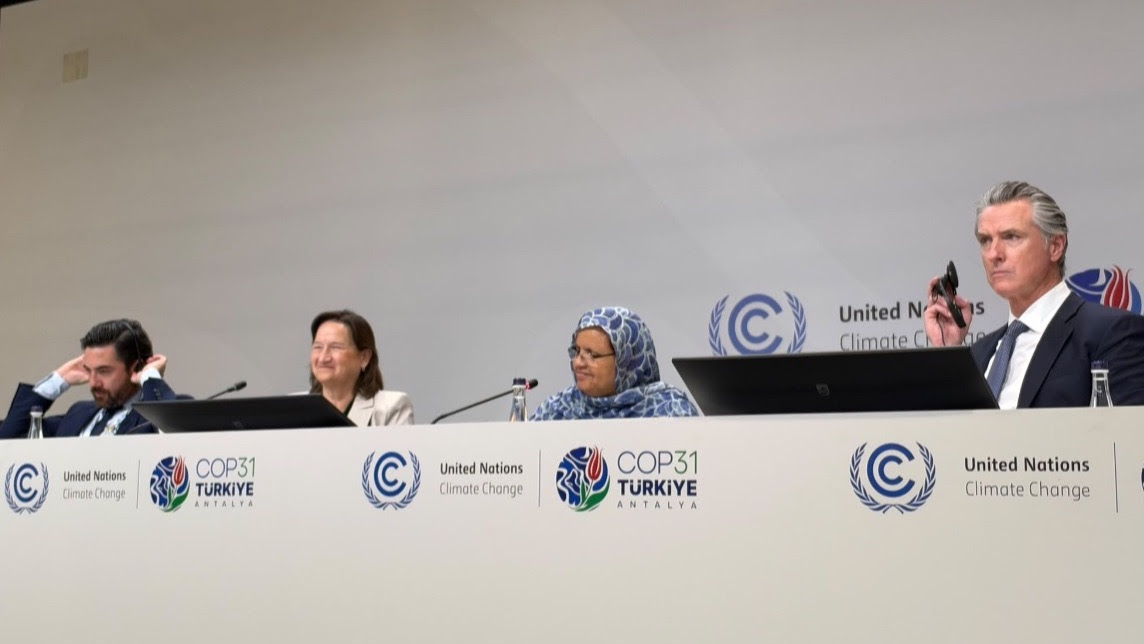
“Since the first COP in 1995, the Local Governments and Municipal Authorities (LGMA) has been bringing the voice of local and regional governments to the negotiations. Implementation is [now] at the heart of the climate agenda… and must be measured by the difference it makes in the lives of our populations.”
~ Fatimatou Abdel Malick, President of the Region of Nouakchott, Mauritania