
 Follow a
  See our
  View our
 Download the

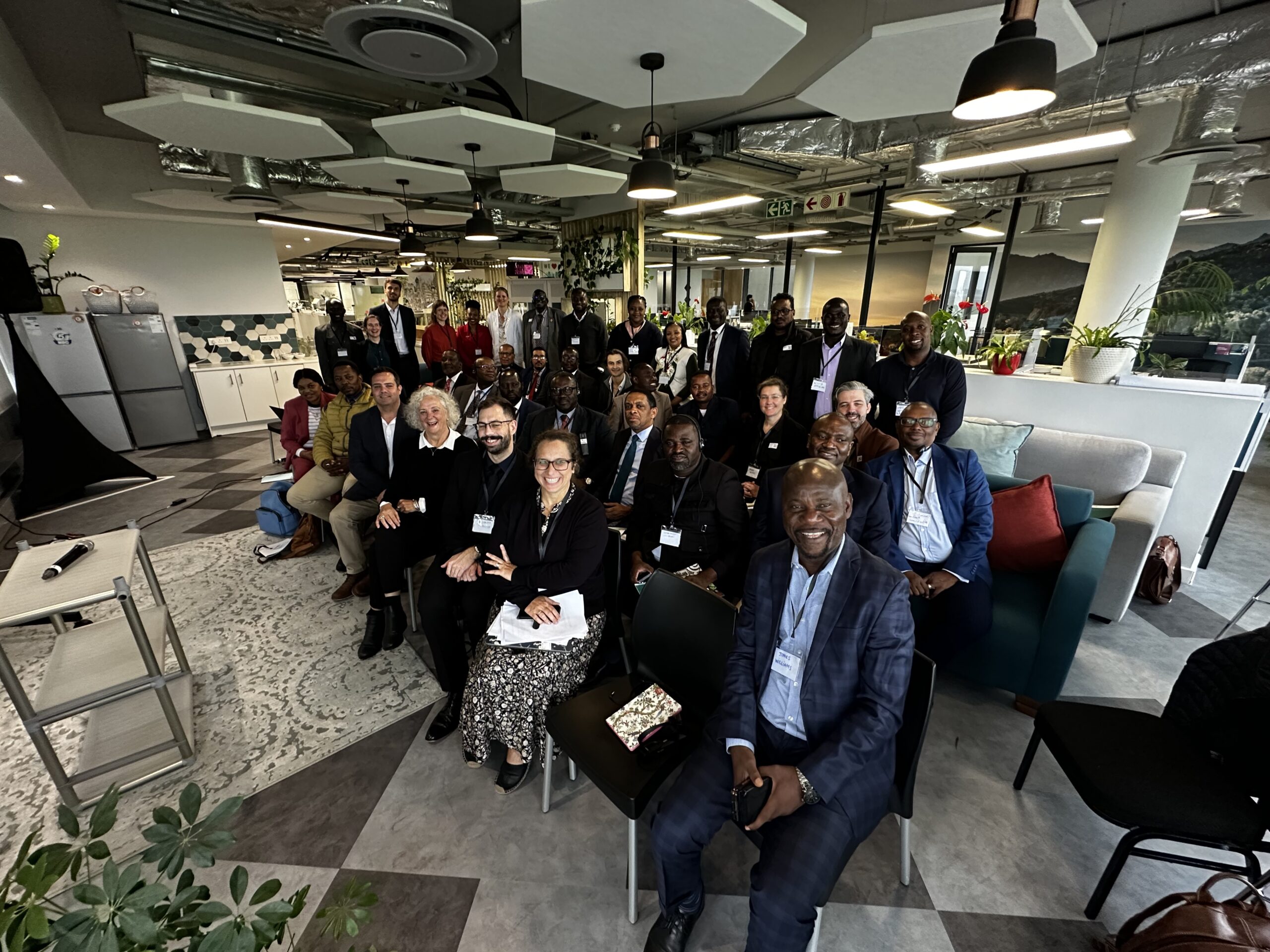

The Continental Policy Dialogue and Vision Leaders’ Engagement on Urban Resilience in Africa brought together governors, mayors, leaders, academia and development partners from across the continent to collectively shape a shared vision and action agenda for urban resilience in Africa.
Hosted by ICLEI Africa, in partnership with the African Union Commission and GIZ’s Resilience Initiative Africa, the three-day convening forms part of the Planning in Action: Strengthening Resilience of African Cities and Urban Centres initiative.
The dialogue seeks to strengthen local government leadership, connect city realities to continental priorities, and co-produce the foundations of an Action Document for Urban Resilience in Africa aligned with the African Union’s Africa Urban Resilience Programme (ARUP).
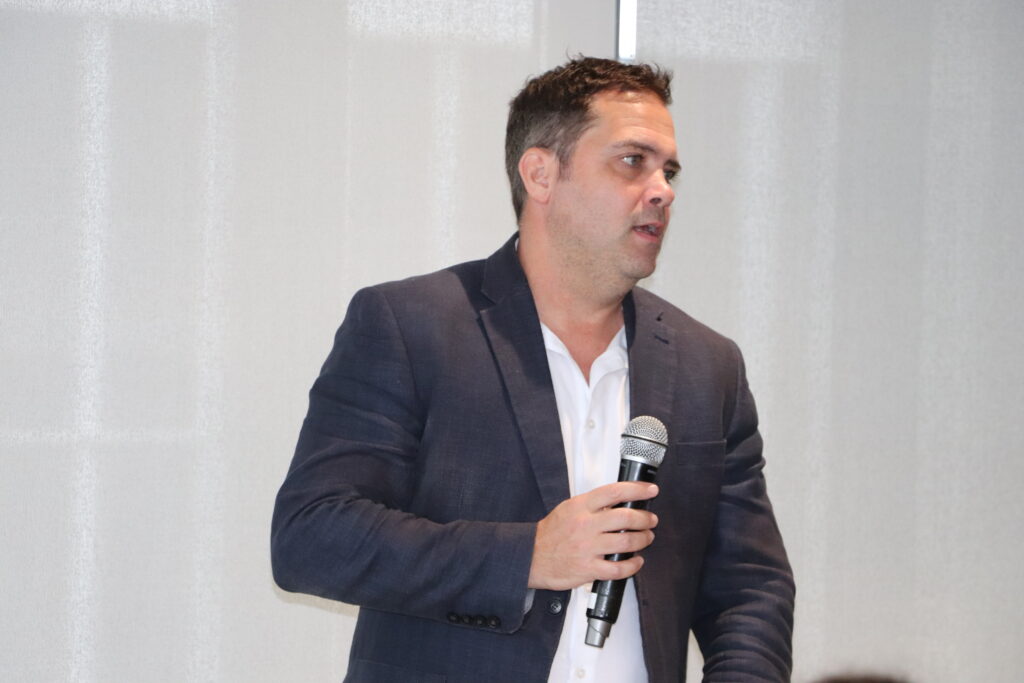
Gareth Morgan, Executive Director of Future Planning and Resilience in the City of Cape Town
Gareth leads a portfolio of functions, including corporate portfolio management, strategic planning, data science, performance management and risk management, that help the organisation plan for the future and to be prepared for shocks and stresses. Prior to his current role he was the Director of Resilience. He led the development of the first Cape Town Resilience Strategy, and held leadership positions in the portfolio responses of the City to both the recent regional drought and the COVID-19 pandemic.
In the early part of his career he was a Member of Parliament in the South African National Assembly (NA) for nine years, serving predominantly on the Portfolio Committee of Environmental Affairs and he served for two years as a whip of the NA.
He is an Aspen Global Leadership Fellow and an Archbishop Tutu Fellow and was a recipient of the Rhodes Scholarship, which took him to Oxford University where he read for a MA in Politics, Philosophy and Economics and a MSc in Environmental Change and Management. He recently published his first book: “Becoming Good at Crises – A Field Guide for Leaders”.
Opening Remarks from Gareth at the Continental Policy Dialogue and Vision Leaders’ Engagement on Urban Resilience in Africa | 27 May 2026
Good morning Governors, Mayors, CEOs, honoured guests, colleagues, partners, and friends from across our African continent.
On behalf of the City of Cape Town, it is my privilege to welcome you to our city and to this important Continental Policy Dialogue and Vision Leaders’ Engagement on Urban Resilience in Africa.
I would like to thank ICLEI Africa for hosting this event, and for the partnership of the African Union, GIZ, and the many cities, institutions, universities, civil society organisations, and development partners represented here today. The fact that leaders from across Africa have gathered here in Cape Town is itself a powerful statement, because resilience is no longer a peripheral conversation. It is central to the future of our cities, our economies, and our societies.
And perhaps there is no better place to host this discussion than an African city that has, in recent years, experienced both profound shocks and extraordinary resilience.
Cape Town has lived through what many believed impossible.
We faced the Day Zero drought in 2017/2018, crisis that brought our city to the brink of running out of water. It tested not only our infrastructure systems, but also our institutions, our economy, our communication systems, and public trust itself.
What that crisis taught us is that urban resilience is not only about engineering solutions or emergency responses. It is about leadership, trust, behavioural change, communication, and collective action. During Day Zero, residents, businesses, civil society, and government all had to work together in ways we had never experienced before. It reminded us that resilience is ultimately social as much as it is technical.
Then came Covid-19, a global pandemic that disrupted lives, livelihoods, governance systems, and supply chains in ways few cities had fully prepared for.
And alongside these acute crises, we continue to experience the slower-moving but equally destabilising pressures of inequality, urbanisation, infrastructure strain, climate volatility, and increasingly complex geopolitical disruptions that ripple into local systems through food prices, fuel costs, migration pressures, supply chain instability, cyber threats, and economic uncertainty.
These experiences have fundamentally changed how we think about governance and the future of cities.
They have taught us that resilience is not simply about responding to disasters.
Resilience is about the ability of a city, its institutions, infrastructure, economy, communities, and leadership, to anticipate, adapt, absorb shocks, recover, and continue to function under pressure.
But more than that, resilience is about creating cities that can thrive despite uncertainty.
That understanding shaped Cape Town’s Resilience Strategy, adopted in 2019, which sought to strengthen the capacity of the City, residents, businesses, and partners to understand, anticipate, prepare for, mitigate, respond to, and recover from a wide range of shocks and stresses.
Importantly, resilience in Cape Town is not treated as a stand-alone programme or a niche policy area.
It is embedded as a foundation of our five-year Integrated Development Plan and deeply connected to our long-term vision for Cape Town in 2050, what we call a “Thriving City of Hope.”
That vision recognises that economic growth, social inclusion, infrastructure investment, and environmental sustainability cannot be separated from resilience. If our systems are fragile, development gains can be lost overnight. But if our systems are resilient, cities are better able to protect livelihoods, sustain investment, and create long-term opportunity.
But let me say clearly: that vision is not guaranteed.
Whether Cape Town, or any African city, becomes more inclusive, more prosperous, safer, and more sustainable depends on how we respond to systemic risks today.
And the reality is that we are no longer planning for a stable future.
We are planning for a future defined by volatility, disruption, uncertainty, and increasingly interconnected crises.
Climate change is no longer a future scenario. It is already reshaping our cities through droughts, flooding, heatwaves, coastal risks, and infrastructure stress.
Urbanisation is accelerating at extraordinary speed. In Cape Town, as in many African cities, a significant share of future urban growth will occur informally.
This reality challenges us to think differently.
Informality is often framed only as vulnerability. But it is also a space of innovation, adaptation, entrepreneurship, housing access, and livelihood creation.
Across African cities, communities are constantly adapting in response to changing realities. Informal economies sustain millions of livelihoods. Informal settlement upgrading is creating new models of partnership. Community networks are often the first responders during crises. These realities should not only inform our resilience thinking, they should shape it.
If we are serious about resilience, we cannot govern from a mindset of control alone.
We must move toward partnership.
Partnership with communities.
Partnership with civil society.
Partnership with academia.
Partnership with the private sector.
Partnership across spheres of government.
Because resilience cannot be delivered by government alone.
This is one of the reasons this gathering matters so much.
Over the next few days, this symposium will explore how we co-produce a continental vision and action framework for urban resilience in Africa. The programme moves intentionally from understanding our current realities, to envisioning the future of resilient African cities, and finally toward translating those ideas into practical action pathways and commitments.
What we often lack are the systems, financing models, institutional arrangements, and partnerships required to scale resilience action at the pace and magnitude demanded by our realities.
The next decade therefore matters profoundly.
The first decade of resilience practice across many cities was about establishing strategies, piloting approaches, building awareness, and learning through crises.
The next decade must be about scaling implementation and driving measurable impact.
We must move:
- from plans to implementation;
- from isolated projects to systemic change;
- from reactive governance to anticipatory governance;
- and from government action alone to collective action.
In Cape Town, we are increasingly focused on what this transition requires.
It requires data-driven and anticipatory governance.
Cities must become more capable of understanding risk in real time, through climate modelling, hazard mapping, integrated data systems, and multi-hazard early warning systems.
We must prioritise those most at risk and invest proactively rather than reactively.
We must also become better at planning for compound and cascading crises, where one disruption quickly triggers another. A flood can become a transport crisis. An energy disruption can become a public safety issue. A geopolitical conflict thousands of kilometres away can suddenly affect food security and affordability in our cities. This interconnectedness means resilience planning can no longer happen in silos.
It requires crisis-capable leadership.
The future will not be defined by occasional disruption. It will increasingly be characterised by continuous disruption.
That means institutions must learn to operate under uncertainty.
Leadership must become adaptive, collaborative, and capable of making decisions under pressure while maintaining public trust and social cohesion.
And critically, it requires a different conversation about finance.
Cities cannot build resilience if they are trapped in cycles of disaster response funding after crises occur.
We must shift from paying for disasters to investing in risk reduction upfront.
That means resilience-building infrastructure, nature-based solutions, insurance and risk transfer mechanisms, blended finance, stronger local government financing systems, and global financing mechanisms that genuinely reflect the realities of African cities.
For many African cities, the challenge is not only access to finance, but access to finance that aligns with local realities, local capacities, and long-term resilience priorities. We need financing systems that support implementation at city scale, that recognise prevention as a better investment than response, and that empower local governments as critical actors in resilience delivery.
Because resilience is not a cost.
Resilience is an investment in economic stability, service continuity, investor confidence, and social protection.
Colleagues, African cities stand at a defining moment.
The decisions we make now, about infrastructure, governance, inclusion, climate adaptation, technology, financing, and partnerships, will shape the trajectory of urban life on this continent for generations.
And while the risks we face are serious, I remain optimistic.
Because across this continent we continue to see innovation, adaptability, entrepreneurship, and leadership emerge even under difficult conditions. African cities are not simply sites of vulnerability. They are also sites of creativity, resilience, and possibility.
The opportunity before us is not simply to protect our cities from risk.
It is to shape a distinctly African model of urban resilience, one grounded in our realities, our strengths, our communities, and our aspirations.
A model that recognises resilience not only as disaster management, but as inclusive development and economic transformation.
So as we begin this dialogue together, I encourage all of us to approach these conversations with urgency, honesty, openness, and ambition.
Let us learn from one another.
Let us challenge one another.
Let us build partnerships that endure beyond this symposium.
And let us ensure that the outcomes of these discussions translate into real action for the people who live in our cities every day.
Cape Town is honoured to host you.
We are honoured to learn alongside you.
And we are committed to working with cities across Africa to help build a more resilient, inclusive, and hopeful urban future for our continent.
I wish you productive engagements over the coming days, meaningful conversations, and a memorable stay in Cape Town.
Thank you, and welcome.