 Follow a
  See our
  View our
 Download the

IMPACT AREA 5
Justice, inclusion and rights-based approaches
Urban environments reflect and often reinforce social inequalities. Poorer communities are more likely to reside in areas prone to risk, with limited access to natural spaces and decision-making opportunities. This compounds the vulnerabilities experienced by women, youth, people living with disabilities, the elderly and residents of informal settlements.
The UNA project demonstrated that urban resilience is impossible without justice. By adopting an HRBA, the project helped cities reframe nature as a foundation for wellbeing, linking ecosystems to health, safety, dignity and opportunity. Anchoring the project approach, an HRBA is based on international human rights standards and addresses the inequalities at the core of development challenges. Through the UNA Resilience project, this approach integrated human rights into every aspect of project development. It ensured that all processes, policies and decisions protect and promote the rights of all people, especially marginalised and vulnerable groups. By embedding HRBA principles, the UNA project shifted who is included in urban sustainability conversations, whose needs are prioritised and documented and how decisions are made. These shifts highlight the critical role of equity and justice in how we think, plan and make decisions about our cities.
5a
Equity, inclusion and gender mainstreaming
The UNA project embedded inclusion at every level, from planning to implementation. It helped cities apply gender-sensitive approaches, consider who benefits from nature-based interventions and prioritise fairness in how resources and risks are distributed.
Case studies
Addis Ababa: Designing inclusive public space through Minecraft
In Addis Ababa, the UNA project used the Minecraft computer game as a creative tool for participatory planning, bringing together community members – nearly half of them women – to redesign a neglected riverside area. Even though many participants had never used a computer before, women led the design process and contributed practical and inclusive ideas that reflected lived experience. Several of their proposals were integrated into the final plans, resulting in a safe and welcoming public park that meets the needs of women and families. The project demonstrated how digital tools can level the playing field and amplify diverse voices in urban design. Today, Ras Mekonnen Urban Park is an inclusive space that offers a varied nature experience to the citizens of Addis Ababa.
Read more about the Ras Mekonnen Urban Park redesign:
Entebbe: Nurturing women’s skills for nature-based livelihoods
In Entebbe, the UNA project supported the empowerment of women working in subsistence agriculture around the Namiiro wetland. Through hands-on skills training in permaculture, composting, water harvesting and sustainable farming, women gained the skills to build resilience in the face of environmental and economic challenges. These efforts strengthened local food security and helped women gain visibility and recognition in community-level planning and supported access to decent livelihoods. By investing in women’s agency and knowledge, the UNA project ensured that NbS also support inclusive and sustainable livelihoods.
Read more about gender and inclusion in UNA cities:
More info
Click here to watch a video about crafting better cities with nature in Addis Ababa, Ethiopia

The community needs to be included at all levels. Each has their own opinion, knowledge and ideas and by including them it contributes to the project’s success and sustainability.
–
Eshetu Mulu Melaku, Director: Green Development, Urban Beautification Bureau, Addis Ababa
5b
Recognising and engaging informality
Instead of treating informality as a problem to be fixed, the UNA project recognised it as an existing reality to be engaged with. The project facilitated collaboration between cities and informal actors, particularly in areas such as waste management and land use, to develop solutions rooted in everyday lived experiences.
Case study
Lilongwe: Working with informality to restore nature and inclusion
In Lilongwe, the UNA project challenged the perception of informal areas as illegitimate and undesirable by reframing them as underserved but essential parts of the city. Through extensive trust-building with city officials and informal traders at the Tsoka and Lizulu markets, the UNA project created space for dialogue, shared understanding and joint problem-solving. Together, officials and market leaders co-produced a master plan to restore the adjacent river system and improve waste management. The plan culminated in a composting initiative that reached thousands of residents. The experience revealed strong internal leadership structures in informal areas and showed officials first-hand that inclusive, co-designed solutions are not only possible, but transformative and long-lasting. City officials reported that the initiative has become a permanent feature of the market’s waste management landscape.
Learn more about how the UNA project worked with informality:
More info
Click here to watch a video about turning waste into wealth: Composting at the Lilongwe River
I have liked the inclusive approach of UNA in designing the project and implementing the project…. Under the UNA project, we have learned that everyone matters, whether it’s a vendor, whether it is a farmer. But if we want to improve the locality of a city, then everybody must take part.
So that inclusivity, it is the one that brings a change to an area because there is ownership… Everybody would like to say, ‘this is part of me. I’ll take care of this particular development because I was involved.’ So I’ve liked that approach, and I think it can be beneficial to many cities in Africa.
–
Gift Kasamira, Deputy Director: Planning and Development, Lilongwe
5c
Using a human rights-based approach
The HRBA lens introduced by UNA Resilience made it clear that nature and human wellbeing are interdependent. By grounding NbS in rights, cities were able to reframe resilience as a justice issue. It also helped them conceptualise how current and future NbS interventions could be environmentally sound and socially fair and equitable.
Case study
Bo City: Making human rights real through learning and localisation
In Bo City, the UNA project supported the realisation of human rights by grounding complex ideas in local knowledge, languages, folklore and priorities. Using accessible resources like illustrated maps, posters, infographics and participatory learning labs, stakeholders were invited to explore the links between urban nature, community wellbeing and rights. These sessions sparked inclusive dialogue among government, traditional leaders, civil society and informal actors, which built shared understanding and trust.
Language is one of our most powerful communication tools, shaping how we connect, express ideas and make sense of the world around us. Through the use of vernacularisation as an entry point, concepts as complex as human rights were unpacked and explored in local languages. They were traced back to African history, values and ways of living. African folklore, storytelling and proverbs were used to break down concepts often deemed foreign into locally relatable language that resonates with the people. These stories, shared over generations, were recognised not just as entertainment but also as moral instruction, rooted in principles of human rights.
Through this innovative entry point to human rights, the UNA project empowered local communities, academics, practitioners and other stakeholders to better understand human rights. This included understanding the intricate relationship between rights holders and rights bearers in driving sustainable urban transitions. As a result, this enabled cities like Bo City to build toward a more informed, rights-based approach in decision-making that centres people and the environment.
More info
Click here to watch a video on how to introduce and mainstream rights-based approaches in African cities
The human rights-based approach brings everybody on board, and we all think together to solve the problem, so everybody knows what to do and how to do it.
–
Ken Ketor, Planning Officer, Cape Coast Metropolitan Assembly
Pathway resources
Mainstreaming nature in decision-making and planning
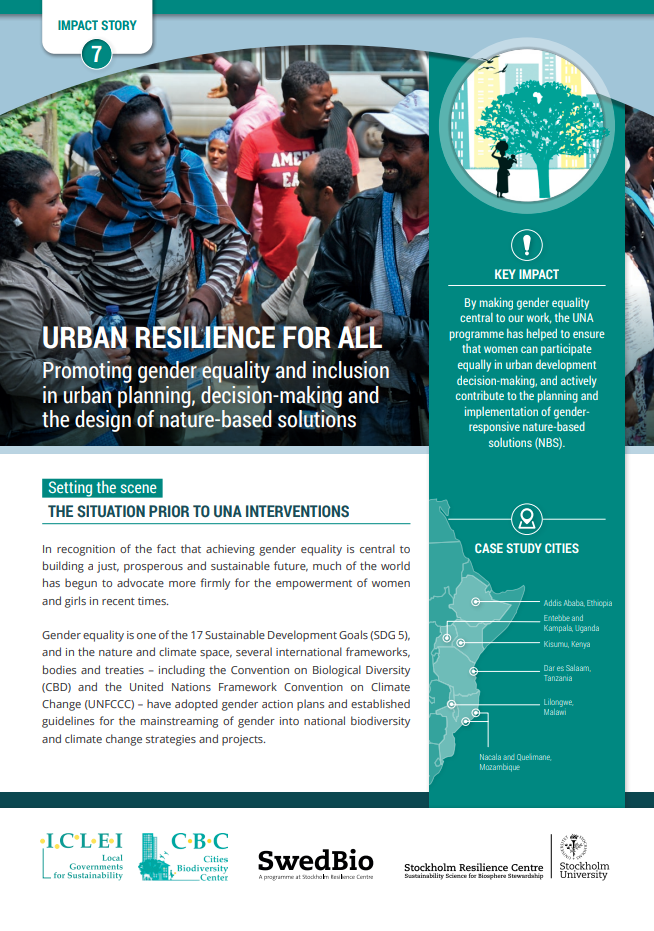
Impact story 7: Urban resilience for all
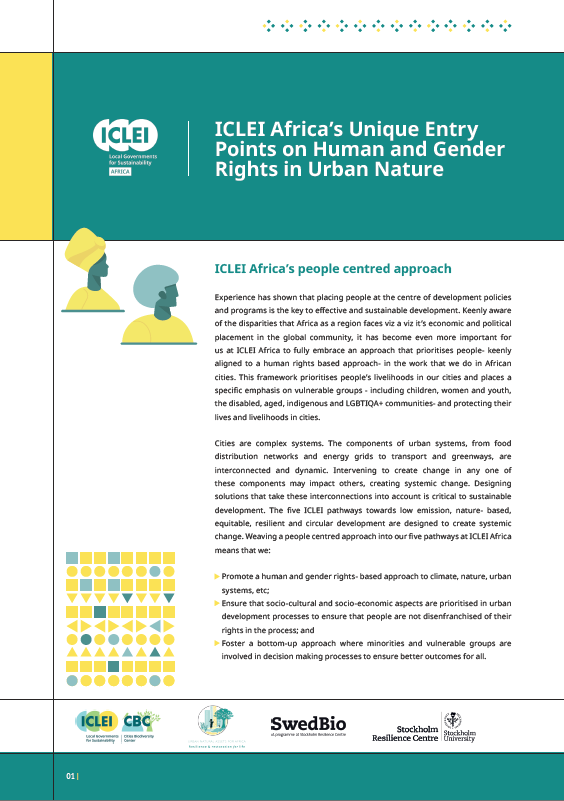

Impact story 8: Working with informality
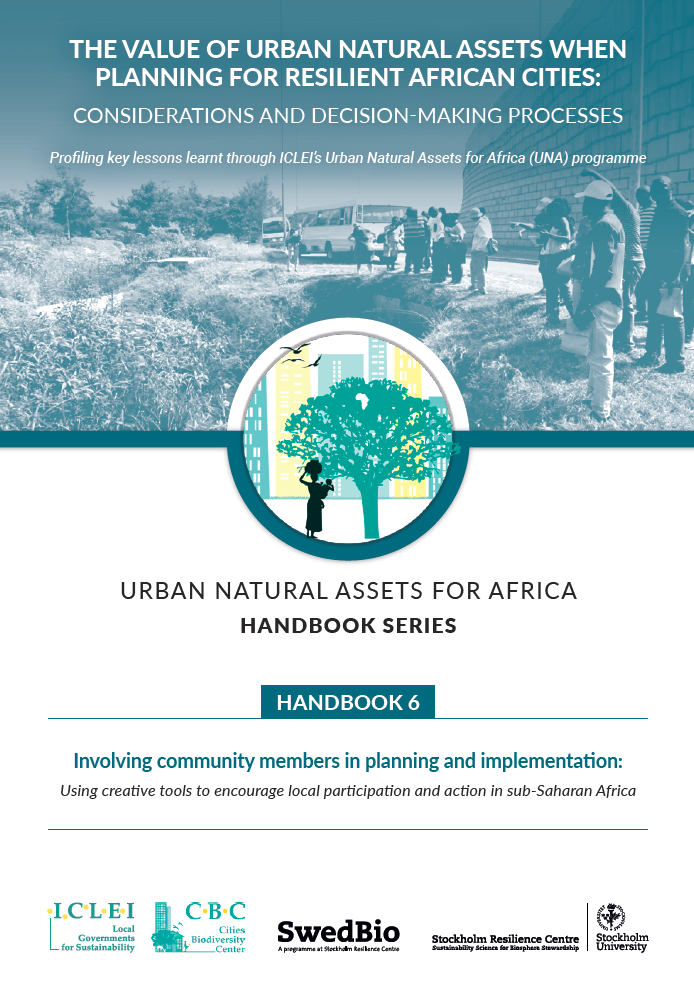
Handbook 6: Involving community members in planning and implementation
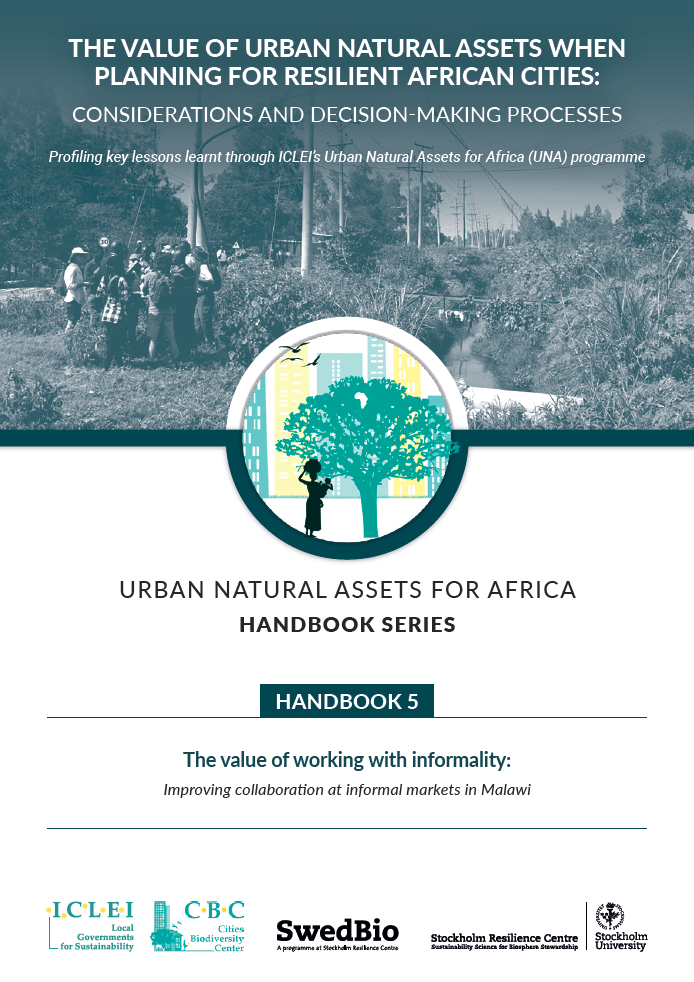
Handbook 5: The value of working with informality
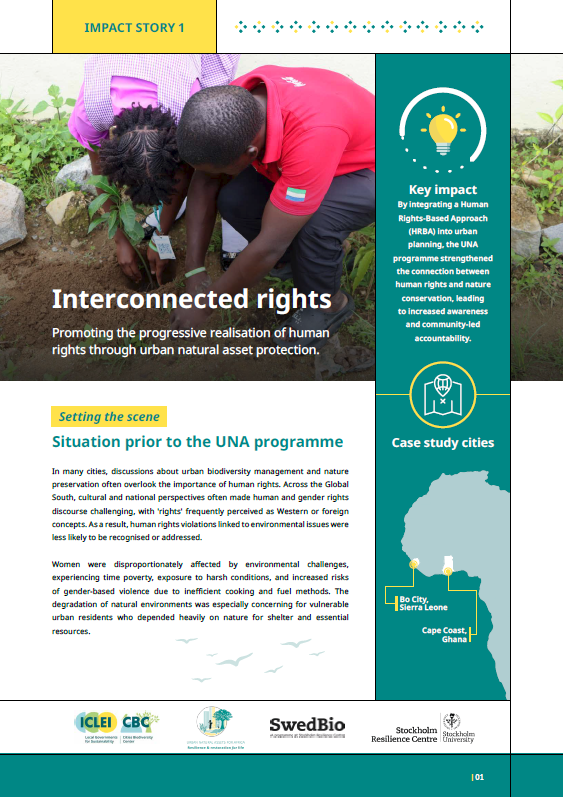
Impact story: Promoting the progressive realisation of human rights through urban natural asset protection

Poster: The value of human rights in cities