In the face of complex urban challenges, rigid planning frameworks often fall short. Cities need flexible, iterative approaches that embrace learning and adjust over time.
The UNA project created space for experimentation, from walking workshops and urban tinkering to storytelling and photovoice. These participatory, low-risk yet innovative methods helped cities test ideas, learn from failure and co-create solutions with diverse actors. Through this process-driven approach, cities built cultures of collaboration, reflection and innovation that extend far beyond the project itself.
6a
Testing new ways and experimentation
The UNA project created space for cities to try new ideas, reflect on what worked and adapt. This built a culture of experimentation and learning, helping cities become more agile in their approach to complex problems.
Case studies
Kisumu: Experimenting with small tweaks for big impact
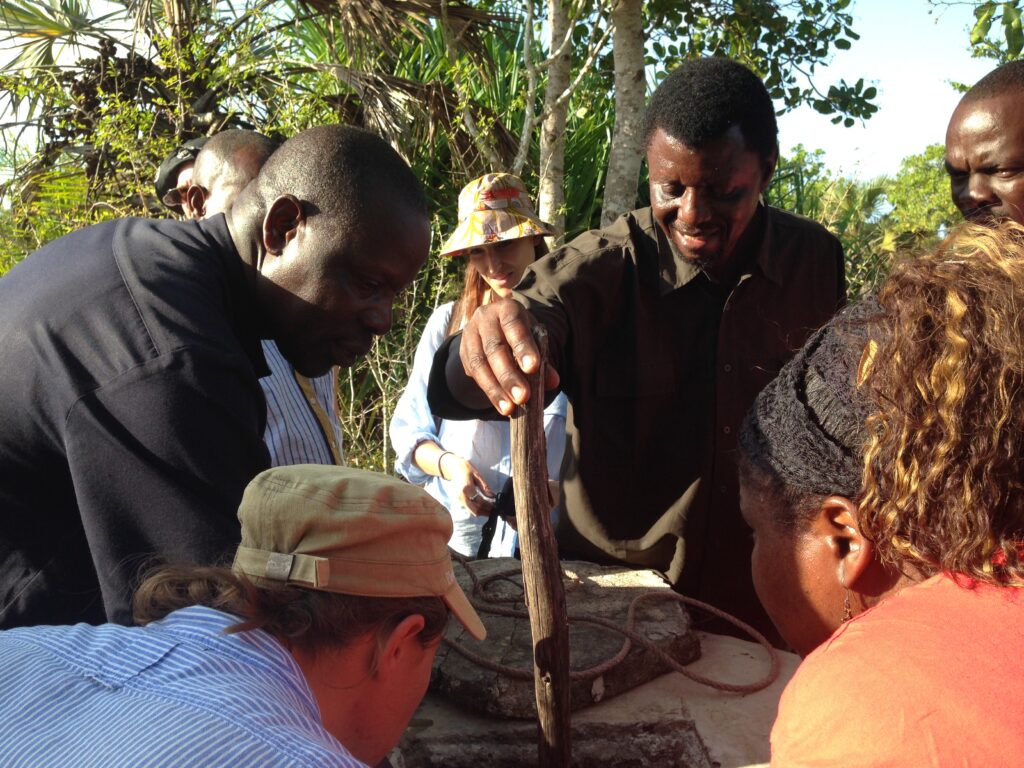
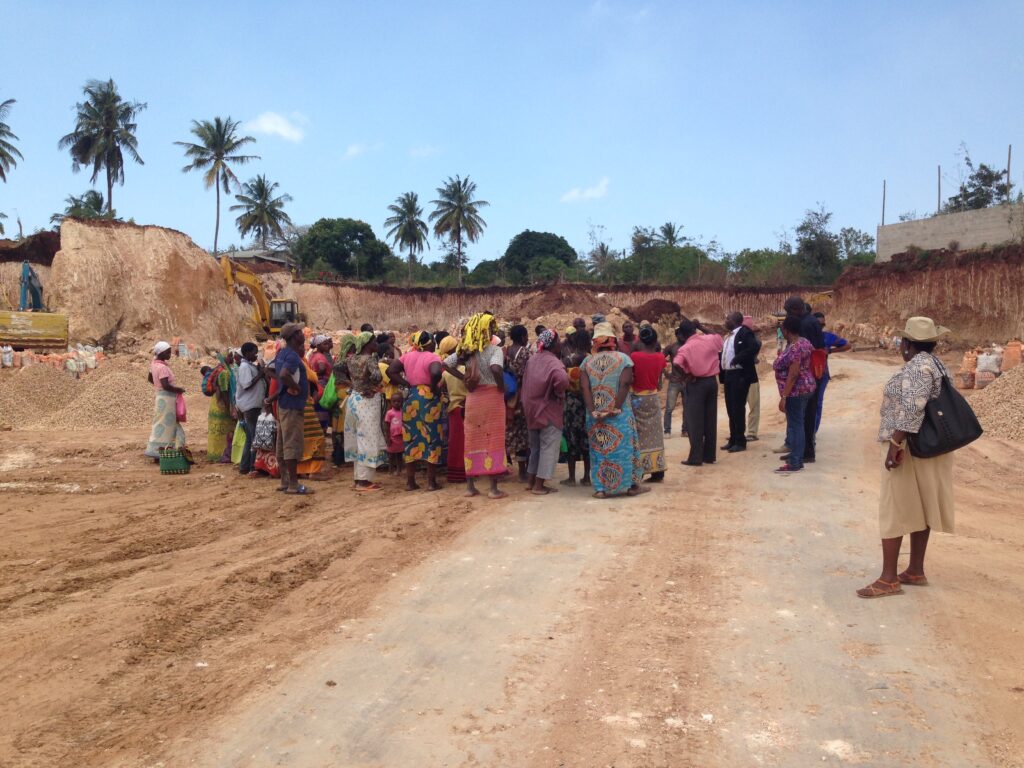
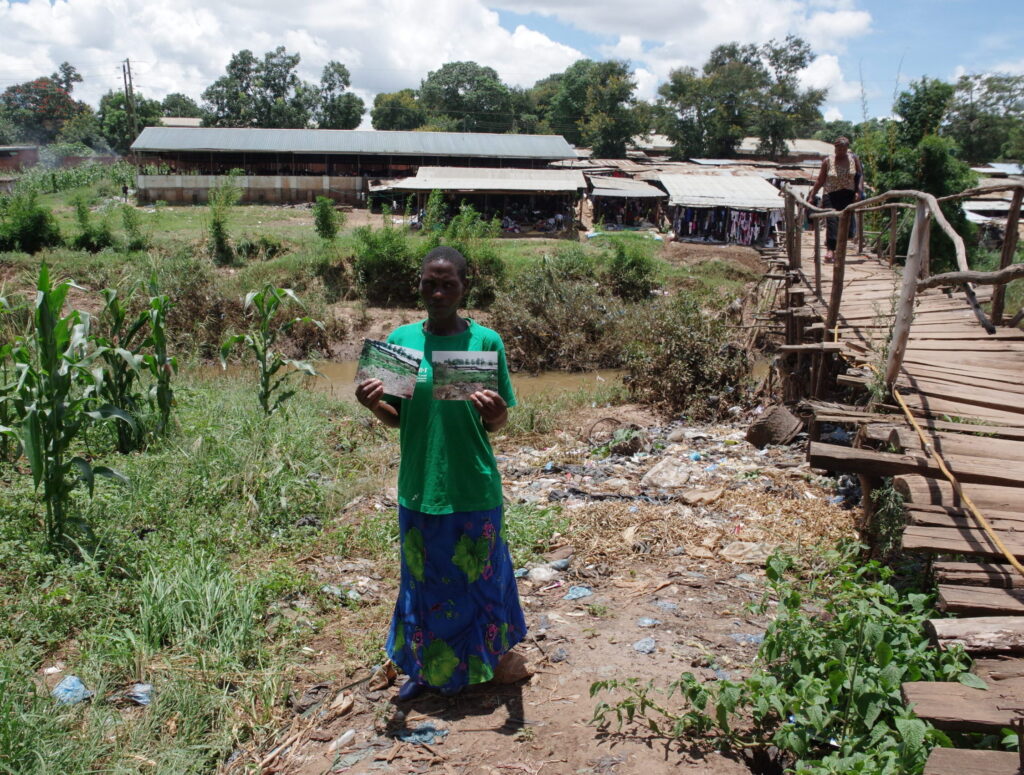
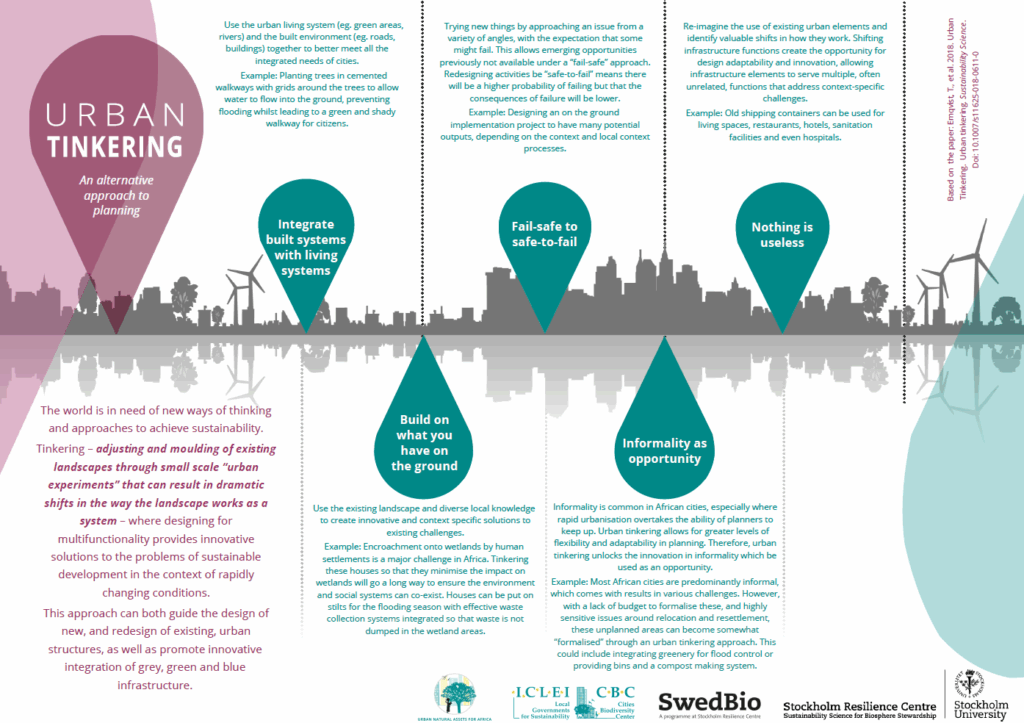
In Kisumu, the UNA project embraced innovation through an approach called urban tinkering, which involves working with what already exists and adjusting small elements to improve resilience. City officials and community members participated in walking workshops through informal areas to identify practical ways to enhance local infrastructure using NbS. From tree planting for flood control to small-scale food gardens, these site-based sessions allowed for real-time experimentation and learning. The process showed how co-designed, low-cost interventions can address complex challenges while building agility, collaboration and shared ownership in city planning. Through the groundwork laid under the UNA project, Kisumu City has since scaled the approach to the County level, where they were awarded catalytic funding through the UN Decade of Restoration Generation Restoration Project. Their investment in restoring the Auji River aims to improve livelihoods, prevent ecosystem degradation and promote sustainable farming practices by restoring biodiversity hotspots and collaborating with local communities.
Learn more about the UNA project’s alternative approaches to planning:
The UNA project leveraged arts, photography and storytelling as powerful ways to connect with the world around us. Through creative tools like photovoice, participatory exhibitions, poetry, song and visual storytelling, the project helped surface lived experiences and ground data in human narratives. This approach built understanding and empathy, especially around the value of nature in urban life.
Case study
Cape Coast: Storytelling as a tool for systems change
In Cape Coast, the UNA project demonstrated how storytelling can shift perceptions about nature and its contributions to people, thereby sparking behavioural changes. Through the Preserve, Conserve and Tinker exhibition featuring youth-led photography, research insights and community voices, residents and decision-makers were invited to reflect on how nature and rights intersect in the city. The exhibition was part of a broader learning journey that used HRBA to unpack exclusionary norms through participatory exercises, local folklore and accessible resources. These creative, inclusive methods helped build awareness, agency and community-led accountability around nature and urban development. Through its catalytic impact, the Preserve, Conserve and Tinker exhibition has since formed a key feature in the Cape Coast Biodiversity Centre. This has reignited the centre as a place for learning and schools and organisations now take children to learn more about nature and how to safeguard the environment.
Click here to watch the official music video: Lulu - Mpumulo (Rivers for Life)
Through the UNA Rivers for Life project, ICLEI Africa partnered with renowned local artist, Lulu, to raise awareness about the importance of rivers in cities. He has become an ambassador for the project and officially launched a song on the 12th of June 2018.
6c
Research and knowledge generation
To mainstream NbS, communication must be tailored to local contexts. The UNA project invested heavily in co-creating tools and knowledge products that aren’t just fit for purpose but consider the city context. This included investing in research and research outputs to ensure the project contributed to knowledge generation; developing interactive posters and infographics to help community members understand what is happening in their cities; and creating interactive videos and stories that enabled cities and stakeholders to share their knowledge and experience on NbS. Over the years, the UNA project collaborated with researchers and universities in Africa and beyond to build on the current evidence base on NbS and urban development in African cities. These efforts made knowledge accessible to inform policy and planning at multiple levels.
Case study
UNA: Research and publications
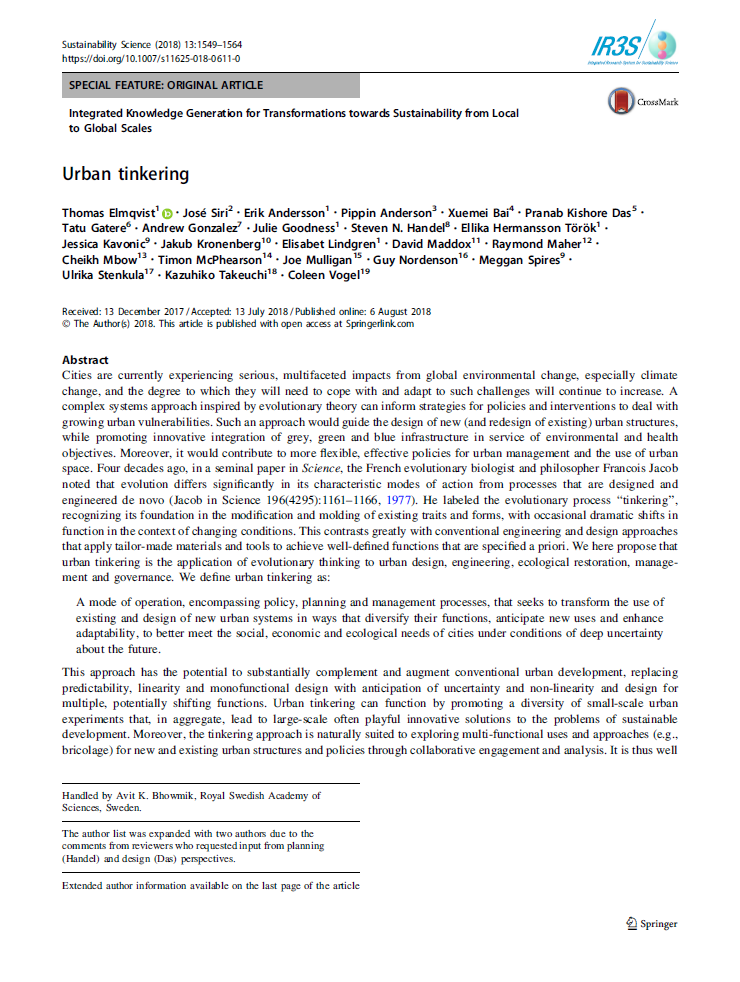
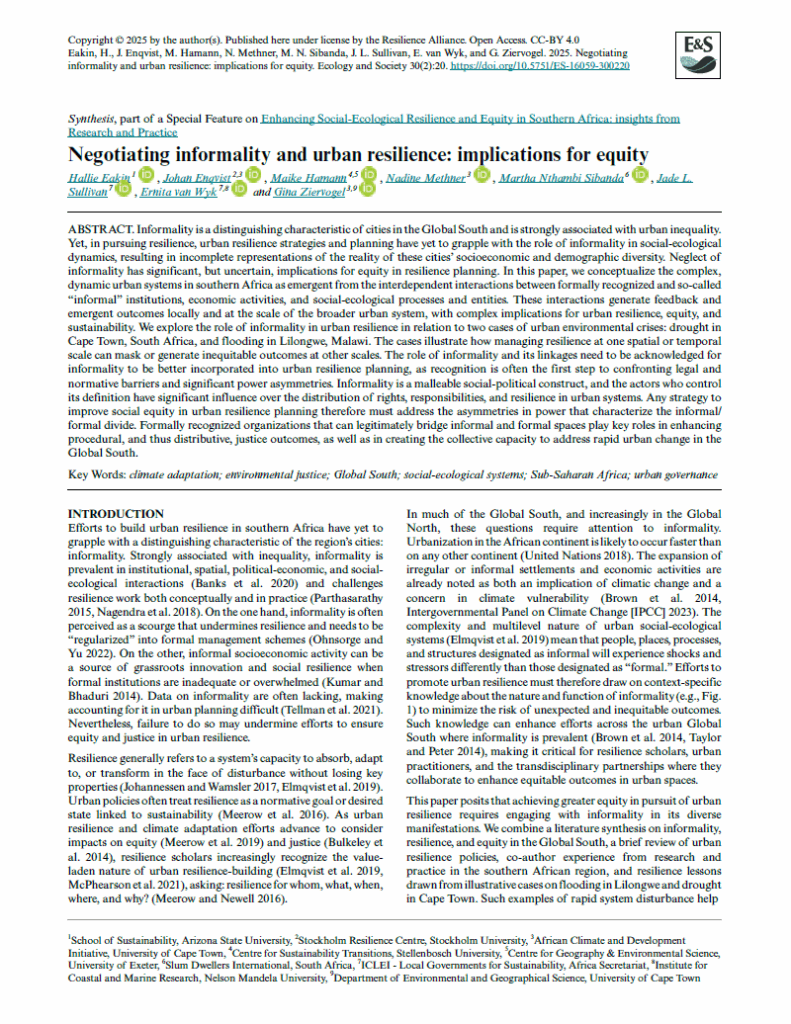
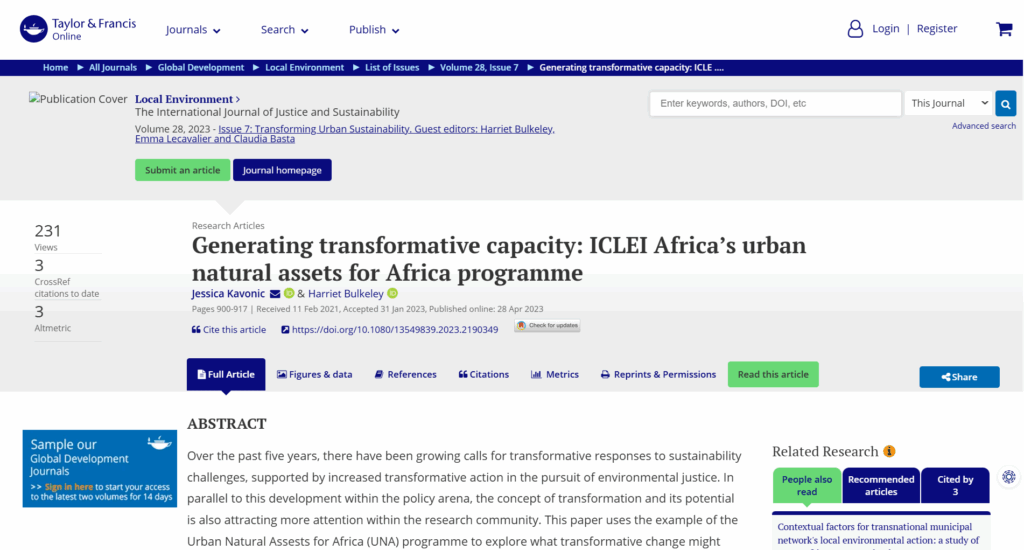
The UNA project produced several peer-reviewed research articles. These articles contributed to practical change in cities and the broader evidence base that informs urban development and NbS, both in Africa and globally. This was done through partnerships with academic institutions and other development organisations, better connecting research and practice. The papers explored critical links between nature, people and development. They addressed diverse themes including (i) scaling NbS in African contexts, (ii) building transformative capacities in NbS development projects, and (iii) recognising informality as a key factor in urban resilience. Although scientific research products were not a requirement in the UNA project, they provided important insights from the project that were scaled through publication and shared in academic circles. Research articles are also important because they tend to be readily taken up by policy-level decision-makers.
Pathway resources
Mainstreaming nature in decision-making and planning
 Download the
 Follow a
  See our
  View our