Living with water: Stories of resilience from Beira’s informal settlements
The city of Beira in Mozambique has endured extreme flooding events in recent years, most notably during Cyclone Idai in 2019, which resulted in extensive urban and environmental destruction, widespread displacement of residents, and loss of human life. Informal settlements, home to 70% of Beira’s population, face heightened vulnerability. In neighbourhoods such as Mungassa, Ndunda, and Alto da Manga, homes are situated in low-lying, poorly drained areas that remain waterlogged long after heavy rains have subsided. When Cyclone Idai struck, it destroyed or severely damaged 90% of the city, and the fragile structures of informal settlements offered little protection against flooding and fierce winds.
This photo story communicates the voices and perspectives of community members from these three neighbourhoods, collected through photovoice methodology as part of the Designing Inclusive African Coastal City Resilience Project (INACCT Resilience). In their own images and words, participants reflected on three guiding questions linked to flooding and resilience building:
How do rains and floods affect you?
What have you and your community done to reduce the impact of the rain and floods?
How and where has someone helped you deal with the floods?
These narratives document not only the physical damage to homes but also the enduring dangers of navigating flooded spaces, the emotional toll of displacement, and the ongoing challenge of increasing resilience to future disasters. Through photovoice methodology, informal settlement residents are not only documenting their experiences but also creating a platform to influence municipal and national planning. Despite significant challenges, their contributions convey a powerful narrative of proactive community-driven efforts to build back better. This photo story explores these lived experiences – of innovation, determination, agency, and resilience in the face of flooding, cyclones, and their lasting impacts.
Damage and daily hardship: The impact of flooding
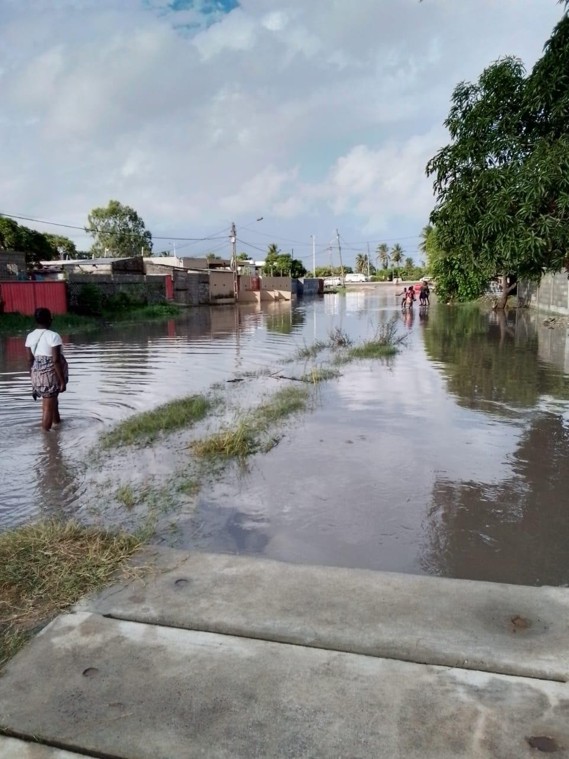
Flooding is a recurring reality in Mungassa, Ndunda, and Alto da Manga, whether triggered by cyclones like Idai or by intense seasonal rains. When Cyclone Idai struck in 2019, it left a trail of devastation—damaging around 90% of Beira’s infrastructure and leaving the city almost entirely submerged.
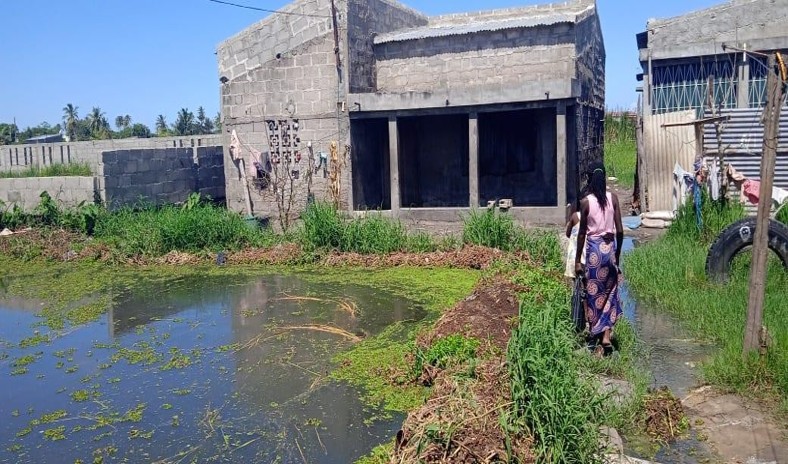
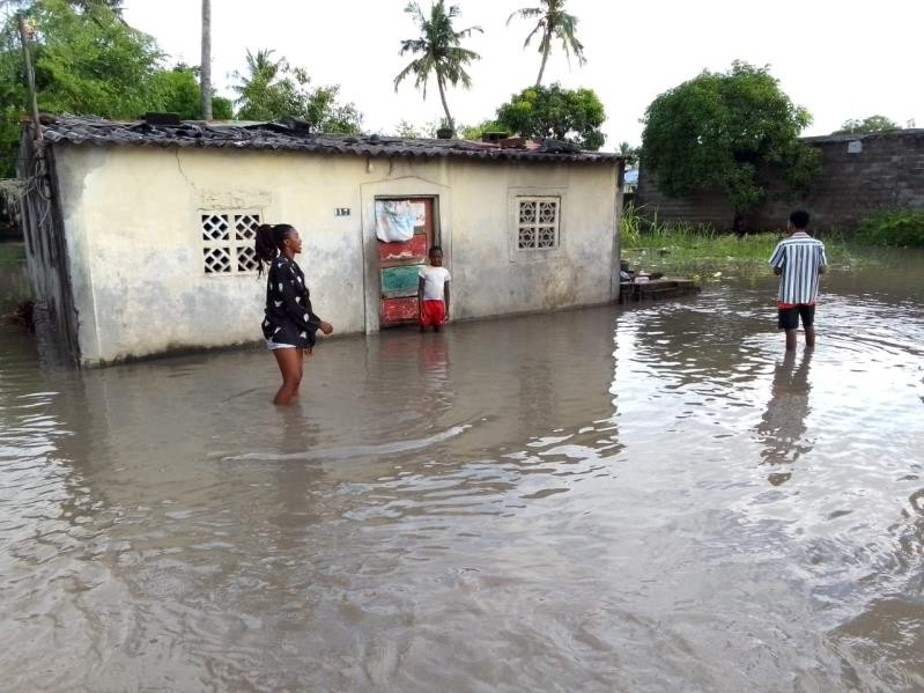
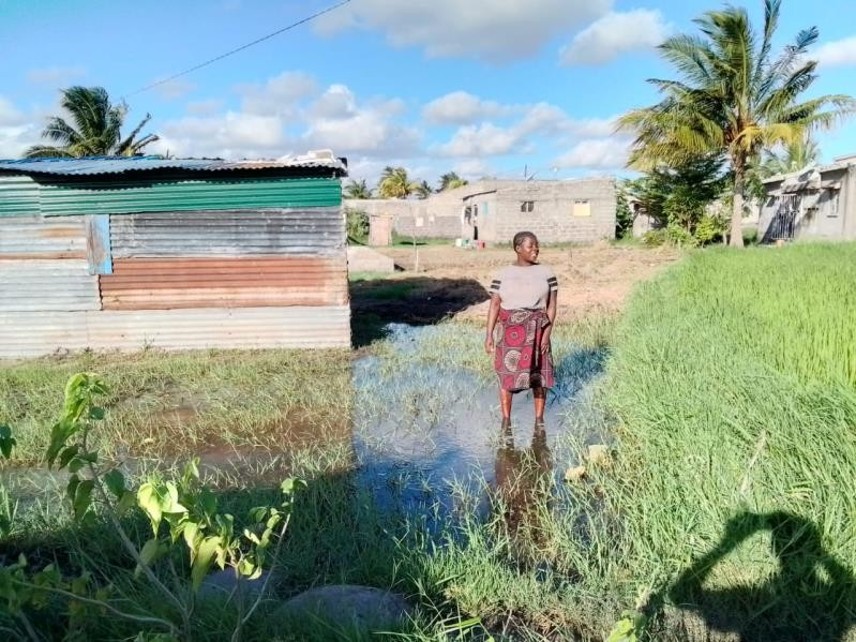
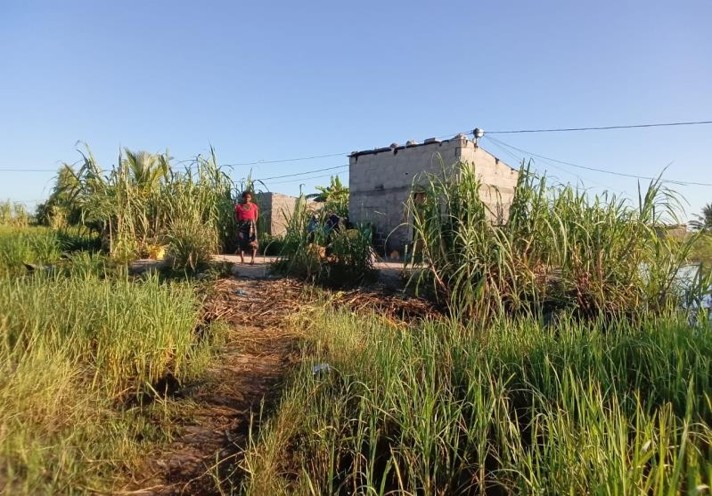
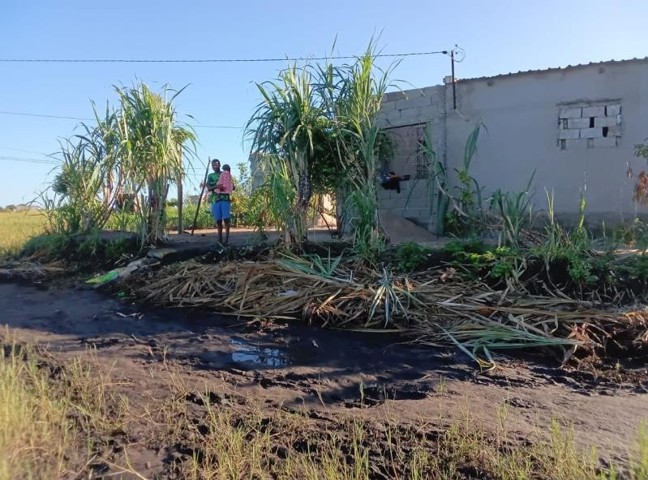
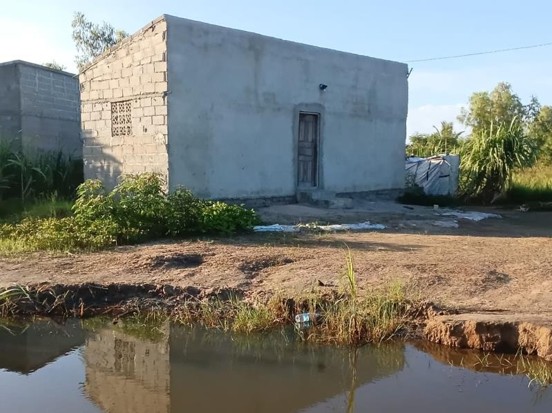
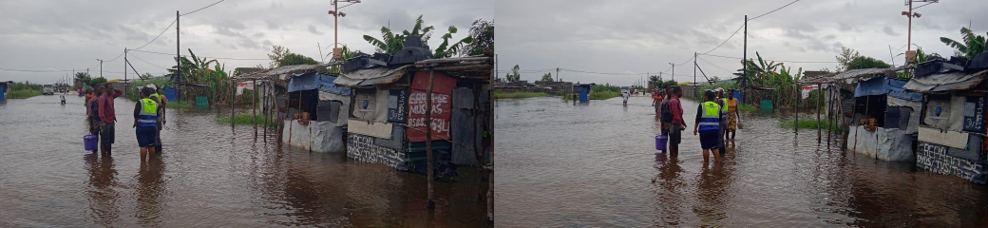
In these rapidly expanding, low-lying areas, cement block houses often stand marooned in muddy, flooded yards. Homes and yards are regularly inundated, creating stagnant pools that serve as breeding grounds for mosquitoes and waterborne diseases. For some families, the water recedes within a week; for others, it stagnates for months. This prolonged flooding compounds daily hardships, posing serious health and safety risks while limiting access to education and income-generating activities.
“This community has a mosquito problem due to the presence of tall grass and stagnant water around their homes.”
– Community member
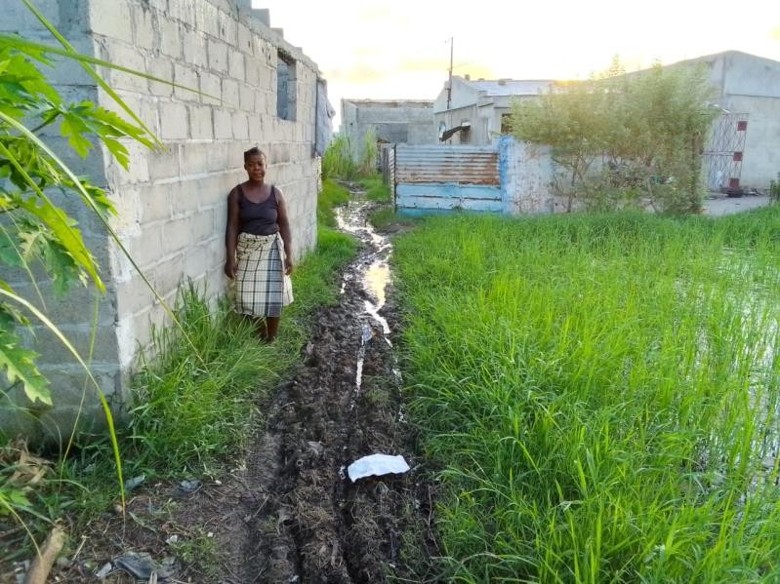
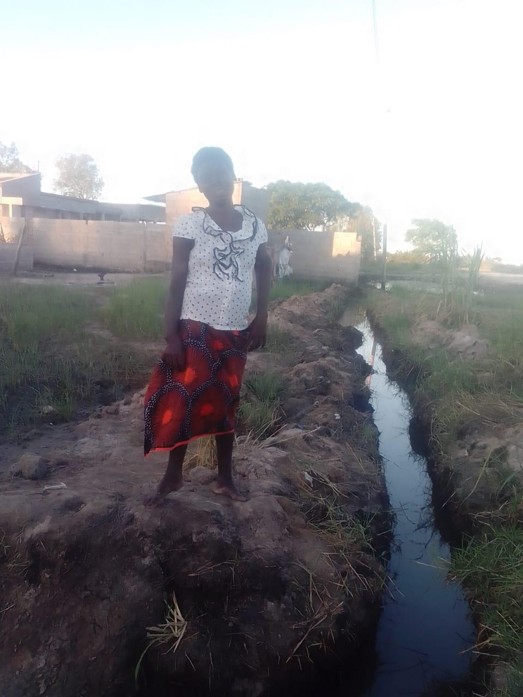
Daily movement within and between neighbourhoods is severely impacted, with safe access to homes being cut off entirely in some cases. Narrow, unplanned paths and open drainage ditches make mobility difficult and dangerous, especially for children, the elderly, and people with disabilities:
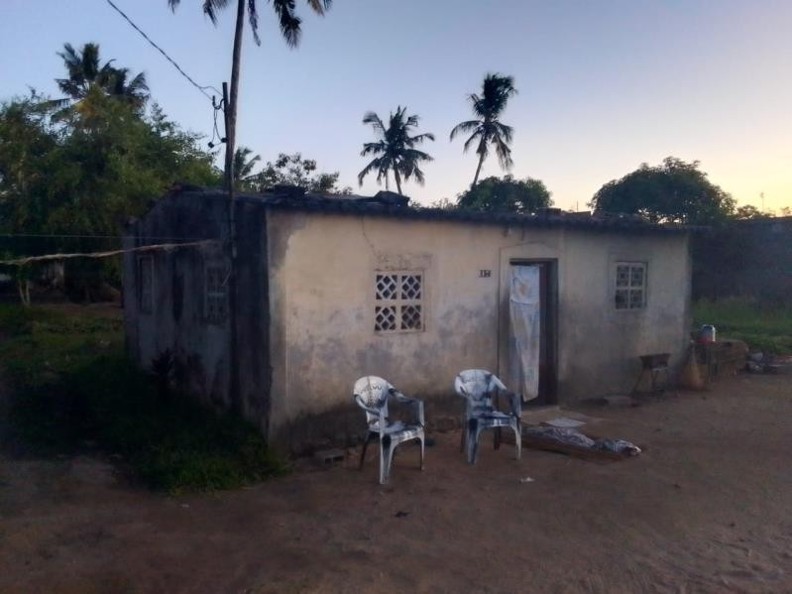
“The house is built with cement blocks and has a sheet metal roof. It is difficult to access, as it sits in a low-lying area with narrow paths and open drainage ditches. After it rains, water often remains stagnant around the house for up to a week.”
– Community member from Alto da Manga
“Her house is precariously built with zinc sheets. It is located in a low-lying, poorly planned area where water remains stagnant in the yard for up to two months. Access paths are narrow and difficult to use.”
– Community member from Alto da Manga
“Block house with damaged roof. Water in the yard lasts for a week. Poorly divided expansion area, with muddy entrances that are difficult to access.”
– Community member from Alto da Manga
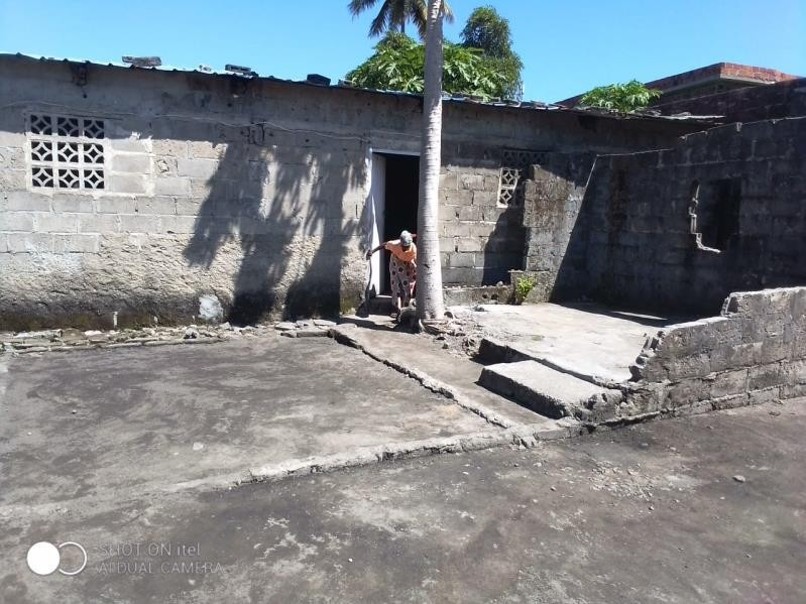
Cyclone Idai’s strong winds and heavy rains broke through zinc roofing, toppled trees onto homes, and left entire streets impassable. In the most exposed areas, many houses were completely destroyed, forcing families into tents provided by the National Institute for Disaster Management (INGD), where some remained for months or even years while seeking a more permanent home.
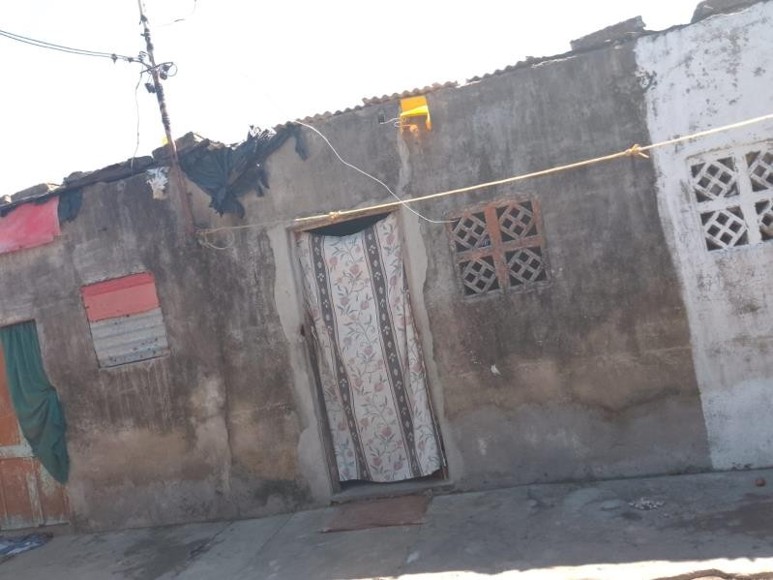
“Block house with damaged sheets caused by fallen trees during Cyclone Idai. The waters last for 2 days in her backyard. Areas are subdivided into plots, but at risk due to flooding. However, her land is below the level of the ditches. With an open street and damaged with large holes that do not allow cars and people to pass when it rains.”
– Community member from Alto da Manga
“This tent was offered by INGD because her house was destroyed by Cyclone Idai and until then she had not been able to establish herself in Ndunda neighbourhood.”
– Community member from Ndunda
Community responses: Adapting to a landscape of water
In the years since Cyclone Idai, and in response to seasonal flooding, residents of Beira’s informal settlements have demonstrated significant resourcefulness and resilience, implementing innovative measures to stabilise their environment, protect homes, and enable mobility through waterlogged landscapes. The INACCT Resilience project works with residents to capture these innovative solutions and identify critical disaster preparedness and response gaps. Its aim is to enhance and scale inclusive flood resilience actions across informal settlements, while also advocating for the integration of these insights into larger resilience frameworks such as Beira’s Masterplan and Municipal Recovery and Resilience Plan.
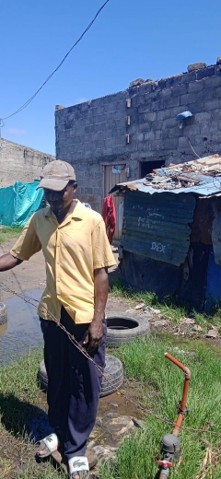
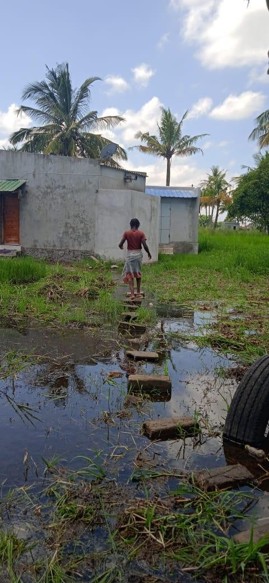
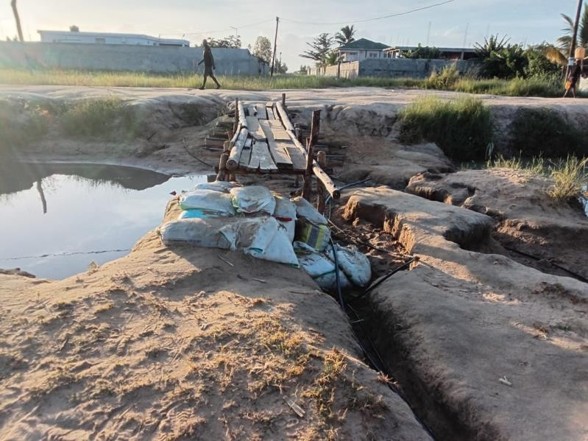
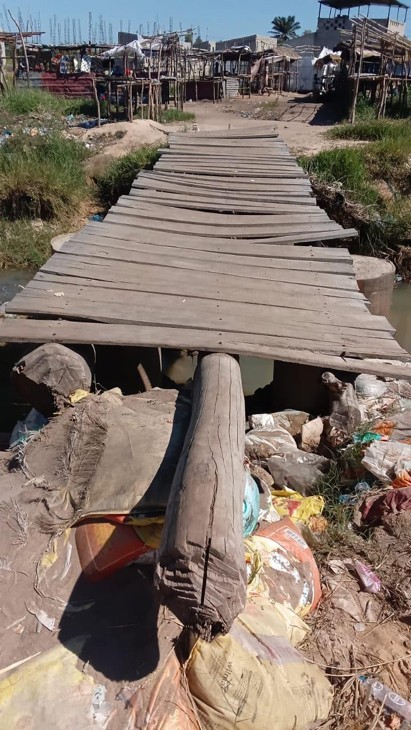
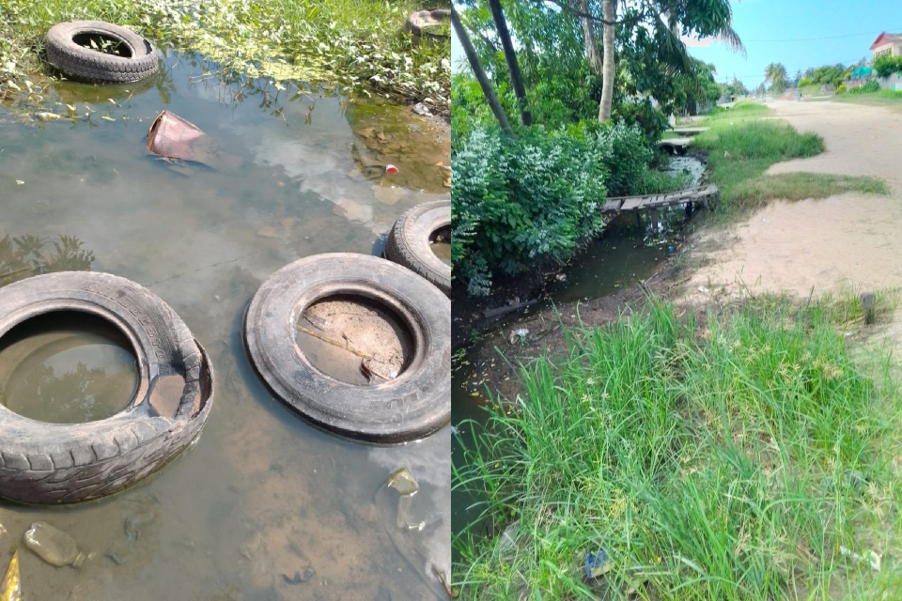
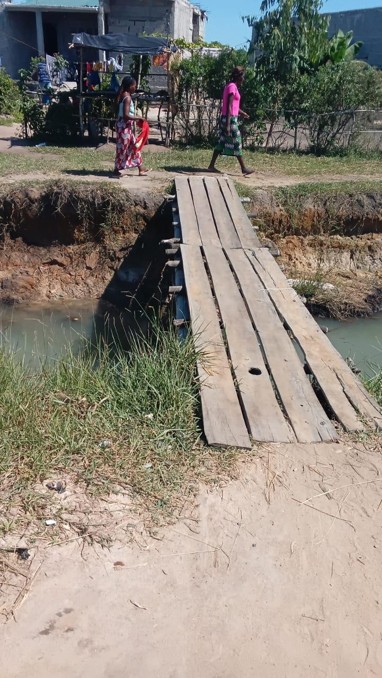
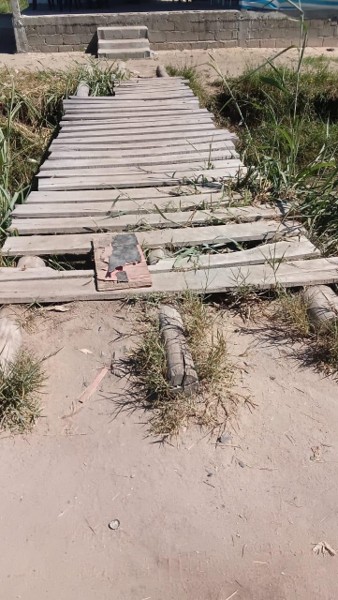
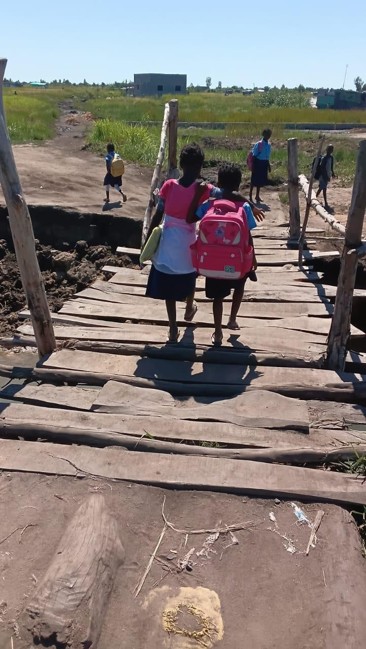
Old tyres and stones are used to form pathways through pools of water. Wooden planks, reinforced with sandbags, form bridges across drainage ditches and rivers, connecting people to schools, markets, and workplaces. While these bridges enable mobility within neighbourhoods and evacuation during climate hazards, unstable planks and the absence of railings means that young children crossing alone are at risk of falling. Scaling efforts should aim to transition from temporary planks to more durable and safe crossings, leveraging gathered insights to advocate for municipal or donor funding.
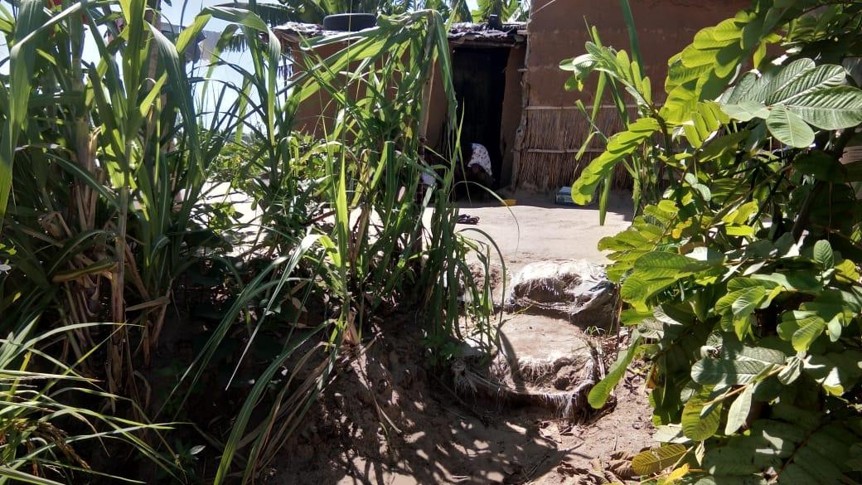
“The house is surrounded by water and tall grass. To leave the house, residents have to step on tires placed on the ground.”
– Community member
“This house is surrounded by water, with no proper path leading to it. To reach the house, residents have placed stones on the ground as a makeshift walkway.”
– Community member from Mungassa
“This house is located on the edge of a drainage ditch. To access the houses, residents built a small bridge and placed sandbags to reinforce it and prevent erosion.”
– Community member from Mungassa
“This small bridge allows many people living along the riverbank to cross to the other side. It is made of wood and reinforced with sandbags to improve safety.”
– Community member
“This is the footbridge that the community uses for crossing. It was built by local residents, but it still poses a danger to children going to school or the market.”
– Community member
To prevent further erosion and protect building foundations, households fill in the land with rubble, soil, reeds, and sandbags. These small-scale community-driven interventions help repair damage and improve the liveability of affected neighbourhoods, making it possible to rebuild on more stable ground:
“Many residents choose to fill in the land with debris or soil as a way to strengthen and protect their buildings against flooding and other hazards.”
– Community member
“This man previously filled it with bags to ensure safety and sealed it with reeds to prevent erosion.”
– Community member from Ndunda
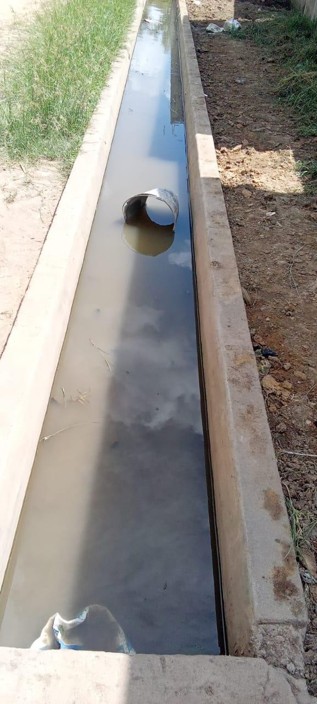
Small drainage ditches are built by community members to help channel floodwater away from homes and improve access routes. Some trenches are reinforced with tyres while others are newly constructed using cement blocks:
“Small drainage ditches were created to allow water to flow and improve access.”
– Community member
“This drainage ditch made of blocks was built by the community. Residents contributed collectively to its construction in response to frequent flooding”
– Community member from Alto da Manga
“A makeshift drainage ditch was built with the help of the community to reduce flooding. Since crossing the area is difficult, residents placed tires to make it easier for people to pass through”
– Community member from Alto da Manga
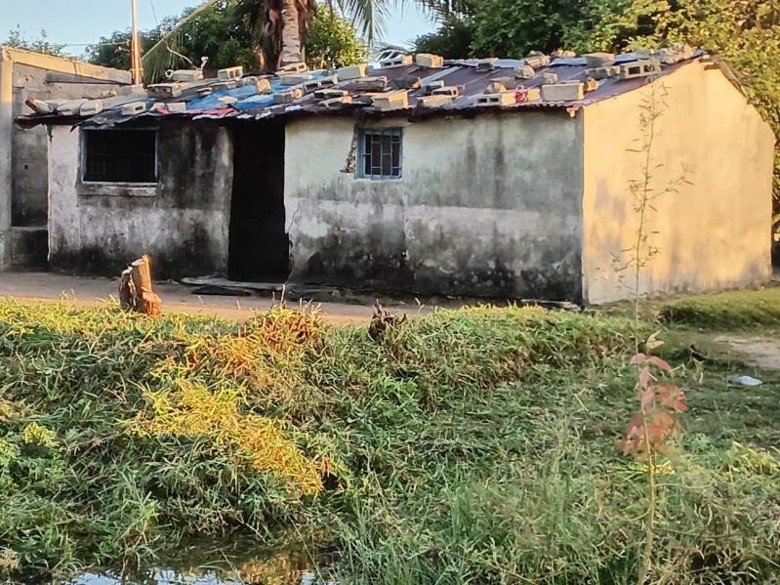
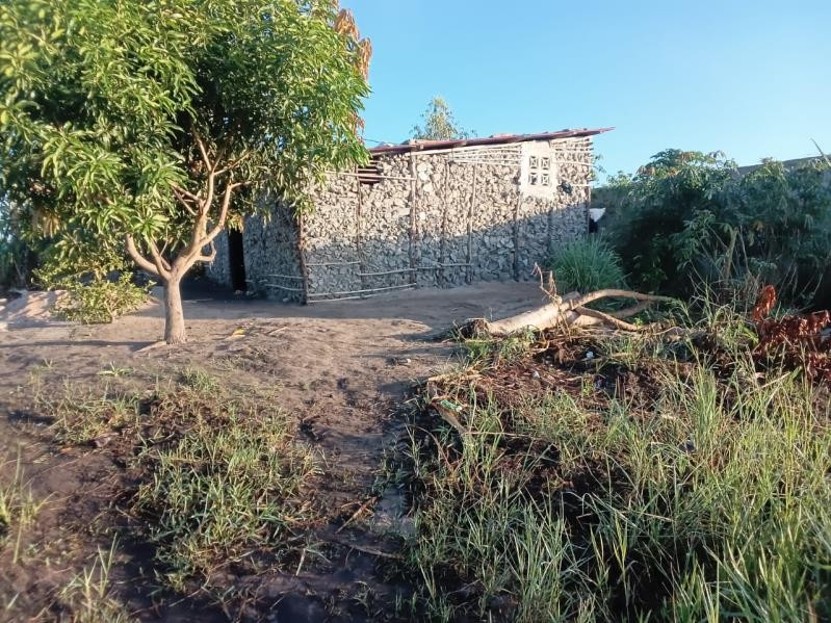
For many, the severity of recent disasters has resulted in implementing fundamental changes to building practices. Residents take precautions to protect and strengthen homes, plastering walls with cement to improve durability, securing roofs with blocks or large stones to withstand strong winds and–in some cases– raising the ground before commencing rebuilding to avoid future inundation. Where finances or materials are limited, residents source locally accessible and low-cost resources, covering roofs with plastic or using mixed materials like reeds and zinc sheets to construct functional shelters in attempts to withstand the impacts of flooding and cyclones.
“This house had some rubble as a preventive measure and then sealed the rubble with sandbags.”
– Community member
“While this house is also made of local material, it was plastered and the roof was secured with blocks and also the rubbled land.”
– Community member
“This house was built with local material, but as a form of adaptation, it was decided to plaster it with cement and also fill the land with rubble.”
– Community member
“This house is located in a low-lying area that receives all the runoff water from upstream. The roof is made of damaged metal sheets, and plastic was added as a temporary solution due to the lack of better materials.”
– Community member from Alto da Manga
“This house is made of pieces of zinc sheets without good security on the roof, reinforced with stones to prevent it from flying away, as it previously fell in a Cyclone.”
– Community member from Ndunda
“This house is located in the risk zone. The house was made of reeds and covered with pieces of zinc sheets to be able to live and the land was raised to escape flood water.”
– Community member from Ndunda
Through these collective efforts, residents of Mungassa, Ndunda, and Alto da Manga show great resilience and ingenuity. Captured through photovoice, these low-cost innovations highlight the potential for locally grounded resilience strategies that can be scaled and supported through research and municipal partnerships. By working collaboratively, such approaches can be integrated into city plans and policies—one of the central aims of the INACCT Resilience project. Beyond coping strategies, these actions are expressions of agency, dignity, and determination in the face of recurring climate disasters.
Support networks: Neighbours, leaders, and institutions lend a helping hand
Collaborative efforts are essential to long-term recovery in the aftermath of a disaster. Communities of support and solidarity reveal themselves in many forms, as illustrated through the voices of community members below: neighbours join forces to reconstruct homes, local initiatives address compromised mobility, national institutions such as INGD offer critical guidance and resources for recovery. Women’s networks and leadership are especially important, advocating for the unique needs and challenges faced by women. The INACCT project works to facilitate and strengthen this representation in communities where women’s voices are often sidelined.
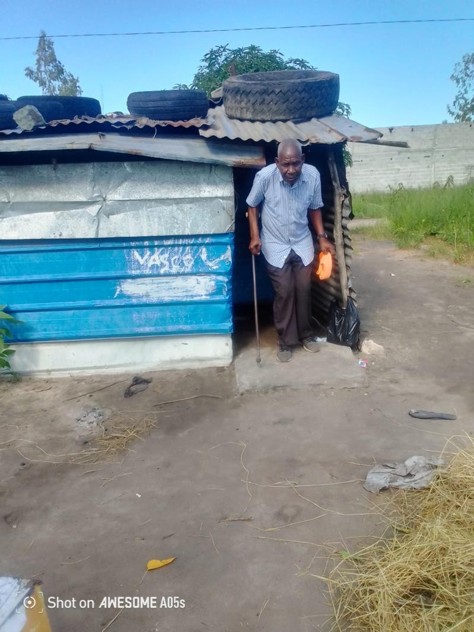
Using locally available materials such as bamboo, zinc sheets, and sacks, residents often collaborate to repair and rebuild homes. For example, an elderly man’s house was constructed with help from nearby residents, who placed tyres on his roof to make it more secure.
“This small house, made of sheet metal with tires placed on the roof to hold it down, is home to an elderly man. He was assisted by neighbours in building the house, which is located in a high-risk area.”
– Community member from Mungassa
As noted earlier, and illustrated below, access routes are often constructed and maintained through personal or community efforts. In many cases, local leaders and residents pool resources to finance and build small crossings. These acts of solidarity and collective determination reduce daily disruptions, allowing residents to remain connected to schools, markets, essential services, and loved ones.
“This bridge was built by a resident with his own funds to provide access to his house.”
– Community member from Mungassa
“This small bridge was built using unconventional materials. It provides access to the informal market in Inharimue and was constructed through the personal initiative and funding of a local resident.”
– Community member from Mungassa
“This small bridge was built using unconventional materials. It connects the Inharimue and Bambamba areas and was constructed through the joint initiative of local leaders and the community.”
– Community member from Mungassa
Beira Municipality, INGD, and Local Committees for Disaster Risk Management (CLGRCs) play an essential role in shaping flood response and recovery efforts. INGD and the Municipality document flood impacts, distribute tents to displaced households (such as the one depicted earlier), and engage with residents to explore options for recovery. At the neighbourhood level, CLGRCs—gender-balanced and volunteer-led—act as a vital bridge between communities and formal institutions. Embedded within INGD, these committees oversee disaster preparedness and response, identifying vulnerable households, coordinating evacuation drills, distributing aid, and ensuring that local knowledge informs emergency planning.
Integrating institutional response with community-driven action strengthens resilience by enabling formal structures to build on residents’ lived experience, while amplifying community agency through recognition and support from municipal and national actors. CLGRCs serve as an important conduit between communities and different levels of government, however their capacity is constrained by limited resources. With adequate support, potentially through external investment, the critical role of CLGRCs could be both strengthened and scaled to other Mozambican cities.
Projects like INACCT facilitate and enhance the collaboration between these diverse actors for proactive flood resilience planning and action in Beira’s informal settlements. Through participatory engagement methodologies such as photovoice, learning labs, and focus group discussions, INACCT aims to ensure that the voices of those most affected by climate hazards are meaningfully represented in institutional planning processes for inclusive and just disaster risk reduction.
“INGD and Municipal officials document the extent of flooding and engage with affected residents after a recent flash flooding event in Beira.”
– Community member
Pathways to resilience: Community voices from Beira’s informal settlements
The photographs and narratives shared by residents of Mungassa, Ndunda, and Alto da Manga reveal a layered story of life in flood-prone informal settlements. They document not only the visible destruction – damaged homes, unsafe pathways, and stagnant water – but also the less visible impacts of displacement, disrupted livelihoods, and the psychological strain of living in risk-prone areas under a constant threat of disaster. This underscores the urgency of climate justice: ensuring that those least responsible for driving global warming are no longer forced to bear its heaviest burdens.
Despite great hardship, these accounts are interwoven with powerful examples of mutual support, self-organisation, and innovation. Whether through makeshift bridges built from salvaged wood, soil stabilisation using rubble and reeds, or collective drainage improvements, these community-led actions highlight the deep reserves of resilience and ingenuity that exist in contexts of climate vulnerability.
These stories offer insights into both the challenges and the possibilities of building collective resilience in the face of climate-related disasters. They highlight the importance of listening to and learning from the communities most affected—ensuring that recovery efforts and adaptation strategies reflect local realities and priorities. These are central elements of INACCT’s proactive, participatory and people-centred approach to resilience building.
This photo story draws on research undertaken as part of the Designing Inclusive African Coastal City Resilience Project (INACCT Resilience) – an action-orientated research project led by ICLEI Africa in collaboration with Eduardo Mondlane University (Mozambique), University of KwaZulu Natal (UKZN), Beira Municipality and eThekwini Municipality (funded by the CLARE initiative). The INACCT Resilience project aims to strengthen urban coastal resilience, focussing on informal settlements, by working alongside communities to ensure their insights are meaningfully integrated into urban resilience policy and practice. Innovative and creative methods of engagement, such as photovoice, facilitate this collaboration by supporting processes of knowledge co-production and validation amongst informal settlement residents, government representatives, and other relevant stakeholders. INACCT aims to support all stakeholders in actioning evidence-informed, gender-responsive, and inclusive interventions for enhanced climate resilience. Both Beira and eThekwini Municipality (Durban) have experienced severe flooding in recent years which caused widespread destruction, displacement, and loss of life. To explore and share translocal insights related to flood impact and response, INACCT facilitates learning exchanges between informal settlement residents of the two cities.
Photovoice is a qualitative and participatory research methodology that entails collecting participants’ photographs and captions to explore their experiences of flood vulnerability and impacts, as well as stories of community-driven response and resilience. This research approach generates rich and locally grounded insights into the lived realities of disaster events for those who have been most severely impacted in Beira and eThekwini. The power of photovoice to foster inclusivity and connect diverse actors lies in its accessible nature, transcending engagement barriers such as language which frequently exclude the voices of impacted communities in decision making processes. Participants’ photovoice contributions can bridge the historic disconnect between decision makers and informal settlement residents, integrating personal narratives with institutional frameworks and planning mechanisms to make resilience strategies more inclusive and effective.
Share on social:
Stay in the loop
Sign up to our newsletter
Sharing impactful, innovative and inclusive action in African cities and regions
 Download the


 Follow a
  See our
  View our