 Follow a
  See our
  View our
 Download the
25 August 2026
Making a step change in climate adaptation: what locally led can look like

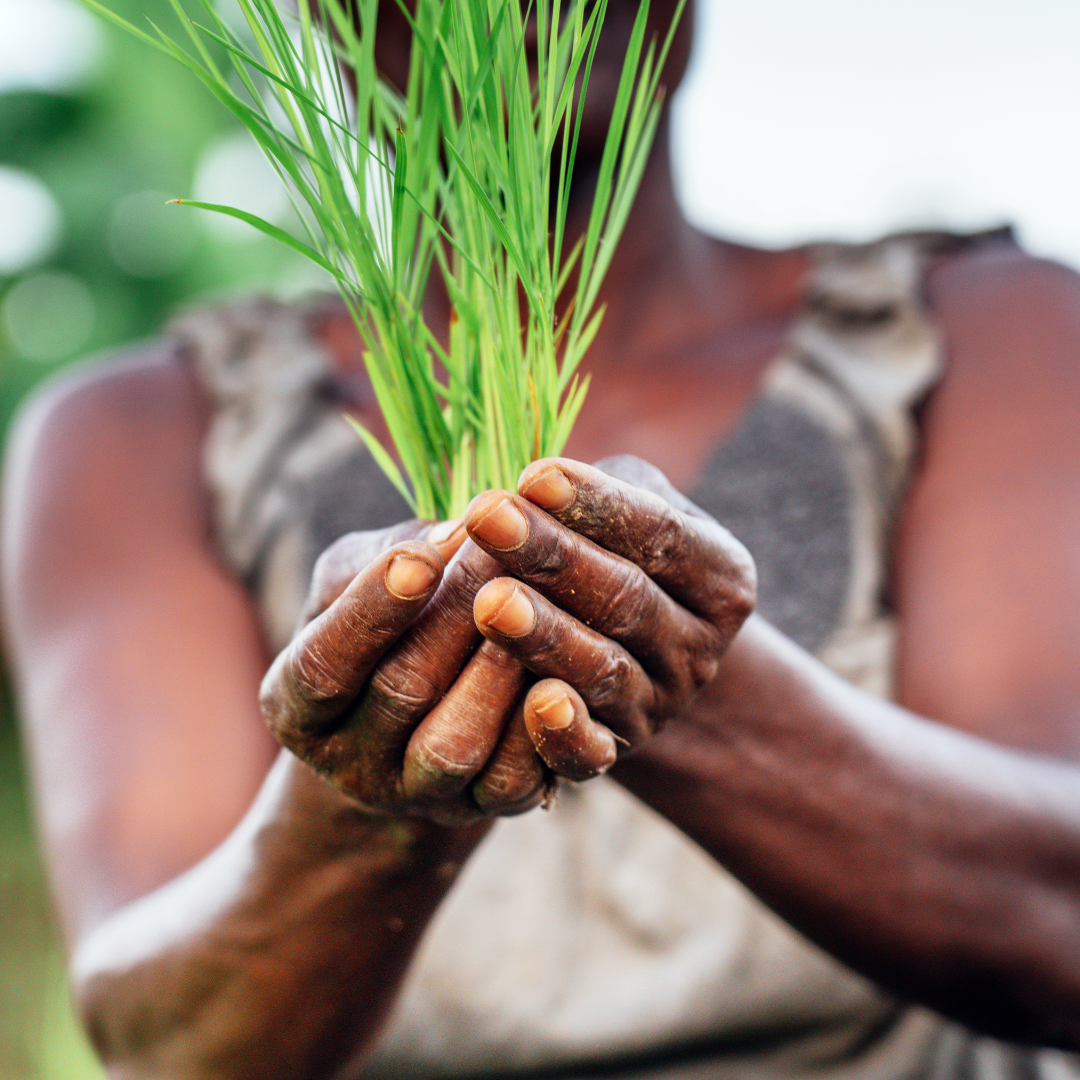

When the people most affected by climate change are trusted, resourced, equipped and connected, they deliver climate adaptation that works. That is the simple but powerful idea Step Change has pursued. A Canada-Netherlands partnership driving equitable and inclusive locally-led adaptation, the Step Change initiative has spent the past four years scaling this approach across Africa, Latin America and Asia.
Individually, the successes emerging from this work are notable: restored highland ecosystems in Ecuador; women and marginalised communities better equipped to assess climate vulnerabilities and identify targeted adaptation actions in Nepal; locally-led adaptation incorporated into Senegal’s national climate plan; and an extensive financial mapping tool developed to support knowledge brokers in better understanding Cameroon’s funding landscape. Considered one by one, these are the kinds of results any solid adaptation programme should be proud of. Taken together, they tell a far more consequential story of impact – real, measurable change in millions of people’s lives across three continents.
This story of impact is unfolding on the ground in five interconnected ways:
- Resilience has been strengthened in the communities that need it most
- Results scaled by changing how governments approach adaptation
- Finance has been unlocked for locally-led adaptation
- A new generation of climate changemakers has been created
- The gap between knowledge and action is closing
How this is being done and why it is successful is also part of the story. Step Change is not simply supporting implementation activities. It is enabling the social infrastructure necessary for transformation in the long term: knowledge brokering that connects local actors, researchers and decision-makers and capacity strengthening that lets communities lead; underpinned by inclusive processes that embed gender equality and social inclusion and the trusted partnerships that hold it all together. This approach is what makes the impact last.
So, what has been achieved?
Each of the five shifts plays out differently on the ground, but together they add up to communities that are more resilient and systems that are starting to work differently and more effectively.
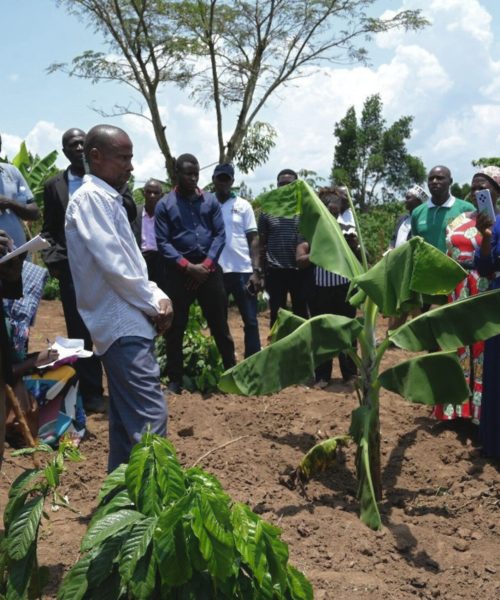
Resilience has been strengthened in the communities that need it most. Step Change has improved the livelihoods of a diverse range of stakeholders, most notably farmers, particularly women and other vulnerable groups, across Africa, Asia and Latin America. Communities on all three continents are more food and water secure, and better equipped to stay that way, and many of the interventions that have been designed and scaled rely on local innovations and solutions. Already, agricultural land the size of over 340 football pitches is under ecosystems-based management that builds from local knowledge, and 18 million people are benefitting from improved river basin management alone. Behind these figures are farmers whose harvests are no longer lost to pests, communities restoring the land and water sources they depend on, and herders combining generations of knowledge with new tools. This is what that resilience looks like, on the ground:
- Nigeria
In Enugu State, women farmers helped develop and scale a low-cost, non-chemical innovation, now protecting their crops from stem-cutting ants. With 2,000 devices installed, farmers are seeing full protection from a pest that once threatened their harvests, while conserving water and cutting plastic waste1.
- Ecuador
In Santa Ana and Loreto de El Pedregal, communities have restored close to 14 hectares of highland paramos, working alongside catchment-scale water funds to secure the water supply their households depend on, while strengthening their own organisational and gender-inclusive capacity2.
- Uganda
Farmers using natural fertilisers and improved irrigation are reporting higher harvest yields. Many have gone on to become community leaders themselves, teaching their methods to neighbours and driving further adoption3.
- Kenya
Rangeland management is becoming more precise as pastoralist herders pair generations of traditional knowledge with GPS mapping tools and mobile apps to track grazing conditions, animal behaviour and seasonal change , in partnership with the Kenya Wildlife Service4.
1 Implemented by the SCALE project led by African Technology Policy Studies Network (ATPS), in partnership with the West Africa Green Economic Development Institute (WAGEDI) in Nigeria and the Initiative prospective agricole et rurale (IPAR) in Senegal. The women farmers are from the Nwanyi Bu Ihe Women’s Cooperative in Nsukka.
2 Implemented by the CDKN project, a partnership between SouthSouthNorth, Fundación Futuro Latinoamericano and ICLEI South Asia.
3 Implemented by the CRAKS project led by the African Centre for Trade and Development (ACTADE) in partnership with the International Institute for Environment and Development (IIED).
4 Implemented by NaPO, a CDKN knowledge-to-action grantee
Results have been scaled by changing how governments approach adaptation. Step Change’s reach extends well beyond the community level. By strengthening the capacity of over 5,300 key climate actors, supporting a multilevel governance approach and ensuring that gender equality and social inclusion are embedded in relevant processes, the initiative has influenced strategic national and subnational policies, Nationally Determined Contributions and National Adaptation Plans. Here is where that influence is already taking hold:
- Senegal
Locally-led adaptation gained greater prominence in Senegal’s NDC 3.0 priorities, supported by broader sector-wide collective efforts, policy briefs and engagement with the Ministry of Environment5.
- Burkina Faso
Nature-based solutions are now part of national policy, including Vision 2028 for Climate Resilience, after the perspectives of grassroots adaptation projects were carried directly to national government6.
- Ethiopia
A new cross-ministry community of practice has trained senior experts across water, health, industry, transport, environment, urban and infrastructure development on gender and climate change, helping mainstream Gender Equity and Social Inclusion into the country’s sector performance management systems and plans7.
- Nepal
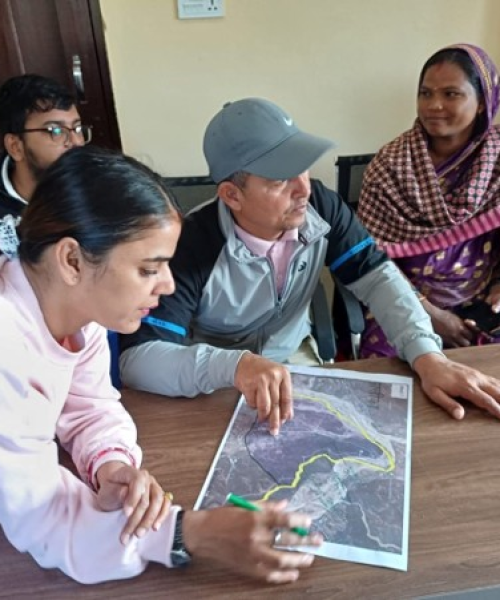
In Dhulikhel and Karjanha, women and marginalised communities are now shaping local climate plans directly, ensuring municipal Local Adaptation Plans for Action reflect the realities they live with8.
5 Implemented by the DEFOCLIM project, led by IED Afrique, in partnership with the International Institute for Environment and Development (IIED).
6 Implemented by the PIEGIS-2AC project, led by Farm Radio International.
7 Implemented by the CDKN project, led by SouthSouthNorth.
8 Implemented by the CDKN project, led by ICLEI South Asia.
Finance has been unlocked for locally led adaptation. Climate actors across Africa, Asia and Latin America have mobilised more than CA $20 million from domestic and international sources, backed by high-quality proposals that reflect real ambition and genuine need. This is proof that when local actors are genuinely supported to lead, the results speak for themselves. This is what that finance is already funding:
- Latin America
New funding is now flowing to strengthen water security across three countries, after a platform that aligns water funds across Colombia, Ecuador and Peru, secured EUR 400,000 from AECID. The funding will continue building the platform’s capacity to design, implement and monitor ecosystem-based adaptation and gender equality and social inclusion initiatives, and to unlock further funding opportunities9.
- Cameroon
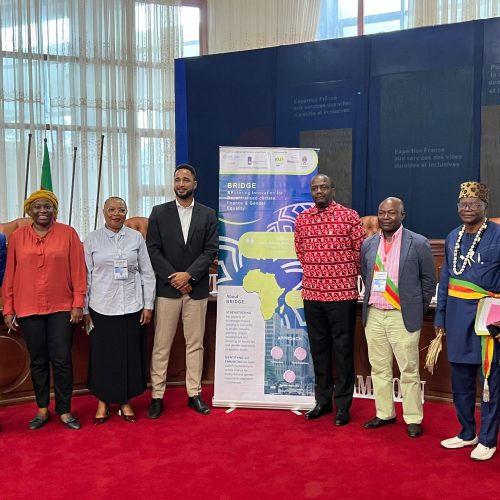
A socially inclusive reforestation initiative in Gazawa is now funded with USD 260,000, one of the first results of a two-pronged approach to unlocking finance in Cameroon. On the supply side, Step Change strengthened relationships between FEICOM, the country’s leading municipal bank for local development, and global funding mechanisms. On the demand side, it supported local actors to develop stronger funding proposals. Together, this led FEICOM to launch a dedicated LLA funding window10.
9 Implemented by the CDKN project, led by Fundacion Futuro Latinoamericano.
10 Implemented by the BRIDGE project, led by ICLEI Africa.
A new generation of climate changemakers has been created. Step Change partners have created 32 new strategic partnerships, from national government, to grassroots organisations and local governments, and numerous strong communities of women and youth changemakers – groups that did not just receive support, but developed the collective agency to shape their own futures. Together, these partners have influenced decision-making within their communities and beyond, informed policy at local and national levels, and secured new land for farming. This is who is leading that change:
- Ghana
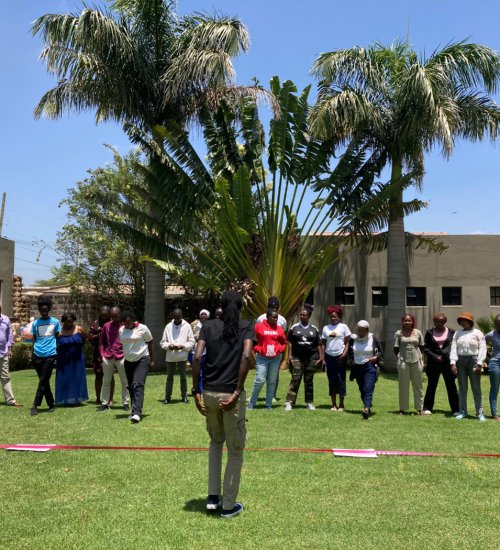
40 community projects are completed and underway across the country, led by a cohort of 120 youth climate leaders mentored and trained in advocacy, project management and climate literacy. Several have gone on to represent their communities as youth climate negotiators in UNFCCC processes11.
- Bangladesh
Two cities have developed Disaster Risk Reduction Action Plans, following a series of collaborative workshops delivered through an MoU between ICLEI South Asia and the Municipal Association of Bangladesh12.
- Burkina Faso
Women are now securing land of their own to test climate-smart agricultural practices, after Farm Radio International partnered with local radio stations, to develop gender-inclusive programming and safe space listening groups where women could build the confidence and voice to advocate for it13.
- Kenya
A new collaborative agreement between Masinde Muliro University of Science and Technology and Africa Research and Impact Network will bring the two institutions together to advance joint scientific cooperation and research14.
11 Implemented by the CDKN project, led by SouthSouthNorth
12 Implemented by the CDKN project, led by ICLEI South Asia
13 Implemented by the PIEGIS-2AC project, led by Farm Radio International
14 Implemented by the LAMA project, led by the Africa Research and Impact Network (ARIN), in partnership with the University of Glasglow.
The gap between knowledge and action is closing. Perhaps most distinctively, Step Change has bridged worlds that rarely meet: indigenous, traditional and local knowledge and rights-based approaches on one side; technology, media and policy on the other. Through enhanced communication via novel platforms and the co-production of over 160 knowledge products, the initiative has built resilience, enhanced peer-to-peer learning and ensured that previously disconnected groups – communities, governments and researchers – are working from the same understanding.
Based on concrete experiences, Step Change partners have produced toolkits on gender equality and social inclusion integration into climate planning from Ecuador to Ethiopia, training manuals to develop grassroots climate champions in Kenya, and courses to help local governments access climate finance in Cameroon. More than 60 case studies offer contextualised insights into the role of finance, gender equality and social inclusion, biodiversity and the private sector in locally led adaptation across 19 countries. Of these knowledge products, 92% of the authors are from the global South, 84% of the authors are women, and half of them were co-produced directly with end users. And it does not stop there. In keeping with turning knowledge into action, these resources have catalysed action:
- Cameroon
Funders, including the Global Fund for Cities Development, are now using an extensive financial mapping tool to source new projects to support, giving knowledge brokers a clearer understanding of the country’s funding landscape.
- Benin
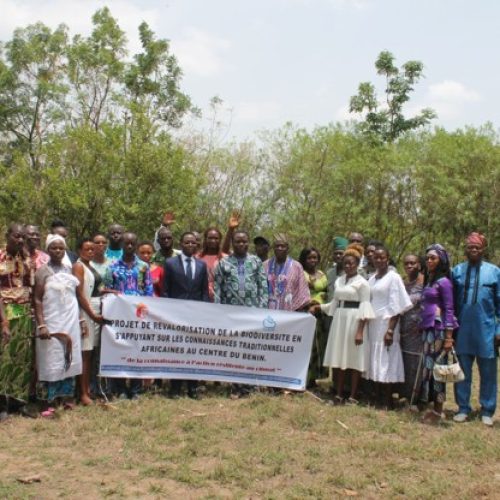
Context-appropriate forest governance practices are now being replicated across communities, after local organisations, traditional leaders, government representatives and technical experts were convened in peer exchanges to share experiences on integrating Indigenous knowledge into biodiversity conservation and climate adaptation. 61 inclusive forest management committees have been established across six municipalities, supporting joint management of forest resources by communities and the state15.
15 Implemented by Survie, a CDKN knowledge-to-action grantee.
This consistency is not a coincidence. Behind each of these five shifts, in the paramos above Santa Ana, the rangelands of Kenya, the ministries of Addis Ababa and the radio stations of Burkina Faso, sits the same underlying model: the social infrastructure for transformation that has made this impact possible from the outset. Different contexts, different challenges, and yet the same pattern of change, repeating itself across three continents because the foundations beneath it are consistently strong.
Step Change has expanded the network of knowledge brokers working as engines of change across Africa, Asia and Latin America. This is making knowledge accessible, relevant and usable across contexts, and connecting evidence to decision-making, so that the voices of the most climate-affected people reach the spaces where policy is made and finance is directed. Alongside this, sits an equally deliberate investment in people: capacity strengthening that is peer-led and shaped by what communities actually need, building the skills, confidence and networks that let local actors lead.
Embedded throughout Step Change’s work is ensuring that women, youth and marginalised groups shape the knowledge produced, how it is shared, and the actions taken. And underpinning all of it is trust: the relational groundwork of understanding local contexts, working with partners already rooted in their communities, and ensuring continuity so that change lasts.
Step Change partners have achieved measurable change in millions of lives, built on a foundation of knowledge, capacity, inclusion and trust. But the work is not finished. Governments are only partway through changing how they plan for and implement climate adaptation, and gaps between knowledge and action remain. Sustaining the progress made through Step Change, and extending it to the millions of communities still facing climate risk without this kind of support, is the work of everyone in the Step Change partners have achieved measurable change in millions of lives, built on a foundation of knowledge, capacity, inclusion and trust. But the work is not finished. Governments are only partway through changing how they plan for and implement climate adaptation, and gaps between knowledge and action remain. Sustaining the progress made through Step Change, and extending it to the millions of communities still facing climate risk without this kind of support, is the work of everyone in the development sector in the years to come, and will require investment on a scale that matches the growing need.
Photo credits: ICLEI South Asia, ICLEI Africa, SouthSouthNorth, Survie
ICLEI Africa 's collaboration with the Step Change programme
ICLEI Africa is supporting the International Development Research Centre (IDRC) to tell the impact story of its Step Change Programme. Working with the project teams to strengthen their skills in the methodologies, we are using outcomes harvesting and collaborative sensemaking to identify and communicate – through narrative and visual impact stories – the programme’s most significant shifts, insights and contributions.