 Follow a
  See our
  View our
 Download the
Accelerating e-mobility in Rwanda
We support the mitigation of climate change impact by supporting the creation of an enabling regulatory and financial environment to accelerate the transition to e-mobility.


Years active:
2021 - present
Related ICLEI Pathway(s)
Locations
Funded by
About
Project summary
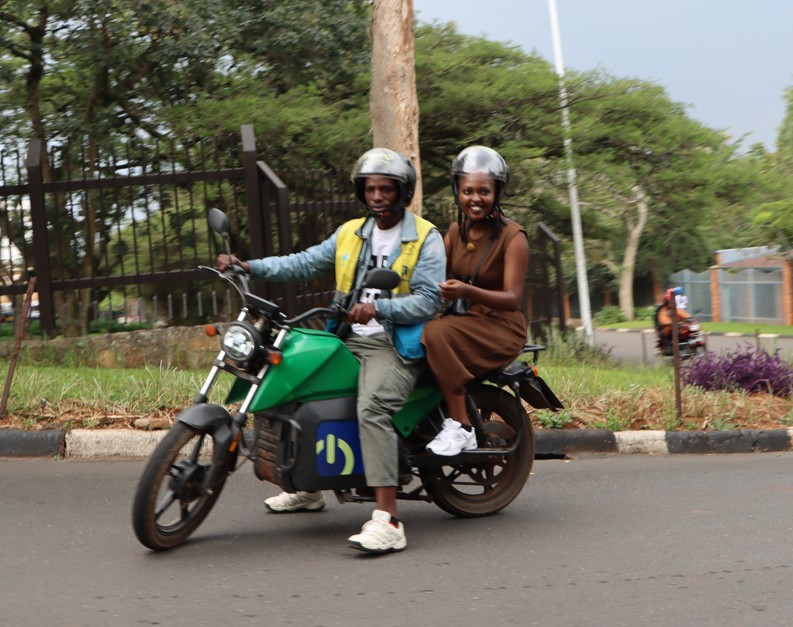
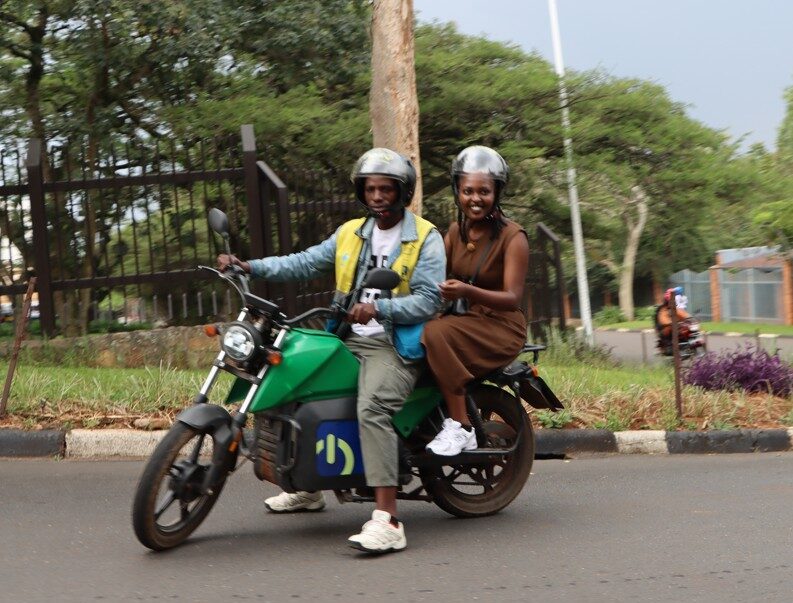
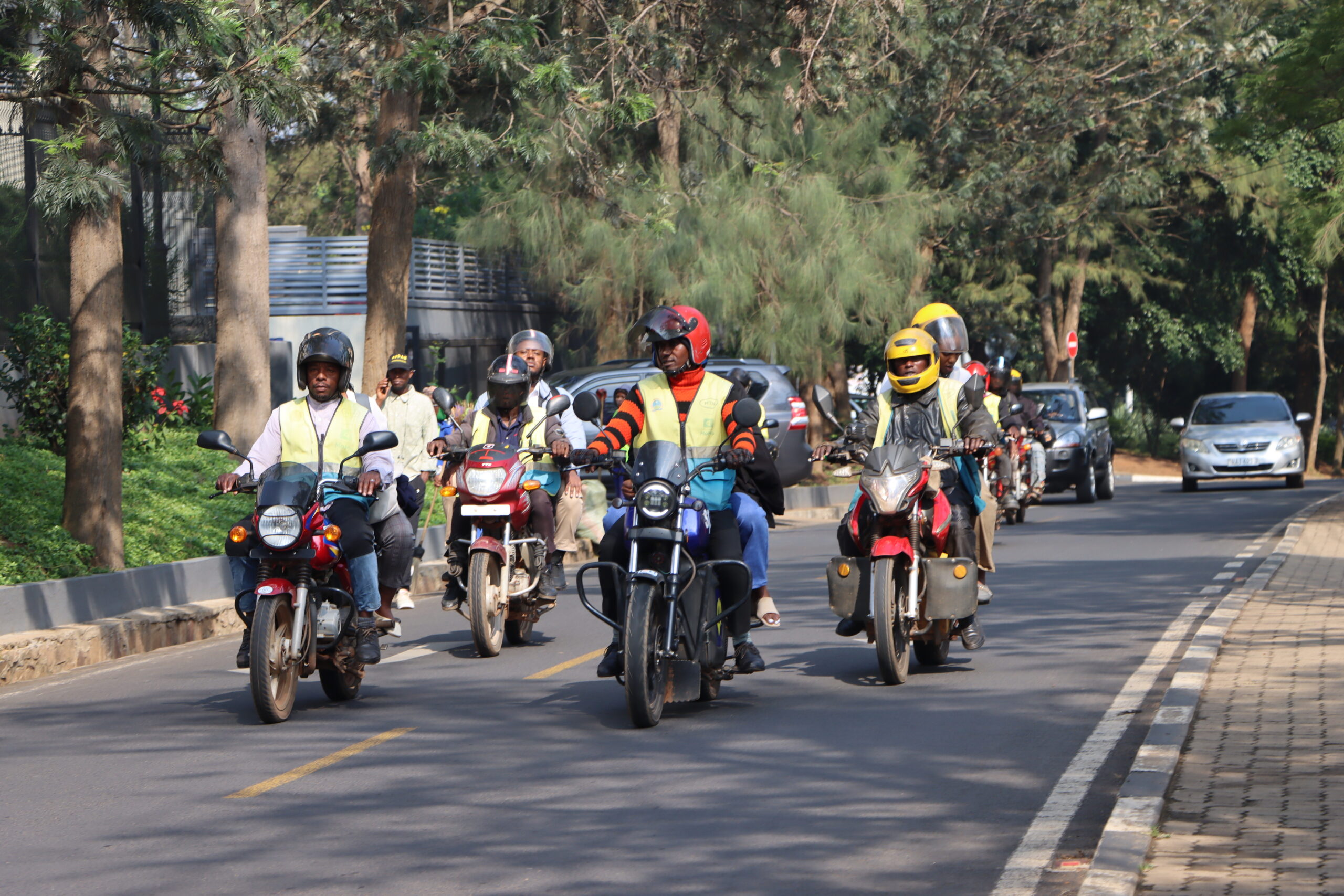
The Rwanda E-Moto Project is catalysing the country’s largest electric mobility shift by unlocking affordable finance and growing the ecosystem around electric motorcycles (e-motos). This innovative initiative is increasing the supply of e-motos, expanding charging infrastructure, and boosting adoption among riders with a focus on women, youth, and low-income groups.
As a Technical Implementing Partner, ICLEI Africa provides technical assistance to the Implementation Organisations and Partners in i) implementation, ii) providing technical and capacity-building support to the Rwanda Green Fund (RGF), the Development Bank of Rwanda (BRD), Global Clearinghouse for Development Finance (GlobalDF) and external stakeholders, and iii) monitoring and evaluation of the implementation and operation of the Rwanda E-Moto Project, including supporting the development of a National E-Moto Programme.
ICLEI Africa plays a key intermediary role, building local capacity, supporting coordination across institutions, and brokering partnerships to support finance mechanisms that will enable scale. Working closely with the Rwanda Green Fund, the Development Bank of Rwanda, and Global DF, ICLEI Africa supports the financial component, focusing on crowding in both public and private partners to mobilise the necessary capital and partnerships. This funding aims to promote bankable investments that encourage the supply of e-motos, support adoption, and foster systemic change. Such efforts are designed to ensure the transition’s sustainability beyond the project’s duration.
The Rwanda E-Moto Project is working to:
- Make finance work for cities by blending public and private funding to support both manufacturers and riders.
- Expand the supply of e-motos by unlocking access to capital for manufacturing, assembly or importing parts, batteries, and installing charging stations.
- Stimulate demand through rebates and financing schemes that make e-motos accessible to low-income mototaxi operators and women.
- Strengthen the enabling environment by supporting Rwanda’s regulatory, technical, and financial systems for e-mobility.
- Foster resilience and equity by centring mototaxi operators, low-income individuals, and women in the green transport shift.
ICLEI Africa’s role:
- Assistance in implementation of the Rwanda E-Moto Project
- Supporting project governance and Monitoring, Evaluation and Learning (MEL) frameworks.
- Technical advisory and assistance to strengthen policy and regulations, proactively improving the e-moto enabling environment and waste management related to EV batteries and ICE motos.
- Technical support to the Rwanda Green Fund (RGF) to implement Gender Equality and Social Inclusion (GESI) considerations as a core aspect of project interventions.
- Leading capacity-building for government partners at the national and local level, cooperatives, and private sector players.
- Convening partners through the E-Moto Partnership Group.
- Sharing lessons regionally to support peer learning and uptake of e-mobility across Africa.
The Rwanda E-Moto Project is catalysing the country’s largest electric mobility shift by unlocking affordable finance and growing the ecosystem around electric motorcycles (e-motos). This innovative initiative is increasing the supply of e-motos, expanding charging infrastructure, and boosting adoption among riders with a focus on women, youth, and low-income groups.
As a Technical Implementing Partner, ICLEI Africa provides technical assistance to the Implementation Organisations and Partners in i) implementation, ii) providing technical and capacity-building support to the Rwanda Green Fund (RGF), the Development Bank of Rwanda (BRD), Global Clearinghouse for Development Finance (GlobalDF) and external stakeholders, and iii) monitoring and evaluation of the implementation and operation of the Rwanda E-Moto Project, including supporting the development of a National E-Moto Programme.
ICLEI Africa plays a key intermediary role, building local capacity, supporting coordination across institutions, and brokering partnerships to support finance mechanisms that will enable scale. Working closely with the Rwanda Green Fund, the Development Bank of Rwanda, and Global DF, ICLEI Africa supports the financial component, focusing on crowding in both public and private partners to mobilise the necessary capital and partnerships. This funding aims to promote bankable investments that encourage the supply of e-motos, support adoption, and foster systemic change. Such efforts are designed to ensure the transition’s sustainability beyond the project’s duration.
The Rwanda E-Moto Project is working to:
- Make finance work for cities by blending public and private funding to support both manufacturers and riders.
- Expand the supply of e-motos by unlocking access to capital for manufacturing, assembly or importing parts, batteries, and installing charging stations.
- Stimulate demand through rebates and financing schemes that make e-motos accessible to low-income mototaxi operators and women.
- Strengthen the enabling environment by supporting Rwanda’s regulatory, technical, and financial systems for e-mobility.
- Foster resilience and equity by centring mototaxi operators, low-income individuals, and women in the green transport shift.
ICLEI Africa’s role:
- Assistance in implementation of the Rwanda E-Moto Project
- Supporting project governance and Monitoring, Evaluation and Learning (MEL) frameworks.
- Technical advisory and assistance to strengthen policy and regulations, proactively improving the e-moto enabling environment and waste management related to EV batteries and ICE motos.
- Technical support to the Rwanda Green Fund (RGF) to implement Gender Equality and Social Inclusion (GESI) considerations as a core aspect of project interventions.
- Leading capacity-building for government partners at the national and local level, cooperatives, and private sector players.
- Convening partners through the E-Moto Partnership Group.
- Sharing lessons regionally to support peer learning and uptake of e-mobility across Africa.
Project aims
The project is currently in its full implementation phase. Implementation Phase 2 is focused on:
- Unlocking access to capital to finance e-moto supply and adoption through the support of the E-Moto Finance Advisory Team to manufacturing companies and asset financiers in developing bankable projects through structured finance and use of credit enhancements, including the potential use of the E-Moto Credit Enhancement Facility (E-CEF) as a first loss guarantee.
- Cultivating demand for e-motos through the targeted interventions of the E-Moto Technical Hub, activating access to finance through operator linkages with asset financiers through the E-Moto Operators Platform, workshops, and increasing affordability through targeted rebates for low-income individuals, especially women, through the E-Moto Rebate Scheme.
- Mobilising and coordinating partner engagement, support, and input through the E-Moto Partnership Group;
- Strengthening regulatory, legal, and policy frameworks to enable the sustainable and equitable electrification of the moto-taxi sector countrywide; and
- Increasing the participation of women and their benefits across the e-mobility value chain through targeted, gender-responsive measures.
Now in its second implementation phase, entailing full-scale deployment, the expected impacts of the Rwanda E-Moto Project, based on the approved project design from February 2026 to June 2030, are:
- Direct GHG Reduction: Estimated at 777,061 tCO2e over 5 years, and 1,971,475 tCO2e over 10 years.
- Indirect GHG Reduction: Up to 52,726 tCO2e over 5 years, and 5,081,139 tCO2e over 10 years post-program.
- Financial Leverage: Minimum leverage of MAF funds by 11 times, mobilising EUR 196 million from public and private sectors.
- Total e-motos deployed (new and retrofits): 64,755 (9,000 through the E-Moto Rebate Scheme) over 5 years.
- Over 3,000 new jobs for women across the e-moto sector and the entire ecosystem (e.g., government, private sector, cooperatives, training providers, etc.).
The project is currently in its full implementation phase. Implementation Phase 2 is focused on:
- Unlocking access to capital to finance e-moto supply and adoption through the support of the E-Moto Finance Advisory Team to manufacturing companies and asset financiers in developing bankable projects through structured finance and use of credit enhancements, including the potential use of the E-Moto Credit Enhancement Facility (E-CEF) as a first loss guarantee.
- Cultivating demand for e-motos through the targeted interventions of the E-Moto Technical Hub, activating access to finance through operator linkages with asset financiers through the E-Moto Operators Platform, workshops, and increasing affordability through targeted rebates for low-income individuals, especially women, through the E-Moto Rebate Scheme.
- Mobilising and coordinating partner engagement, support, and input through the E-Moto Partnership Group;
- Strengthening regulatory, legal, and policy frameworks to enable the sustainable and equitable electrification of the moto-taxi sector countrywide; and
- Increasing the participation of women and their benefits across the e-mobility value chain through targeted, gender-responsive measures.
Now in its second implementation phase, entailing full-scale deployment, the expected impacts of the Rwanda E-Moto Project, based on the approved project design from February 2026 to June 2030, are:
- Direct GHG Reduction: Estimated at 777,061 tCO2e over 5 years, and 1,971,475 tCO2e over 10 years.
- Indirect GHG Reduction: Up to 52,726 tCO2e over 5 years, and 5,081,139 tCO2e over 10 years post-program.
- Financial Leverage: Minimum leverage of MAF funds by 11 times, mobilising EUR 196 million from public and private sectors.
- Total e-motos deployed (new and retrofits): 64,755 (9,000 through the E-Moto Rebate Scheme) over 5 years.
- Over 3,000 new jobs for women across the e-moto sector and the entire ecosystem (e.g., government, private sector, cooperatives, training providers, etc.).
Project partners