 Follow a
  See our
  View our
 Download the
Urban Natural Assets for Africa
IMPACT SHOWCASE
Accelerating nature-based development in African cities
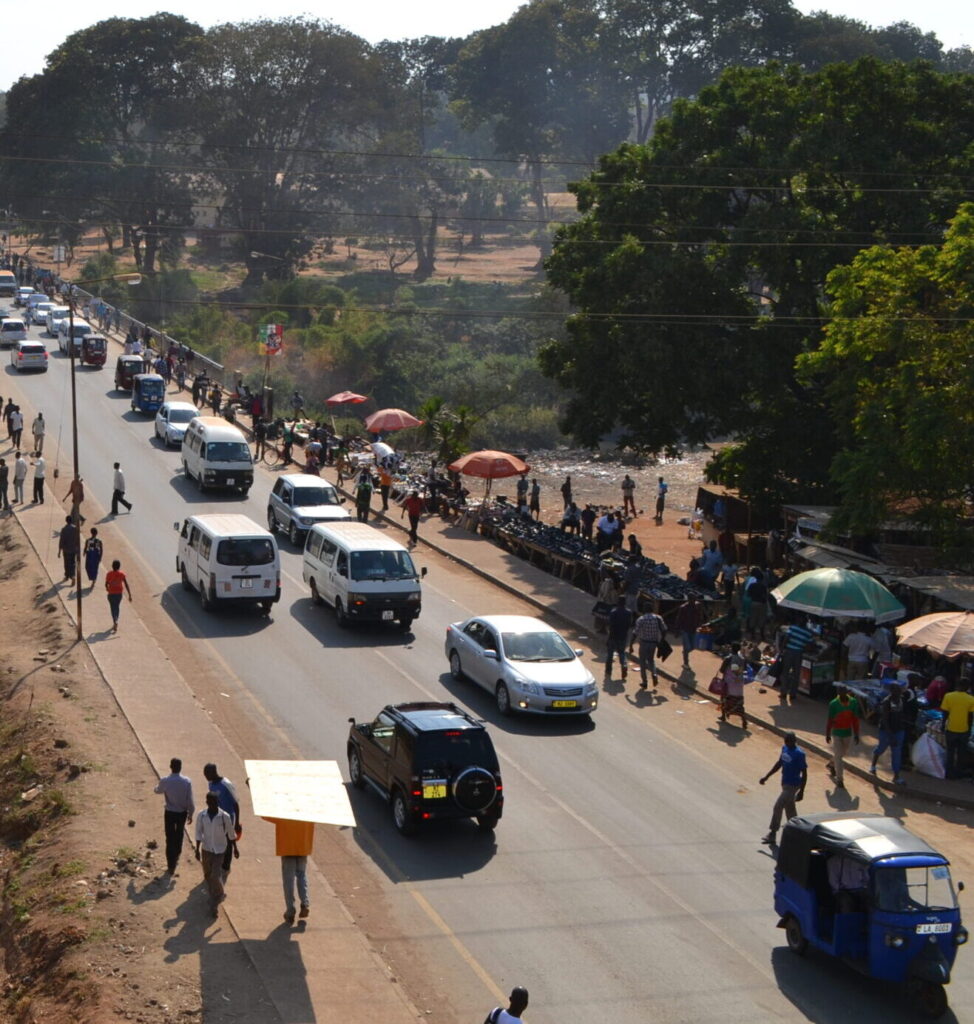
African cities stand at a crossroads, where rapid urban growth demands a shift towards development that is both people-centred and nature-positive. Nature provides an abundance of contributions to people, including raw materials, fresh water and food – all of which support water security, food security and livelihoods. It also provides medicinal plants, trees and green spaces that lower city temperatures and improve air quality. These natural assets are crucial to the city’s economy and the health and wellbeing of its people. Yet these contributions are often undervalued or excluded from planning and decision-making processes.
This Impact Showcase brings together key learnings from over a decade of collaboration, co-design and co-production across African cities. It highlights how collective engagement – by city authorities, local officials, stakeholders and national government – in addressing local challenges and pressures can foster inclusive action, guide policy reform, mobilise finance, encourage innovation and strengthen local leadership and agency. Together, these efforts help to progressively protect and restore urban natural assets while safeguarding the rights of people and addressing urban challenges. Alongside stories, tools and first-hand accounts from partner cities, this showcase page and the associated report will highlight creative entry points, resources, lessons and case studies to inspire more action and inform future efforts across the continent, and beyond.
About UNA
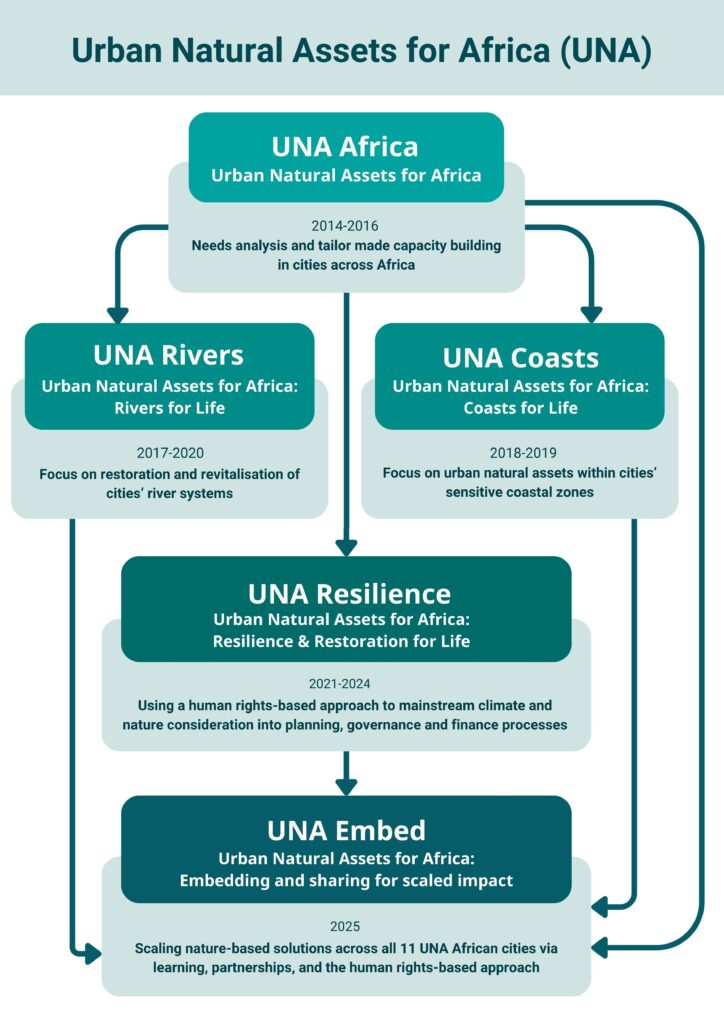
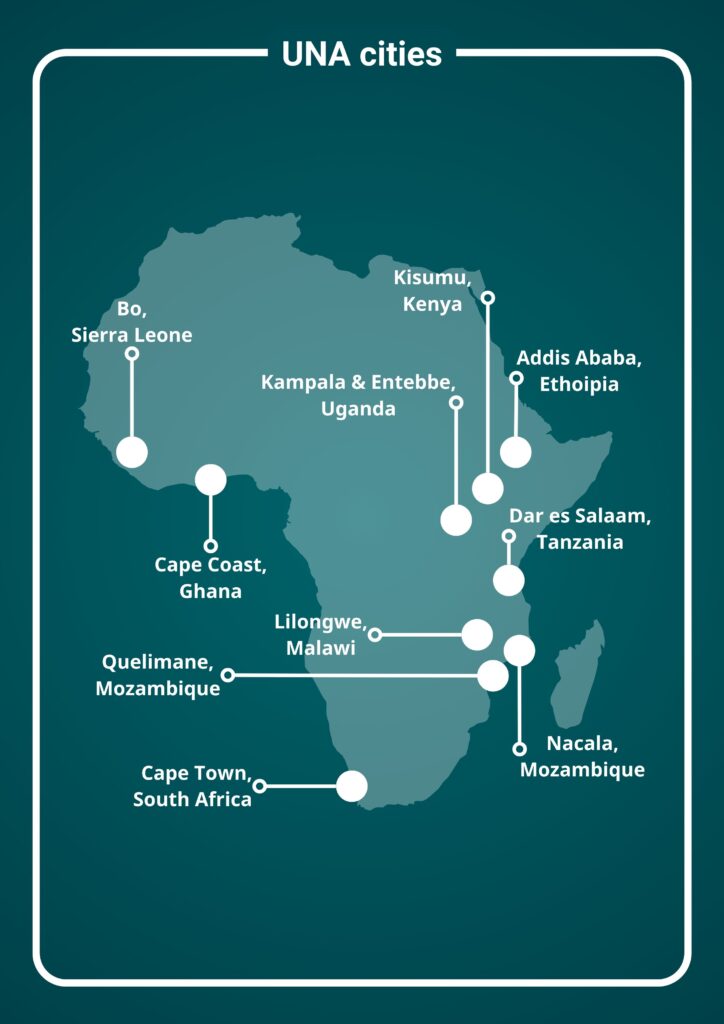
Since 2014, the UNA – funded by the Swedish International Development Cooperation Agency (Sida) through SwedBio at Stockholm Resilience Centre – has supported cities and helped shift development narratives by positioning nature as an essential asset and part of urban infrastructure. Over the years, the UNA project supported 11 cities across nine countries in their transition towards a more sustainable development trajectory. Through the UNA project’s five flagship projects – Urban Natural Assets for Africa (UNA Africa: 2014-2016), Urban Natural Assets: Rivers for Life (UNA Rivers: 2017-2020), Urban Natural Assets: Coasts for Life (UNA Coasts: 2018-2019), Urban Natural Assets: Resilience and Restoration for Life (UNA Resilience: 2021-2024) and Urban Natural Assets: Embedding and Sharing for scaled Impact (UNA Embed: 2025) – the project facilitated the integration of NbS into governance, planning and later finance. In doing so, it built urban resilience and generated sufficient agency and momentum to support an ongoing process of transformative change.
What makes the UNA project impactful?
The UNA project prioritised building the capacity of city officials and local stakeholders. It also explored and critically assessed alternative approaches to planning that better suit the African context, paying specific attention to the key role of nature-based solutions (NbS). By placing nature at the forefront of its approach, the UNA project supported the improved integration of nature into decision-making and city planning processes. It also built momentum and agency for a continuous transformative process and fostered a culture of caring for nature through inclusive approaches to a diverse range of stakeholders, including youth, women, Indigenous peoples and vulnerable communities. Through this ongoing process of transformative change, the UNA project supported cities in working towards more nature-positive development, where ecosystems are restored, regenerated and connected for continued recovery.
The UNA project’s approach
Bringing nature back into cities
1
Advocating for the integration of nature and NbS into city planning and decision-making processes as a pathway to resilient, nature-sensitive development.
Co-producing with city knowledge holders
2
Recognising that a successful nature-based project centres people fairly and inclusively and ensures that it incorporates all types of knowledge.
Incorporating creativity and innovation
3
Using experimentation and innovation as opportunities to integrate social learning dimensions into the “science”, and as a tool to tap into indigenous and local community knowledge and wisdom while solving current challenges.
Embedding a human rights-based approach (HRBA)
4
Promoting social equity and the recognition of human rights obligations in all facets of the project and how cities respond to development challenges.
Documenting for future showcasing and scaling
5
Documenting project processes through lessons and on-the-ground impacts to increase visibility of African experiences in NbS and support peer learning for wider global uptake.
Watch the video below for a quick glimpse into the UNA project’s journey.
UNA's impact
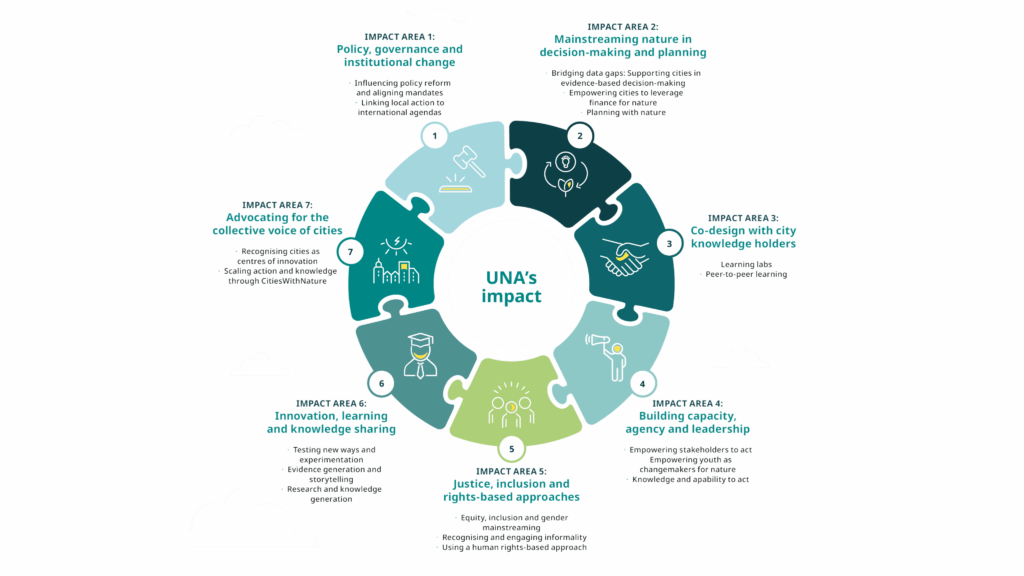
Through a deeply innovative, collaborative and HRBA, the UNA project supported cities across seven interconnected impact areas. The seven impact areas have been the basis for sustainable, resilient urban development that considers the complexity of urban systems. The impact areas encourage holistic and adaptive thinking to help the UNA project achieve its goals. This approach enables cities to progressively address the realities of rapid urbanisation, climate risk and biodiversity loss. It transforms urban development trajectories and strengthens cities’ interconnectedness with their natural systems
EXPLORE NOW
Click on any of the impact areas below or use the side panel to explore UNA’s seven impact pathways in more depth.