 Follow a
  See our
  View our
 Download the

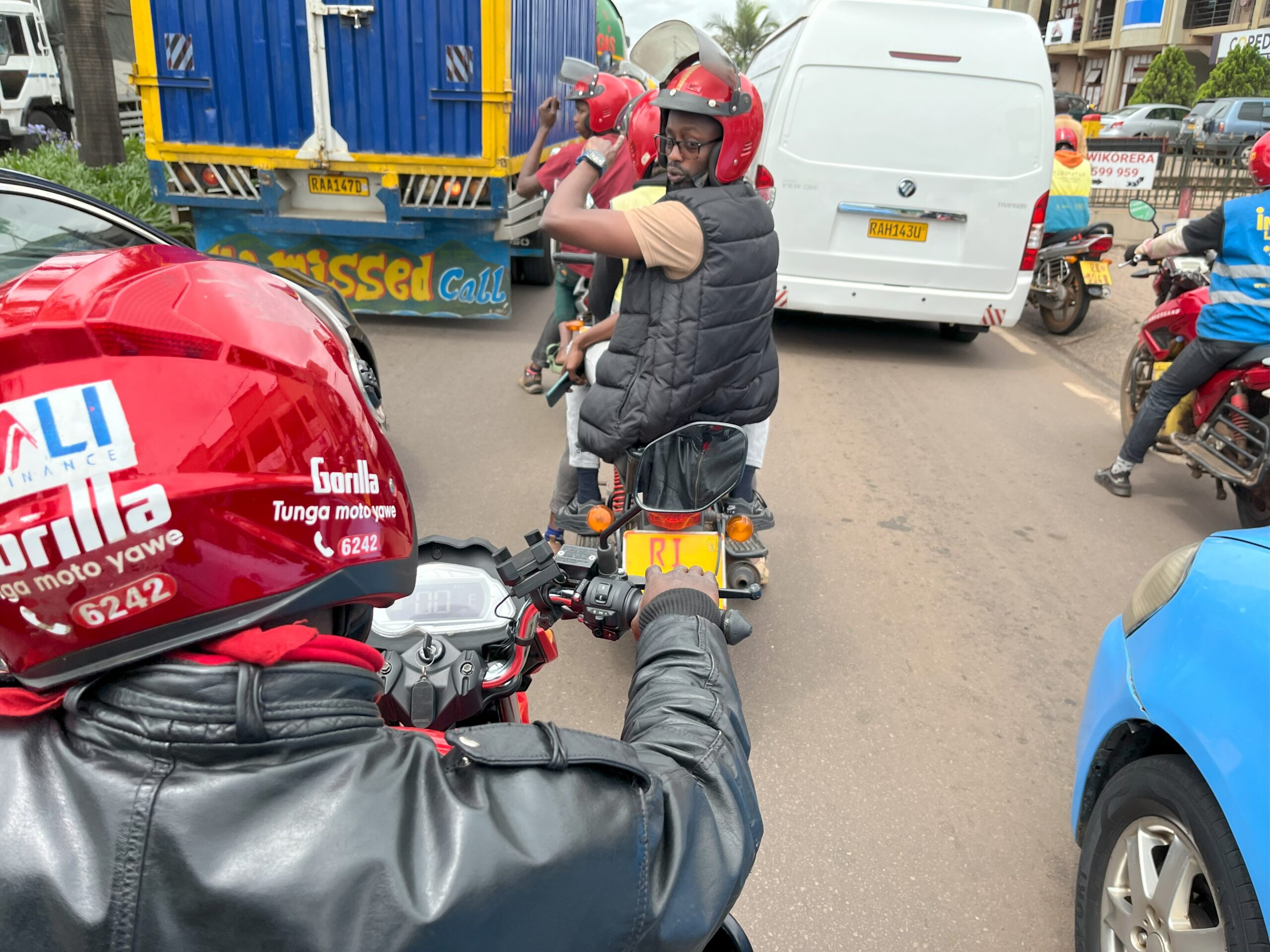

Launched in 2024 with funding from the Mitigation Action Facility, the Accelerating the deployment of e-motos in Rwanda (E-Moto Project) is building the institutional and financial infrastructure needed to support large-scale electric motorcycle adoption across Rwanda.
Through partnering and a multilevel governance approach, the project is mobilising over €120 million in additional finance to deploy 52,000 e-motos, cut 422,556 tCO₂e over five years, and demonstrate a sustainable, inclusive finance-driven model for clean transport in the country.
The pioneering project is uniquely structured to tackle both supply and demand barriers, using a combination of financial innovation and technical assistance, and building a model for national and regional replication.
The key mechanisms of the project include:
- E-Moto Credit Enhancement Facility (E-CEF)
8.3 million euros invested as first-loss capital in this finance-focused advisory and support mechanism to help local partners develop bankable projects and secure investment. It uses a blend of financial structuring tools, including guarantees, co-financing, and risk mitigation instruments. - E-Moto Rebate Scheme
A 1.4 million euro subsidy scheme to make e-motos more affordable, with a specific focus on inclusion, particularly for low-income groups and women riders. - E-Moto Technical Hub
A knowledge-sharing and capacity-building platform designed to support institutions, cooperatives, and private-sector actors in navigating the technical, regulatory, and operational aspects of e-mobility. - E-Moto Partnership Group
A cross-sector collaboration mechanism to mobilise additional finance and ensure alignment among key stakeholders across public, private, and development sectors.
Together, these mechanisms form a replicable model for other countries seeking to catalyse investment into low-carbon transport solutions.


“With support from the E-Moto Project’s financial advisory team, we are optimistic that new investment will help us scale operations and meet the growing interest in electric motorcycles.”
— E-moto company representative
Unlocking insights from the ground
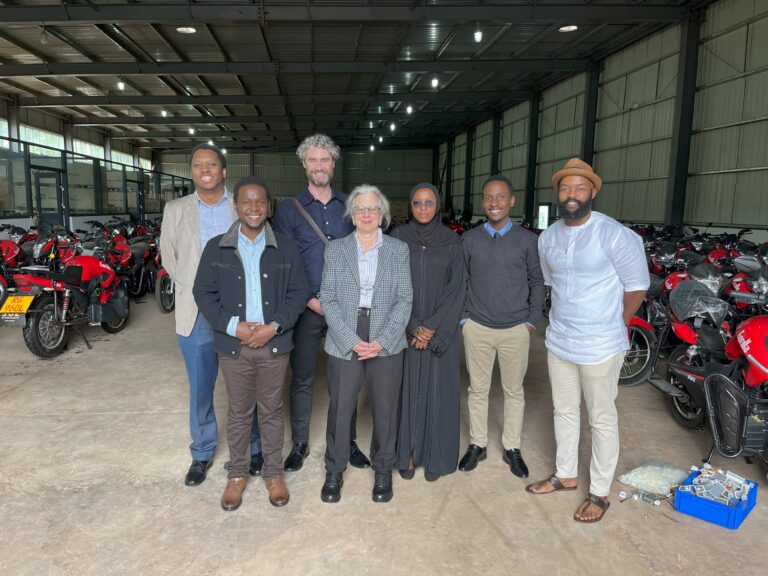
We are collaborating with key government institutions to unlock local-level finance and private sector investment to drive Rwanda’s largest low-carbon transport shift and build a replicable model for cities across Africa. In May 2025, E-moto project partners from ICLEI Africa, the Rwanda Green Fund (RGF), the Development Bank of Rwanda (BRD), and Global Clearinghouse for Development Finance (GlobalDF) gathered in Kigali for the first major stakeholder engagement since the E-Moto Project’s official kickoff of phase 1, in January 2025. The two week long engagements deepened partnerships with key local stakeholders, validated sector needs, and assessed the enabling environment for e-moto roll out in Rwanda, and revealed that:
- There is strong, unmet demand for e-motos.
E-moto companies and microfinance institutions reaffirm the long waiting lists, with thousands of taxi drivers eager to switch to electric, if financing becomes more accessible. The recent decision by the Rwanda Ministry of Infrastructure (Mininfra), banning internal combustion engine (ICE) motorcycle taxi registration in Kigali has accelerated interest in e-motos among both consumers and cooperatives in the country. - Supply-side finance is a major bottleneck.
E-moto companies shared that they are unable to meet rising demand without access to working capital. The E-CEF was welcomed by many as a timely opportunity to address these constraints through advisory support and risk-sharing tools. - Financial institutions are ready to innovate.
Local banks and microfinance institutions showed strong interest in developing dedicated e-moto loan products. Discussions identified promising opportunities for the project to support these institutions with guidance on structuring transactions and product development. - Structured finance is seen as a good fit.
Diverse stakeholders confirmed that the project’s proposed financing architecture, including guarantees and blended capital, offers a viable path to unlocking finance and scaling e-moto deployment in Rwanda and beyond. - A coordinated regulatory framework is key.
Government stakeholders reiterated the importance of ensuring adherence to environmental safeguards, waste management policies (including battery disposal), and consumer protection measures as the e-mobility sector grows. The upcoming establishment of a Partnership Group will support inter-agency alignment on these critical issues.

“Women need to make money for their families but cannot afford to pay for an e-moto.”
- Woman e-moto taxi operator.
Momentum, impact and next steps
E-Moto Project engagements to date have reaffirmed the E-Moto Project’s relevance, demonstrating a convergence of strong political will, growing consumer demand and an engaged private sector, forming a solid foundation for scaling the e-mobility transition.
We are advancing this work by:
- Developing e-moto finance products in collaboration with BRD and financial institutions;
- Refining a pipeline of investment-ready transactions through the E-CEF’s advisory services; and
- Engaging stakeholders across the value chain, including cooperatives, women operators, manufacturers, and development partners, through targeted outreach, training, and partnership facilitation.
Ultimately, the project is establishing the framework needed to enable the deployment of tens of thousands of e-motos, reduce hundreds of thousands of tonnes of CO₂ emissions, and improve access to affordable, low-emission transport, especially for underserved groups.
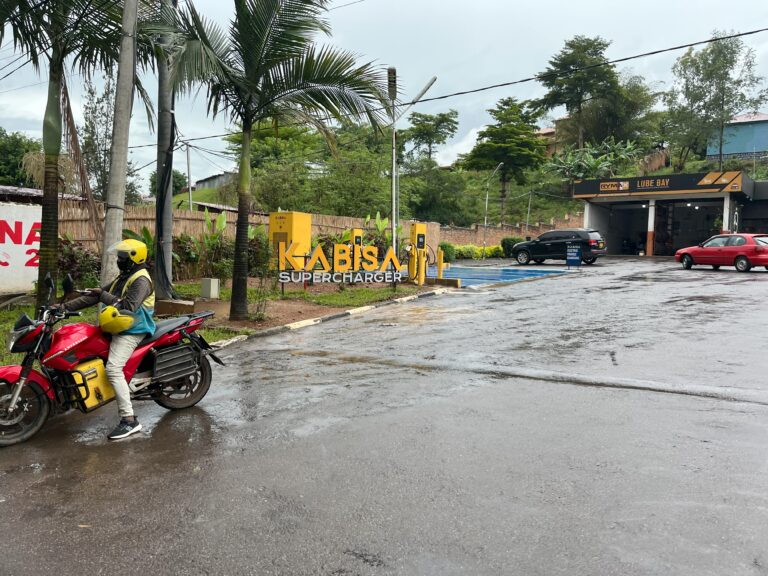
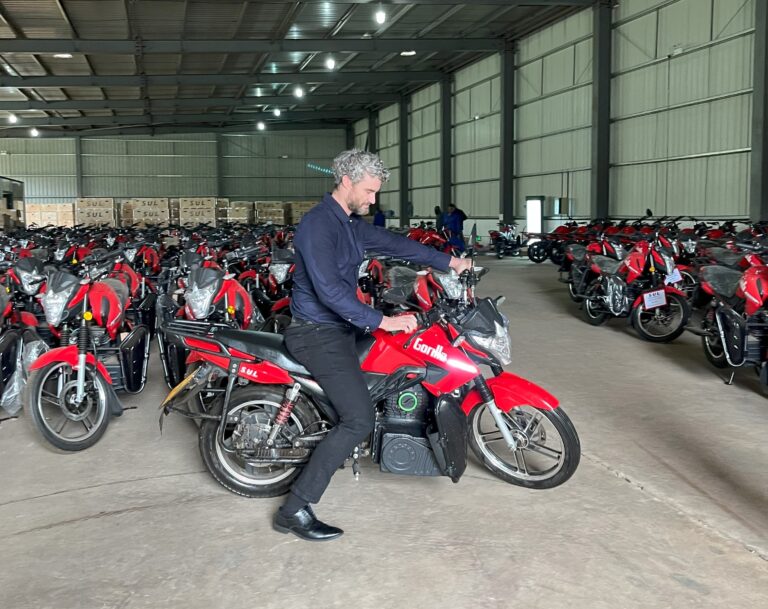

“We have a list of over 2,000 taxi operators who want to lease e-motos, but there is no supply, and we do not have the funds to lend people money,”
- Microfinance manager, asset financier.
A model for replication
Though grounded in Rwanda, the E-Moto Project is already gaining attention as a blueprint for other cities and countries across Africa. Its integrated model, combining catalytic finance with tailored technical assistance, demonstrates how national and sub-national institutions can leverage global climate funding to drive local transformation.
By connecting government, finance institutions, and the private sector, ICLEI Africa plays the intermediary role that makes the E-Moto Project possible. We broker partnerships, align technical and financial support, and ensure that global climate funding is translated into bankable local action. This “joining the dots” approach strengthens institutions, lowers investment risks, and helps riders, cooperatives, and manufacturers access the finance and support they need to scale e-mobility.
Learn more
Visit the ICLEI Africa project page
Explore the Mitigation Action Facility’s transport projects
Photos by the E-Moto Project Team during the May 2025 mission in Kigali.
The Mitigation Action Facility is a joint initiative of the German Federal Ministry for Economic Affairs and Climate Action (BMWK), UK’s Department for Energy Security and Net Zero, the Danish Ministry of Climate, Energy and Utilities (KEFM), the Danish Ministry of Foreign Affairs (MFA), the European Union and the Children’s Investment Fund Foundation (CIFF).