
 Follow a
  See our
  View our
 Download the
AI and Data Co-Production for Risk Reduction
Co-producing an AI tool with local stakeholders in Cape Coast and Cape Town to enhance heat and flooding emergency preparedness and planning



Years active:
2025 - Present
Visit the website
AI and Data Co-Production for Risk Reduction arrow_outwardRelated ICLEI Pathway(s)
Locations
Funded by
About
Project aims
We are supporting the development ClimateIQ, an open-access, AI-powered climate risk tool designed to democratize climate data for under-resourced cities in collaboration with New York University’s (NYU) Urban Systems Lab (USL). ClimateIQ uses machine learning to increase the speed and accuracy of traditional physics models, providing high-resolution data to under-resourced cities. Currently piloted in North America and Europe, ICLEI Africa is leading stakeholded engagement so the tool can be developed, scaled, trained, and validated for use in the Global South, ensuring its accuracy for global release. We will be leading a series of coproduction workshops, through which local data from stakeholders will be integrated with global datasets to produce high-resolution flood and heat data for training ClimateIQ to enhance local planning and disaster response. This project addresses two key gaps: the need for localized data integration in DRR tools, and the lack of high-resolution information on inland flooding and extreme heat for African cities.
We are supporting the development ClimateIQ, an open-access, AI-powered climate risk tool designed to democratize climate data for under-resourced cities in collaboration with New York University’s (NYU) Urban Systems Lab (USL). ClimateIQ uses machine learning to increase the speed and accuracy of traditional physics models, providing high-resolution data to under-resourced cities. Currently piloted in North America and Europe, ICLEI Africa is leading stakeholded engagement so the tool can be developed, scaled, trained, and validated for use in the Global South, ensuring its accuracy for global release. We will be leading a series of coproduction workshops, through which local data from stakeholders will be integrated with global datasets to produce high-resolution flood and heat data for training ClimateIQ to enhance local planning and disaster response. This project addresses two key gaps: the need for localized data integration in DRR tools, and the lack of high-resolution information on inland flooding and extreme heat for African cities.
The project team
AI and Data Co-Production for Risk Reduction team
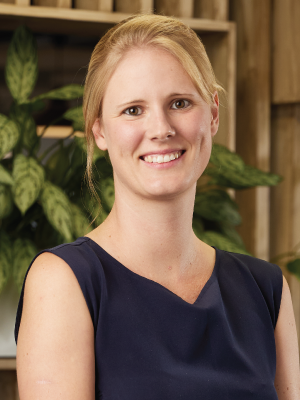
Dr Kate Strachan
Senior Manager: Climate Change Resilience, Coastal Management & DRR

Brian Palmer
Senior Specialist: Climate Change, Energy & Resilience
Brian’s diverse climate adaptation experience is centred on building coalitions for resilience in communities facing compounded vulnerability. He holds an MPhil in Climate Change and Sustainable Development, with a focus on coastal governance. His appreciation for monitoring, evaluation, and learning stems from a passion for asking questions, listening, and synthesising information. Brian’s project development work has been rooted in testing innovations and finding replicable success.
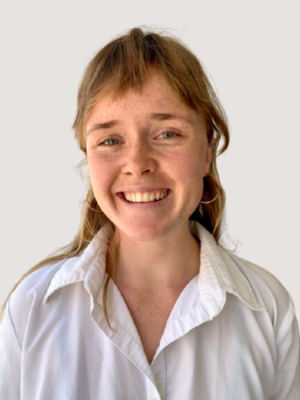
Clara Marais
Professional Officer: Climate Change Resilience & Disaster Risk Reduction
Clara holds an Honours degree in Environmental and Geographical Science, graduating with distinction from the University of Cape Town. With a keen focus on climate change adaptation, disaster risk management and resilience, Clara is driven by a commitment to advancing sustainable and equitable solutions in the African urban context. She believes that impactful resilience-building emerges from collective action and interdisciplinary engagement.