Why cities? Why food?
Why Africa?
Through our work, we elevate the role of local governments in solving Africa’s food systems challenges, leading to healthier, more prosperous cities backed by sustainable rural value chains. And ultimately, better lives through food. As a dynamic team of African professionals we understand Africa, and as a city network that has over three decades of experience, we understand local governments. We support ICLEI’s global City Food program by bringing African experience into the international arena. Working across four thematic areas of expertise our team supports cities stepping up to this challenge in ways which promote a whole-of-society response which is gender sensitive and youth orientated. Through strong, established partnerships, a solid continental network and a unique blend of research skills, governance experience, financing support, implementation expertise and advocacy skills, we make change possible.
Why a food centre?
Change starts with small but concrete actions among small groups of visionary champions responding to pressing challenges. Change spreads when others are connected to these actions and are inspired and enabled to get involved to shift the wider system.
Our approach
Enabling resilient food markets & infrastructure
Better food through infrastructure.
We work with a wide range of city governments, local stakeholders, technical partners and financial institutions to plan, design and deliver contextually appropriate infrastructure upgrades, supporting cities to take an active stance in response to the challenges they face.
Infrastructure is an essential yet often overlooked foundation of food systems performance. Well-designed and maintained infrastructure can strengthen the resilience of cities and regions to climate shocks, support inclusive economic growth, and secure access to sustainable, safe and nutritious food for urban populations.
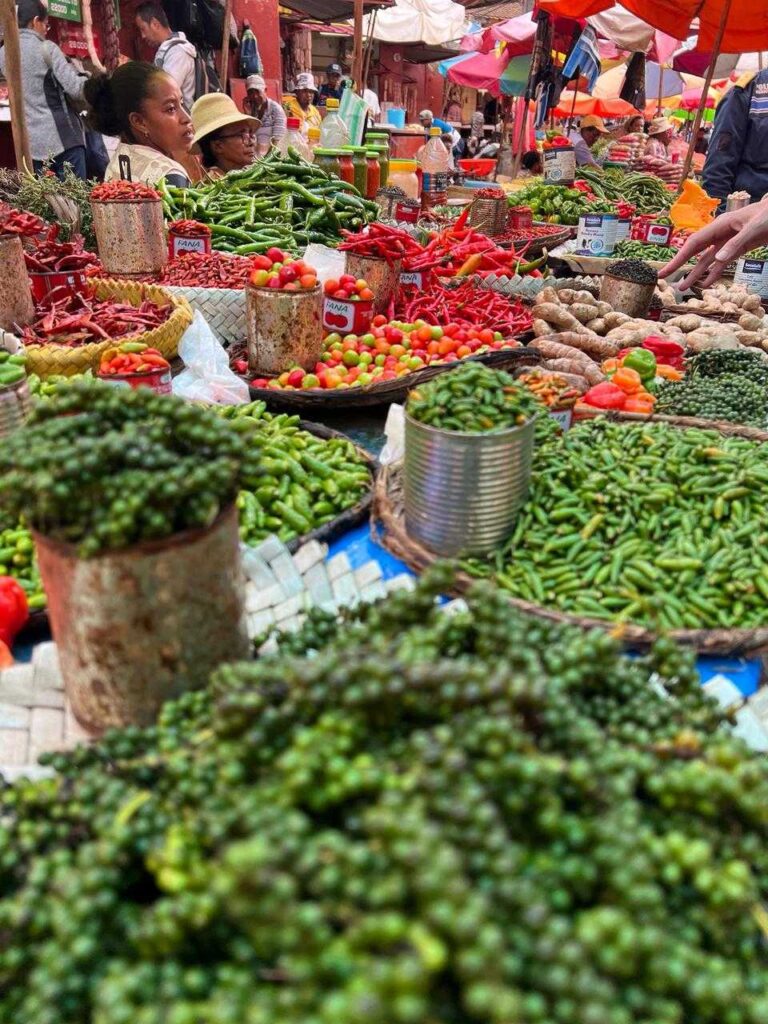
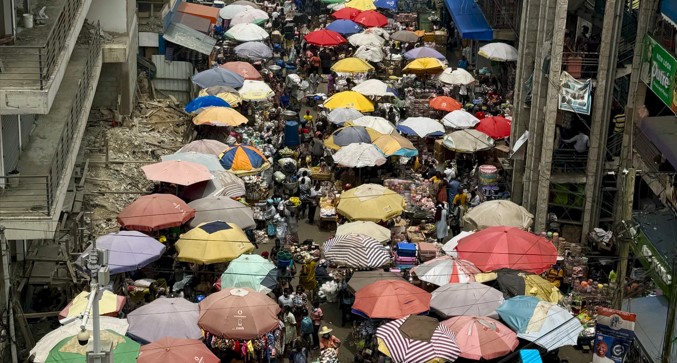
Urban food markets are critical municipal assets through which 80% of Africa’s urban food passes. They are the basis of Africa’s urban nutrition and one of the most vibrant sources of livelihoods, culture and local economic development present in Africa’s cities today.
Yet, in spite of their importance, these markets are chronically under-developed, with local governments struggling to maintain existing markets let alone expand coverage to meet the needs of rapidly growing urban populations. Increased flooding and heatwaves place further strain on fragile infrastructure resulting in food wastage, supply disruptions, food price shocks and disease outbreaks.
The African City Food Centre is working in partnership with a wide range of local stakeholders, technical partners and city governments to plan, design and deliver contextually appropriate infrastructure upgrades. We’re also working with a global network of partners and financial institutions to ensure that suitable financing mechanisms are in place that allow cities to take an active stance in response to these challenges.
PILLAR LEAD
Amy Murgatroyd
Professional Officer: Urban Systems
Flagship projects
Strengthening Fresh Food Markets for Healthier Food Environments within Planetary Boundaries
Unlocking investment into Africa’s urban markets
Centering children in urban food policy & practice
Better food for children.
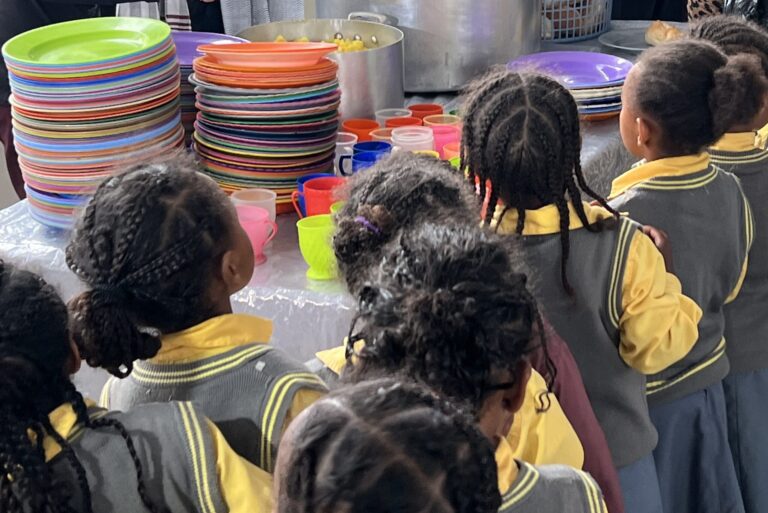
We build strong local governments partnerships with national governments, civil society and school communities, creating the momentum needed to overcome the policy and resource constraints that are limiting the universal roll out of adequate school meal programmes.
No city can prosper while its children go hungry. Eradicating child hunger and malnutrition requires a whole of society approach, with local governments playing a vital role.
Adequate nutrition in the first 1000 days of a child’s life – from the point of conception to their second birthday – is a fundamental precondition for the attainment of social equality and prosperity. This phase, during which cognitive, physical and emotional development is most acute, presents a unique opportunity that influences not only children’ s survival but also their ability to grow, learn and rise out of poverty.
This starts with maternal health and nutrition and means working with cities and their partners to ensure that women have access to the knowledge, services and resources they require before, during and after pregnancy.
Because children cannot learn on an empty stomach we are working to build stronger local governments partnerships with national governments, civil society and school communities. Together we are creating the momentum needed to overcome the policy and resource constraints that are limiting the universal role out of adequate school meal programs.
PILLAR LEAD
Dr Fru Wanka
Professional Officer: Urban Systems
Flagship project
Empowering communities through school food
Mainstreaming urban food governance & planning
Better food through planning.
We support local governments to better fulfil their important role in shaping more sustainable, inclusive and resilient food systems, through three key strategic actions: Supporting integrated food governance mechanisms; supporting the development of city food strategies; and facilitating city exchange and peer learning.
Local governments are at the frontline of Africa’s food system transition. Cities are uniquely positioned to improve food safety, combat hunger, promote nutrition, and drive inclusive socio-economic development through food system activity. Across their different departments, cities play a key role in managing markets and waste, supporting informal food vendors and small businesses, strengthening urban-rural linkages and sustaining critical food sheds. However, food governance at the local level is often highly fragmented and undermined by unclear mandates and an absence of governance and planning processes. The general absence of a clearly structured focus on food, also means cities’ food mandates are under-funded, further limiting the potential for action.
The African City Food Centre works to support local governments to better fulfil their important role in shaping more sustainable, inclusive, and resilient food systems. We support this through three key strategic actions:
1. Supporting Integrated Food Governance Mechanisms
We support cities to build strong, inclusive food governance systems by embedding dedicated food coordination roles within local government, establishing multi-stakeholder platforms, and improving collaboration across departments. By aligning local action with national and provincial food policies, we help cities unlock more coherent, cross-sectoral responses to hunger, nutrition, climate, and resilience challenges.
2. Supporting the Development of City Food Strategies
We work with cities to turn food systems thinking into action by developing local food strategies, integrating food into broader planning processes, and supporting implementation aligned with city priorities. Our approach is grounded in participatory, context-specific processes that reflect local realities and build collective ownership.
3. Facilitating City Exchange and Peer Learning
Because cities learn best from each other, we specialise in enabling city officials to build capacity through peer-to-peer learning by facilitating exchange visits, hosting collaborative learning platforms, and building communities of practice. Our approach fosters practitioner-led knowledge sharing, grounded in real-world experience and relationships across cities and regions.
PILLAR LEAD
Ivan Pauw
Professional Officer: Urban Systems
Flagship project
Empowering communities through school food
Celebrating Africa’s rich food heritage
Better lives means celebrating African cultures.
We support cities to tap into Africa’s rich mosaic of food cultures – a powerful, underleveraged urban asset – offering opportunities for place-making, education, employment, tourism, biodiversity preservation, pride, wellbeing and so much more.
Across Africa, traditional food cultures have aligned to local soils, climates and rich biodiversity. Food cultures are thus a vital bridge between health, identity and ecological integrity.
Today, African cities are vibrant melting pots of cultural diversity, rising to become defining global forces in art, fashion, literature and music. However, Africa’s unique culinary heritages are increasingly eclipsed by narratives of poverty and globalised ideals of western consumer culture. Cheap and unhealthy convenience foods fill our rapidly growing cities, while stories of local wisdom and ingenuity go untold. The narrative on Africa’s rich food heritage is missing.
Celebrating African food cultures is not to deny the challenges of malnutrition, but rather to hold space for a more balanced view that also celebrates our successes. Food is not only sustenance – it is story, identity, belonging – and by honouring the cultural dimensions of food, we open up new ways of engaging with our challenges and imagining better futures.
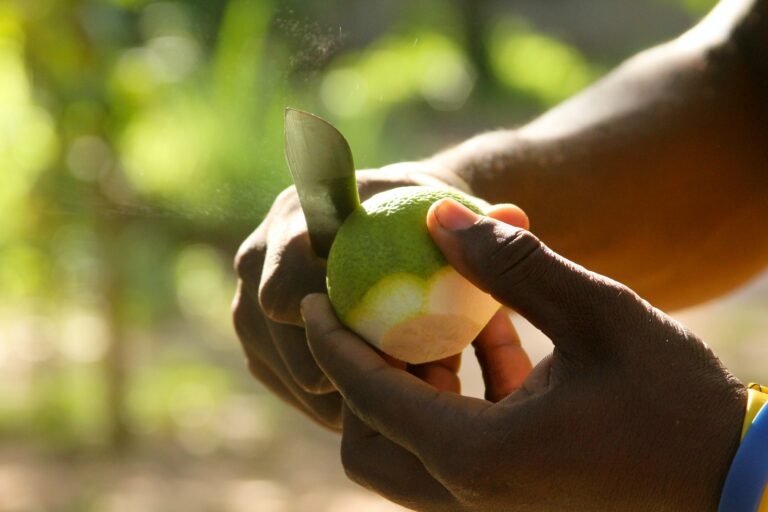
Africa’s dynamic tapestry of food cultures are a powerful, underleveraged urban asset offering opportunities for place-making, education, employment, tourism, biodiversity preservation, pride, wellbeing and so much more. Supporting culturally relevant ways of producing and consuming, promoting the use of indigenous ingredients, bringing food knowledge into schools, reviving our connection to the environment – and linking these efforts to governance and urban planning can unlock huge potential for African cities. Food cultures can be a lynchpin around which city development flows.
From the Mediterranean diets of north Africa to the rich food baskets of the Congo River Basin, the lakes of Great Rift Valley and the dry expanses of the Kalahari, Africa is a vibrant mosaic of flavour and ancient understanding. By encouraging the transmission of intergenerational knowledge and empowering youth to tell stories rooted in heritage and place, we can spark renewed interest in our food systems. Youth-led storytelling is key to shifting perceptions of African food and to generating pride in our culinary cultures.
Whether it’s supporting cities like Chefchaouen in the roll out of their Mediterranean Diet Action Plan which champions traditional diets and cultural heritage, or building a network of African youth ambassadors showcasing the vibrant cultures across our cities, we’re putting African cultures on the map. Through Africa CityFood Month we bring attention to these stories and create platforms for others to connect and share.
PILLAR LEAD
Dr Fru Wanka
Professional Officer: Urban Systems
Flagship project
Transforming Africa’s Urban Food Systems
Strengthening networks & amplifying African voices
Better food through collaboration.
With Africa’s urban population set to double by 2050 and the number of cities and towns on the continent estimated to be 7,600 and climbing, no organisation or movement can solve Africa’s food challenges in isolation.
At the African City Food Centre we believe firmly in the power of open collaboration and long-term partnerships. Starting with small but concrete actions we work with other visionary champions to build action-orientated networks and alliances across Africa and beyond. Through these we foster collaboration and collective action among cities and regions, ensuring African cities are not just included in, but leading, the conversation on the future of food systems.
PILLAR LEAD
Dr Luke Metelerkamp
Professional Officer: Urban Systems
Flagship project
Transforming Africa’s Urban Food Systems
Our team
TEAM LEAD
Dr Luke Metelerkamp
Senior Professional Officer: Urban Systems
Paul Currie
Director: Urban Systems Unit
Jodi Allemeier
Senior Specialist: Urban Systems
Amy Murgatroyd
Professional Officer: Urban Systems
Ivan Pauw
Professional Officer: Urban Systems
Dr Fru Wanka
Professional Officer: Urban Systems
Sinethemba Mthethwa
Professional Officer: Urban Systems
Tiago Damasceno
Professional Officer: Urban Systems
Sara Nakalila
Professional Officer: Urban Systems
Ruby Schalit
Professional Officer: Urban Systems
Tashi Piprek
Professional Officer: Urban Systems
Palesa Base
Professional Officer: Urban Systems
Mulesa Lumina
Communications Officer